Genre: War (Page 2)
Browse 64 movies in the War genre.
All Genres
Full Metal Jacket
During the Vietnam War, a group of United States Marine Corps recruits arrive for eight weeks of Recruit Training at Parris Island, where Senior Drill Instructor Gunnery Sergeant Hartman uses harsh methods to train them for combat. Among the recruits are the wisecracking J. T. Davis, who is nicknamed "Joker" after mocking Hartman, and the overweight and dimwitted Leonard Lawrence, whom Hartman nicknames " Gomer Pyle ". During bootcamp, Pyle struggles to meet Hartman's expectations and is eventually paired with Joker. Pyle shows signs of improvement, but during an inspection, Hartman discovers a jelly doughnut in Pyle's footlocker. Believing the platoon has failed to improve Pyle, Hartman begins a policy of collective punishment in which he will punish everyone except for Pyle for each mistake he makes. In retaliation, the recruits haze Pyle with a blanket party, which Joker reluctantly participates in under pressure. Afterwards, Pyle appears to reinvent himself into a model recruit, showing particular expertise in marksmanship. This impresses Hartman but worries Joker, who believes Pyle may be suffering a mental breakdown after seeing Pyle talk to his rifle. The night before the new Marines are to leave Parris Island, Joker, on fire watch, discovers Pyle in the barracks latrine loading his M14 rifle with live ammunition, executing drill commands, and loudly reciting the Rifleman's Creed. Awakened by the commotion, Hartman orders Pyle to put down the rifle, but Pyle fatally shoots Hartman and then kills himself in front of Joker. By late January of 1968, Joker is a sergeant based in Da Nang for the newspaper Stars and Stripes alongside Private First Class "Rafter Man", a combat photographer. Their base is unsuccessfully raided as part of the Tet Offensive. The following morning, Joker and Rafter Man are sent to Phu Bai, where Joker searches for and reunites with Sergeant "Cowboy" Evans, a friend from Parris Island who now serves in a unit dubbed the "Lusthog Squad". During the Battle of Huế, platoon leader Lieutenant "'Mr. Touchdown'" Schinoski is killed, leading Sergeant "Crazy Earl" to take his place as squad leader. As they enter the city, the squad engages in combat with enemy forces and secure the area. Later, during a patrol, a booby-trapped rabbit toy kills Crazy Earl, leaving Cowboy in command. Becoming lost in the city, the squad is attacked by a Viet Cong sniper who fatally shoots "Eightball" and "Doc Jay". As the squad closes in on the sniper's location, Cowboy is killed. Assuming command, squad machine gunner "Animal Mother" leads an attack on the sniper. Joker locates her first, but his M16 rifle jams. The sniper, a teenage girl, overhears this and opens fire, while Rafter Man shoots and mortally wounds her. As the squad converges on the sniper, she begs for death, leading to an argument over whether to kill her or leave her to die in pain. Animal Mother agrees to a mercy killing but only if Joker will handle it; after some hesitation, Joker shoots her. As night falls, the Marines march to the Perfume River singing the " Mickey Mouse March ". A narration of Joker's thoughts conveys that, despite his being "in a world of shit", he is glad to be alive, and is "not afraid".
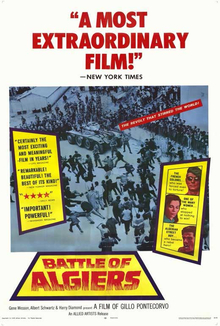


The Best Years of Our Lives
Three returning World War II veterans meet on a flight to their midwestern hometown of Boone City. USAAF bombardier captain Fred Derry had been a drugstore soda jerk who lived with his father and stepmother on the wrong side of the tracks. Before shipping out, Fred married gold-digger Marie after a whirlwind romance. Marie has since been working in a nightclub to fill her time (and her nightlife) in spite of Fred's generous combat pay as an Air Force officer. U.S. Army sergeant Al Stephenson is a bank executive; he, his wife Milly and their children Peggy and Rob live in a luxury apartment. U.S. Navy petty officer Homer Parrish was a star high school athlete living with his middle-class parents and younger sister, and dating his next-door neighbor Wilma, whom he intended to marry upon his return from the war. Each man faces challenges integrating back into civilian life. Homer lost both hands in the war; he is reluctant to return home and face his well-meaning parents and their friends, who have a hard time seeing past his disability. Homer can deftly use his mechanical hooks, but hesitates to display affection for Wilma as he cannot believe she will still want to marry him. Al, tired and jaded, returns to the bank and is given a promotion, but wrestles with alcohol. Fred suffers from PTSD flashbacks by night. Fred arrives home and cannot locate his party girl wife, who does not expect him. The Stephensons and Peggy invite Fred to go out with them, bar-hopping to celebrate Al's return. An inebriated Fred keeps asking Peggy who she is; she humorously reminds him she's "Al's daughter." When Fred can't get into his apartment, the Stephensons offer him a bed for the night. Later, Peggy calms Fred during a nightmare, and they develop a mutual attraction. When Peggy and her boyfriend invite Fred and Marie out to dinner, Peggy realizes how shallow and materialistic Marie is and determines to break up Fred's marriage. Homer is frustrated and often depressed by his loss of independence. Concerned that Wilma doesn't fully understand the difficulties of being married to him, Homer demonstrates how she'll need to assist him when he removes his prosthetic hands at bedtime, leaving him helpless. Wilma reaffirms her love and vows her commitment to a grateful and emotional Homer, who finally embraces her. Widely respected by the bank's senior management for his past business acumen, Al is admonished after approving an unsecured loan to a farmer and fellow veteran without collateral. With inhibitions lowered by excessive drinking, Al gives a speech at a work banquet that satirizes requiring a veteran to provide collateral before risking his life to take a hill in battle. With little work experience and unable to find a better job than soda jerk, Fred returns to the same drugstore and is now supervised by his former protege. Fred and Peggy's attraction grows stronger, increasing tensions with Al. When Homer visits Fred at the drugstore, another customer criticizes US involvement in the war, telling Homer his injuries were unnecessary. Homer responds angrily, and Fred punches the customer, for which he's fired. Marie, frustrated with Fred's lack of financial success and missing her past nightlife, seeks a divorce. Bitter and seeing no future in Boone City, especially with Al telling him to stay away from Peggy, Fred decides to catch the next plane out. While waiting at the airport, Fred walks into an aircraft graveyard, climbing into the bombardier's seat of a decommissioned B-17 bomber. He's roused from a painful flashback by a work crew foreman, who tells him the planes are being demolished for use in the growing prefab housing industry. Fred asks if they need help in the budding business and is hired. Al, Milly, and Peggy attend Homer and Wilma's wedding, where Fred is best man. Now divorced, Fred reunites with Peggy after the ceremony and expresses his love but says things may be financially difficult if she stays with him. Peggy's smile expresses her joy and she and Fred kiss.

Army of Shadows
Philippe Gerbier, the head of a French Resistance cell, is arrested by Vichy French police on suspicion of Resistance activity. Although he is acquitted due to a lack of evidence, he is still sent to an internment camp. He and a young Communist work on an escape plan, but before they can execute it, Gerbier is transported to Paris. While waiting to be questioned by the Gestapo, he manages to kill a guard and flee. In Marseille, Gerbier, Félix Lepercq, Guillaume "Le Bison" Vermersch, and Claude "Le Masque" Ullmann trick Paul Dounat, the young agent who betrayed Gerbier, into meeting them. They take him to a house, but discover the neighboring house is newly occupied, so they cannot use their guns to kill Dounat. Lacking a decent knife, they strangle their former associate. Félix meets his old friend Jean-François Jardie in a bar and recruits the risk-loving former pilot to join the Resistance. While on a mission to Paris, Jean-François visits his older brother Luc, a renowned philosopher who appears to live a detached, scholarly life. He then travels to the Mediterranean coast to help evacuate some Allied soldiers, along with Gerbier and the "Big Boss", to London via a submarine to Gibraltar. Jean-François does not recognize him in the dark, but the Big Boss turns out to be Luc, whose identity is a closely guarded secret. In London, Gerbier tries to arrange additional support for the Resistance from the Free French leadership, and Luc is decorated by Charles de Gaulle. When Gerbier learns Félix has been arrested by the Gestapo, he cuts his trip short and parachutes into the French countryside. After Félix's arrest, Mathilde, a Parisian housewife who is part of the Resistance, moves down to Lyon to run Gerbier's cell. Gerbier is impressed by her abilities, so he keeps her around. She devises a plan to rescue Félix, who is being tortured at the Gestapo headquarters. Jean-François, after hearing the details, writes Gerbier a letter of resignation and incriminates himself with an anonymous letter to the Gestapo so he will be jailed with Félix. Mathilde, Le Masque, and Le Bison try to rescue Félix disguised as Germans and with a forged order to transfer him to Paris, but their plan fails when the prison doctor pronounces him unfit for transport, as he is barely alive. When Jean-François, who has also been badly beaten, sees the rescue has failed, he gives Félix his only cyanide pill. Having seen Gerbier's picture on a wanted poster during the rescue attempt, Mathilde urges him to lie low, but he says there is no one who can take his place at the moment. He is swept up in a raid by Vichy police and handed over to the Germans. Taken to be executed, Gerbier and his cellmates are told that, if they can reach the far wall of a room before they are killed by machine gunners, they will be allowed to live a little longer. Once the shooting starts Gerbier runs to the wall, when suddenly Mathilde and Le Bison appear by a window and throw smoke bombs to block the Germans' view and a rope to help Gerbier. He climbs it and escapes with the group. Gerbier goes to hide out for a month in an abandoned farmhouse. One day, Luc arrives to discuss what to do about Mathilde, who has been arrested. He worries she will inform on her confederates, as her teenage daughter has been threatened. Luc hides when Le Masque and Le Bison arrive with the news that Mathilde is free and two members of the Resistance have been captured. Gerbier orders Mathilde's immediate execution, but Le Bison refuses to do so and swears to prevent Gerbier from killing her, so Luc emerges and convinces Le Bison that Mathilde would want them to kill her before she is forced to identify anyone else. Luc accompanies Gerbier, Le Bison, and Le Masque to Paris. They locate Mathilde on the street, and Le Bison shoots her twice before they drive away. Closing text reveals that all four men were captured and died within less than a year, either through suicide or at the hands of the Nazis. Gerbier's precise fate is succinctly described as "on 13 February 1944, he decided not to run this time".

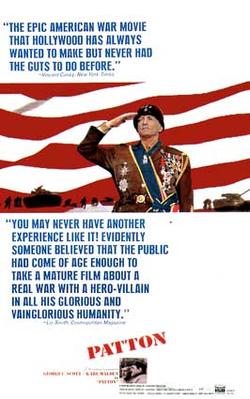
Patton
During World War II, the II Corps suffers a severe defeat at the Battle of Kasserine Pass in North Africa. Hard-charging General George S. Patton is sent to take command; he reorganizes the corps, and imposes strict but necessary discipline. Frustrated by what he perceives as British commander Bernard Montgomery monopolization of the Allied effort—Montgomery's forces had chased Rommel's forces and thus relieved pressure on the Americans following Kasserine—Patton leads the corps to redemption at the Battle of El Guettar. Following Allied victory in North Africa, Patton and Montgomery propose competing plans for the Allied invasion of Sicily. Patton recommends landing his U.S. Seventh Army near Palermo. Commanding officer Harold Alexander opts for Montgomery’s more cautious plan, landing Patton’s forces at Gela. Although initially intended to support Montgomery, Patton pushes northwest, taking Palermo and racing to Messina before the British. During the campaign, he visits a field hospital and slaps a soldier for cowardice, sparking public outrage and requiring a formal apology. Patton is then sidelined by Eisenhower for the Allied invasion of France and placed in command of the fictitious First United States Army Group in London, a decoy to mislead the Germans about the main invasion location. At a public gathering in Knutsford, Patton remarks that the postwar world will be dominated by Anglo-Americans, alarming Allied leaders. George Marshall must decide whether Patton’s outspoken comments warrant sending him home in disgrace. Weeks after the Normandy landings, Patton takes command of the Third Army, reporting to his former subordinate, Omar Bradley. Under his leadership, the Third Army sweeps across France, but is forced to halt before entering Germany due to fuel and supply allocations to Montgomery’s forces. Frustrated, Patton confronts Bradley, who warns him again about the dangers of speaking freely. During the Battle of the Bulge, Patton’s staff plans a bold operation to relieve the trapped 101st Airborne Division in Bastogne. After Germany capitulates, Patton’s candid comparisons of American politics to Nazism create further controversy, and he is relieved of command of the Third Army. He is retained to help oversee the occupation of Germany. In the film’s closing sequence, Patton narrowly avoids a fatal accident while walking with his bull terrier, and his voiceover reflects on the fleeting nature of glory, especially that achieved through military conquest: For over a thousand years, Roman conquerors returning from the wars enjoyed the honor of a triumph —a tumultuous parade. In the procession came trumpeters and musicians and strange animals from the conquered territories, together with carts laden with treasure and captured armaments. The conqueror rode in a triumphal chariot, the dazed prisoners walking in chains before him. Sometimes his children, robed in white, stood with him in the chariot, or rode the trace horses. A slave stood behind the conqueror, holding a golden crown, and whispering in his ear a warning that all glory... is fleeting.

Land of Mine
Following the end of World War II in Europe and the liberation of Denmark from German occupation in May 1945, the Wehrmacht and SS occupiers became prisoners of war. A group of young German prisoners are sent to the west coast where they are trained to use their bare hands to remove the landmines that the Germans had buried in the sand. After their training, the boys are left under the charge of Danish sergeant Carl Leopold Rasmussen, who is determined to treat the young prisoners without sympathy. Marching his squad onto the dunes, he promises that they will return home in three months, if they can each defuse six mines per hour for a total of 45,000 mines. One of the boys, Sebastian Schumann, attempts to remain optimistic as they discuss their plans for when they return home. The POWs are given little food due to post-war shortages and begin to suffer from malnourishment, with Ernst befriending a young local girl to steal some bread from her. One day, while defusing a mine, Wilhelm's arms are blown off and he later dies in a field hospital. Most of the boys become ill after eating grain contaminated with rat faeces that they found on a nearby farm; they are treated by Rasmussen who makes them purge themselves with seawater. Rasmussen gradually treats his charges more kindly, stealing food from the base for them and tries to maintain morale by reporting that Wilhelm has survived. He also allows the boys to use a device invented by Sebastian to improve productivity. Hearing rumours of Rasmussen stealing food for the boys, his commanding officer Captain Ebbe Jensen brings a group of British soldiers to abuse and torment the boys. Rasmussen stops them but is confronted about the theft by Ebbe, who accuses him of being sympathetic towards the Germans. During another day of demining, Werner is blown to bits after encountering landmines buried one above another, leaving his twin brother Ernst distraught. After a casual game of football, Rasmussen's dog is blown up in a supposedly cleared zone of the beach. This causes Rasmussen to snap and begin abusing the boys again. He forces them to march close together across the cleared zones of the beach to confirm that they are safe. When a young local girl walks out into an uncleared area of beach, her mother comes looking for Rasmussen only to find him gone. The boys volunteer to help save the girl. Ernst walks through the uncleared minefield to keep the little girl calm whilst Sebastian clears a path to safety for her. They manage to rescue her but instead of returning to safety with Sebastian, Ernst decides he cannot go on without his brother and commits suicide by walking into the uncleared section and is promptly killed. After witnessing this act of kindness and bravery from the boys, Rasmussen relents in his treatment of them and reassures a grieving Sebastian that they will soon be able to go home. While four of the boys continue to clear the beach with Rasmussen, the rest of them are loading unexploded mines onto a truck. When one of the boys tosses a mine that was not properly defused onto the truckbed of deactivated mines, he accidentally sets off a massive explosion which kills himself and his nearby comrades. Only Sebastian, Ludwig, Helmut and Rodolf remain. Although the boys had been promised that they would be sent home after defusing all of the mines, without Rasmussen's knowledge Jensen decides to send the surviving four to join a team defusing landmines in another coastal area. Rasmussen argues in vain for Jensen to rescind the order. He decides to rescue the boys and then drives them within 500 metres (1,600 ft) of the German border so they can run to their freedom.

Burnt by the Sun
The entirety of the film takes place within the course of one day in the summer of 1936 in the Soviet Union. Mitya (Dmitri), a former nobleman and veteran of the anti-communist White Army, contemplates suicide. The film cuts to Komdiv Sergei Petrovich Kotov, his wife Maroussia, and their young six-year-old daughter Nadia relaxing in a banya (sauna) when a peasant from the local collective farm frantically tells them the Red Army 's tanks are about to crush the wheat harvest as part of general maneuvers. After hearing this news, Kotov rides out to order the tank officer to halt. Kotov carries authority as a senior Old Bolshevik and legendary hero of the Russian Civil War, and he is also very popular with the common people and local villagers. The opening scene makes it clear that Kotov is a devoted family man, and he claims to be a personal friend of Stalin. Following this incident, the happy family returns to their country dacha (country estate), where they join Maroussia's relatives, a large and eccentric family of Chekhovian aristocrats. Mitya (Dmitri), who had been Maroussia's fiancé before disappearing in 1927, arrives in a costume to disguise himself, but when he takes it off he is joyfully embraced by the family and introduced to Nadia as "Uncle Mitya". Maroussia is left feeling deeply conflicted, as she had suffered deeply when Mitya left without explanation and even contemplated suicide, as shown by the self-inflicted marks on her wrists. Despite his personable nature, it is clear that Mitya has returned with a secret agenda. It is slowly revealed throughout the duration of the afternoon that he works for the Soviet political police, the NKVD, and has arrived to arrest Kotov for a non-existent conspiracy that Mitya had framed him for. Mitya is abusing his power for the purpose of revenge, since ten years ago Kotov had conscripted Mitya into the OGPU, the predecessor of the NKVD, and was therefore the reason for Mitya being taken away. Mitya detests Kotov, whom he blames for causing him to lose Maroussia, his love for Russia, faith, and his profession as a pianist. Kotov confronts Mitya about his activities in Paris, where he gave up eight White Army generals to the NKVD. All were kidnapped, smuggled to the Soviet Union, and shot dead without trial. Although eventually realizing that Mitya intends to take him away, Kotov believes that his close relationship with Soviet dictator Joseph Stalin will save him. However, a black car carrying NKVD agents arrives to remove Kotov, just as a group of Young Pioneer children arrives at the dacha to pay tribute to him. Kotov willingly goes with Mitya, pretending to be Mitya's friend and even lets Nadia briefly ride in the car with them. While riding away in the car with his captors, Kotov reminds them who he is and his status, but he quickly realizes that they don't care and that it was Stalin himself who ordered his arrest. Only after looking into Mitya's eyes does Kotov realize the severity of the situation, causing him to breakdown in tears. Kotov is forced to make a false confession to all the charges Mitya framed him for and is shot dead in August 1936. Meanwhile, following Mitya's success in his revenge against Kotov, he ultimately commits suicide, as his revenge did not satisfy him in the way he thought it would. In addition, Maroussia is arrested and dies in the Gulag in 1940. Although arrested with her mother and taken to a concentration camp, Nadia lives to see all three sentences overturned during the Khrushchev Thaw, in 1956, and works as a music teacher in Kazakhstan.

Johnny Got His Gun
Joe Bonham, a young American soldier during World War I, awakens in a hospital bed after being hit by an artillery shell. He has lost his eyes, ears, mouth, nose, and limbs, but remains conscious and able to reason, rendering him a prisoner in his own body. As he drifts between reality and fantasy, he remembers his old life with his Christian Science family and his girlfriend Kareen. He also forms a bond of sorts with a young nurse who senses his plight, although the doctors think he is in a vegetative state. Eventually, Joe communicates with his doctors by banging his head against his pillow in Morse code, spelling out "help" to show he is conscious. He is asked what he wants, and requests for the United States Army to put him in a glass coffin in a freak show as a demonstration of the horrors of war. When told that this is against regulations, he responds by repeatedly begging to be euthanized. Joe ultimately realizes that the U.S. Army will not grant either wish, and will likely leave him in a state of living death. His sympathetic nurse attempts to euthanize him by clamping his breathing tube, but her supervisor stops her before Joe can succumb. In the end, Joe is left alone in his bed in a utility room at the hospital, weakly repeating to himself, " S.O.S. Help me."

The Boy in the Striped Pajamas
Bruno, an eight-year-old German boy living in Berlin, is uprooted to occupied Poland with his family after his father Ralf, an SS officer, is promoted. The boy notices an extermination camp from his bedroom window, but believes it to be a farm. His mother Elsa forbids him from going in the back garden. Ralf arranged for Herr Liszt, a private tutor, to home school Bruno and his elder sister, Gretel. Liszt's anti-semitic teachings and Gretel's crush on her father's subordinate, Lieutenant Kurt Kotler, make her a fanatical Nazi supporter. Bruno struggles to absorb the racist rhetoric after Pavel, a doctor-turned-family slave, tends to a minor injury Bruno suffers. Bruno's explorations of nearby woods takes him to a barbed wire fence surrounding the camp where he befriends Shmuel, a boy his age. They meet at the fence regularly, and Bruno learns Shmuel is a Jew brought to the camp with his parents. Bruno sneaks him food. Kurt inadvertently reveals to Elsa that the smell from the camp is from the crematoria, and she angrily confronts her husband. When Kurt reveals his father left Germany for Switzerland to avoid national service, Ralf berates him, and Kurt in turn beats Pavel for spilling a glass of wine. Ralf later informs his family of Kurt's transfer to the Eastern Front but Elsa realises the real reason for his transfer was his refusal to renounce his father. Bruno sees Shmuel working in his home and offers him cake. Kurt finds them talking and berates Shmuel. After seeing him eating, Shmuel informs Kurt that Bruno offered the cake, which he fearfully denies. Later, Bruno tries to apologise to Shmuel, but he does not reappear at the fence for several days. A short time after, Bruno clandestinely watches his father and other officers reviewing a propaganda film depicting the camp's conditions as positive. Shmuel eventually reappears at the fence, but with visible injuries. Bruno apologises to Shmuel, who forgives him. Ralf's mother Nathalie, who disapproves of the Nazi regime, is killed by an Allied bombing raid on Berlin. At the funeral, Elsa tries to remove a wreath from the Führer out of respect for Nathalie and her beliefs. Ralf stops her, and they quarrel. Elsa informs Ralf she does not want the children living in the vicinity of the camp and Ralf tells Bruno and Gretel their mother is taking them to live with their extended family until the war is over. Bruno visits Shmuel before he leaves, and on learning Shmuel's father has disappeared from a work party, decides to help Shmuel find him. Shmuel provides Bruno with a prisoner's striped outfit and cap, but they're captured by the guards after Bruno digs into camp under the fence. Gretel and Elsa burst into Ralf's office during a meeting when they realise Bruno is missing. A search dog tracks Bruno's scent to his discarded clothing by the wire. Ralf enters the camp as a group of prisoners are processed in a gas chamber for extermination by pesticide gas. Bruno and Shmuel have been killed, leaving Ralf, Elsa, and Gretel devastated.