Genre: Drama (Page 65)
Browse 989 movies in the Drama genre.
All Genres
Moscow on the Hudson
Vladimir Ivanov, a saxophonist with the Moscow circus, lives in a crowded apartment with his extended family. In the grim living conditions and lack of personal freedom in the Soviet Union, he stands in lines for hours to buy toilet paper and shoes. When Boris, the apparatchik assigned to the circus, criticizes Vladimir for being late to rehearsal, and warns him that he may miss the approaching trip to New York City, Vladimir gives Boris a pair of shoes from the queue that made Vladimir late. While Ivanov is riding in his friend Anatoly's Lada, Anatoly stops to buy fuel for his car from a mobile black-market gasoline dealer. While the friends wait for the gasoline seller to fill Anatoly's jerrycans, the two practice their English. The circus troupe is sent to perform in New York City. Anatoly, who has talked of little else but defecting, cannot bring himself to go through with it; Vladimir, who had opposed the scheme as reckless and foolhardy, suddenly decides to do it. He runs from his Soviet controllers and hides behind a perfume counter at Bloomingdale's under the skirt of the clerk, Lucia Lombardo. When the NYPD and the FBI arrive, Vladimir stands up to his controllers and defects with news cameras rolling. Vladimir is left with nothing but the clothes on his back, the money in his pocket, and a pair of blue jeans that he had planned to buy for his girlfriend in Moscow. Lionel Witherspoon, a security guard who protected Vladimir from his Soviet handlers during the defection, takes him home to Harlem to live with Lionel's mother, unemployed father, sister, and grandfather—a living arrangement noticeably similar to Vladimir's family back in Moscow. With the help of a sympathetic immigration attorney and Cuban emigrant, Orlando Ramirez, Vladimir soon adapts to life in the United States. Vladimir attempts to find work despite speaking little English and fearing the threat of his former KGB handlers. He initially works as a busboy, McDonald's cashier, sidewalk merchant and limousine driver. Although these jobs enable Vladimir to eventually move into his own apartment, he begins to doubt that he will ever play saxophone professionally again. Vladimir starts a relationship with Lucia, the Bloomingdale's clerk. At a party celebrating Lucia's becoming an American citizen (Lucia originally being an Italian citizen), Vladimir proposes to her; but she refuses and, after an argument, breaks up with him. Lionel decides to return to Alabama to be closer to his young son. More bad news comes in a letter from Vladimir's family that his grandfather has died. Grieving, Vladimir goes to a Russian nightclub to ease his mind. When he returns to his apartment building drunk, he is mugged by two youths. He reports the incident to the police with his attorney Orlando present; the two go to a diner, where Vladimir rants about his misfortunes. During a confrontation with a burly man who makes it known that he is also a Soviet defector, Vladimir comes to appreciate his good fortune of living in the United States. Soon after, Lucia reunites with Vladimir, telling him that she is not ready for marriage, but would love to live with a fellow immigrant. Lionel moves back from Alabama, and he takes over Vladimir's job driving a limousine. Vladimir encounters his former KGB handler, who is now a street vendor selling hotdogs. He admits that he had to flee the Soviet Union due to his failure to prevent Vladimir's defection, but has also come to appreciate New York City. Vladimir soon gets a job in a nightclub, where he again plays the saxophone.

Dangerous Minds
LouAnne Johnson, a veteran of the U.S. Navy and Marine Corps, applies for a high school teaching job and is surprised and pleased to be offered the position with immediate effect, even though it is a low paying job. Showing up the next day to begin teaching, however, she finds herself confronted with a classroom of tough, sullen teenagers, all from low-income working-class backgrounds, involved in gang warfare and drug pushing, flatly refusing to engage with anything. They immediately coin the nickname "White Bread" for LouAnne, due to her race and apparent lack of authority, to which LouAnne responds by returning the next day in a leather jacket and teaching them karate. The students show some interest in such activities, but withdraw when LouAnne tries to teach the curriculum. Desperate to reach the students, LouAnne devises classroom exercises that teach similar principles to the prescribed work but using themes and language that appeal to the students. She also tries to motivate them by giving them all an A grade from the beginning of the year and arguing that the only thing required of them is that they maintain it. In order to introduce them to poetry, LouAnne uses the lyrics of Bob Dylan 's " Mr. Tambourine Man " to teach symbolism and metaphor; once this is achieved, she progresses on to Dylan Thomas 's " Do not go gentle into that good night ", inspired by a conversation with her co-worker Hal Griffith about his favorite poet, confusing Bob Dylan (his reply) with Dylan Thomas. LouAnne rewards the students liberally, using candy bars, reward incentives, and a trip to a theme park. Her methods draw the attention of the school authorities, George Grandey and Carla Nichols, who try to force her to remain within the curriculum. A few particular students attract LouAnne's interest for their personal problems. Raul Sanchero is a boy who is frequently involved in gang warfare and street crime. LouAnne tries to encourage him to focus by paying a special visit to his family to congratulate him on his work and going to dinner with him as a way of instilling confidence and self-respect. Emilio Ramirez is her most troublesome personal "project", as he believes strongly in a sense of personal honor that prevents him from asking for help. When LouAnne discovers that his life is in danger because of a personal grudge held by a recently released thug, she advises him to seek help from Principal George Grandey. The next day, Emilio visits Grandey, but Grandey (not realizing that Emilio is in serious danger) instantly dismisses him because he neglected to knock on the door before entering his office. Feeling rejected, Emilio leaves the school and is subsequently killed by his rival. Heartbroken by her failure to protect Emilio and angry at the indifferent school system for contributing to his death, LouAnne announces to the class her intention to leave the school at the end of the academic year. The students immediately break down, begging her not to leave. Overwhelmed by their unbridled display of emotion, she decides to stay.

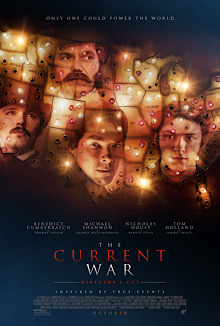
The Current War
In 1880, Thomas Edison has unveiled his electric lightbulb. He plans to distribute power to American neighborhoods using Direct Current (DC), which is cheaper and cleaner than gaslight, but is limited in range and needs an expensive wiring infrastructure. George Westinghouse, a successful business man and inventor himself, wishes to learn more, and invites Edison to dinner. After being snubbed by Edison, Westinghouse sets out to prove alternating current (AC) is the better technology, as it can work over greater distances and at significantly lower cost. Edison and Westinghouse compete to get cities across the United States to use their system. Westinghouse does an AC demonstration at Great Barrington in March 1886. Inventor Nikola Tesla arrives in the United States and begins working with Edison, but is disappointed by Edison's unwillingness to reconsider his ideas and to fulfill what Tesla thought was a financial promise which Edison passes off as just a joke. Tesla then leaves Edison's team. Edison fiercely guards his patents and sues Westinghouse. Edison suggests that AC is dangerous and engages in a publicity war, while Westinghouse stands behind its technical merits. As Edison struggles to find ways to make DC more affordable, Westinghouse attempts to get the high-voltage AC system to work with motors. Edison's wife dies, and Westinghouse is also struck by personal tragedy when his friend Franklin Pope dies in an electrical accident. Both face significant financial risk. To generate funds Edison commercially sells his speaking machine " The Phonograph ". To damage the reputation of AC, Edison shows that it easily electrocutes animals, and secretly works to help the creators of the electric chair, despite his previous objections to manufacturing weapons or other machines of death. The first person to die by electrocution is William Kemmler, and newspapers label the event as "Far Worse Than Hanging". Westinghouse discovers Edison's involvement and reveals it to the press. After an unsuccessful attempt to strike out on his own, Tesla is approached by Westinghouse to work together, and build a practical AC motor. Edison is increasingly marginalized and J. P. Morgan merges Edison Electric into General Electric. The competing systems come to a head as they both put forward proposals to illuminate the 1893 World's Columbian Exposition in Chicago. Samuel Insull presents the bid on behalf of Edison, and Westinghouse presents his competing bid. The fair is abundantly lit, and Westinghouse is successful. At the fair Westinghouse and Edison meet briefly. Edison discusses what it was like to achieve a great invention, and suggests that his next invention (motion pictures) could be so incredible that people might forget his name was ever associated with electricity.

Genius
In 1929, in New York City, Maxwell Perkins is a successful editor at Scribner's and discoverer of great authors such as F. Scott Fitzgerald and Ernest Hemingway. He lives in a "cottage"—actually, a mansion—just outside the city with his wife and five daughters. One day, in his office, he reads the drafts of O Lost, a novel by Thomas Wolfe. Struck by the content, Perkins decides to publish it and begins to collaborate with the author. It is eventually published as Look Homeward, Angel and proves to be a commercial success: 15 thousand copies sold in a month. Perkins and Wolfe become best friends, while Wolfe's relationship with Aline Bernstein, a married woman 20 years his senior, is severely tested after the novel's publication. Max manages to publish Wolfe's successful second novel, Of Time and the River, after several years of exhausting revision. Wolfe is in Paris where he follows the events remotely, thanks to news received from Perkins. On his return to New York, he immediately goes to work, writing his new book. His turbulent character leads him to quarrel with Perkins, destroying the relationship between them, resulting in Wolfe turning to another editor. Aline finally leaves Wolfe, because she feels he needs to experience how to be truly alone. After Perkins has reconciled himself with Wolfe's absence, a phone call comes from Wolfe's mother: he has contracted miliary tuberculosis. Despite surgery, Wolfe shows no signs of improving. After a few weeks he dies but before dying he writes a letter to Max, expressing his immense affection for him.
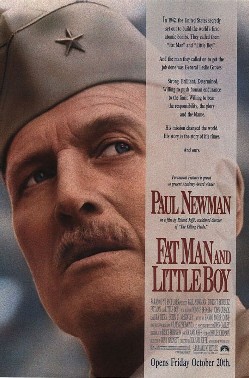
Fat Man and Little Boy
In September 1942, U.S. Army Corps of Engineers Colonel Leslie Groves, who oversaw the construction of the Pentagon, is assigned to head the ultra-secret Manhattan Project, to beat the Germans, who have a similar nuclear weapons program. Groves picks University of California, Berkeley, physicist J. Robert Oppenheimer to head the project team. Oppenheimer was familiar with northern New Mexico from his boyhood days when his family owned a cabin in the area. For the new research facility, he selects a remote location on top of a mesa adjacent to a valley called Los Alamos Canyon, northwest of Santa Fe. The different personalities of the military man Groves and the scientist Oppenheimer often clash in keeping the project on track. Oppenheimer in turn clashes with the other scientists, who debate whether their personal consciences should enter into the project or whether they should remain purely researchers, with personal feelings set aside. Nurse Kathleen Robinson and young physicist Michael Merriman question what they are doing. As Michael works with no protection from radiation during an experiment dubbed Tickling the Dragon's Tail, a probe he is holding slips from an apparatus and he is instantly bathed in a blue light, which is a visible result of a lethal dose of radiation. In the base hospital, nurse Kathleen can only watch as he develops massive swelling and deformation before dying a miserable death days later. While the technical problems are being solved, investigations are undertaken to thwart foreign espionage, especially from communist sympathizers who might be associated with socialist organizations. The snooping reveals that Oppenheimer has had a young mistress, Jean Tatlock, and he is ordered by Groves to stop seeing her. After he breaks off their relationship without being able to reveal the reasons why, she is unable to cope with the heartache and is later found dead, apparently a suicide. As the project continues in multiple sites across America, technical problems and delays cause tensions and strife. To avoid a single point of failure plan, two separate bomb designs are implemented: a large, heavy plutonium bomb imploded using shaped charges (" Fat Man "), and an alternative design for a thin, less heavy uranium bomb triggered in a shotgun or gun-type design (" Little Boy "). The bomb development culminates in a detonation in south-central New Mexico at the Trinity Site in the Alamogordo Desert (05:29:45 on July 16, 1945), where everyone watches in awe the first mushroom cloud with roaring winds, even miles away. Both bombs, Fat Man and Little Boy, are successful, ushering in the Atomic Age.

Hellfighters
Chance Buckman is the head of a Houston -based oil-well firefighting outfit. With a team that includes Joe Horn, Greg Parker, and George Harris, Chance travels around the world putting out blazes at well heads from industrial accident, explosion, or terrorist attack. Chance enjoys the thrills, but longs for ex-wife Madelyn. She divorced him 20 years earlier, taking their daughter Letitia with her, because Madelyn could not bear to see her husband risk his life. Though they love each other, Madelyn could not deal with her terror that Chance might be badly injured or burn to death in a fire. While extinguishing a burning wellhead, Chance suffers a near-fatal accident when he is crushed by a bulldozer blade. Against his wishes, his daughter Letitia (Tish) visits him in the hospital, summoned by his old friend and former firefighting partner Jack Lomax and fetched by Greg Parker in the Buckman Company's corporate jet. She also pursues Greg Parker to a well fire in Louisiana despite Greg's notorious reputation for using fires to pick up women (generally, any woman he takes to a fire ends up in bed with him). In the case of Buckman's spitfire of a daughter, however, after considerable initial friction, Greg and Tish fall in love and marry five days after their first meeting. In spite of Greg's reputation, Buckman comes to trust his daughter's choice and accepts Greg into the family. Madelyn, projecting her own fears onto her daughter, though gracious, is rather less accepting, despite her liking for Greg. Greg suspects that his new father-in-law is growing increasingly protective of him after the marriage in an effort to protect his daughter from heartbreak should her new husband be harmed or killed. Tish wishes to see the fires that her husband and father fight, which neither man encourages. Her father relents and allows her to accompany Greg into the field. Chance, trying to reunite with his ex-wife, leaves the Buckman Company to accept an executive position with his old friend Jack Lomax on the board of directors of Lomax Oil as a way to win her back. Chance gives his company to his son-in-law as a "wedding present", although Greg's pride compels him to tell Buckman he "doesn't want any gifts" and that he will "pay twice what it's worth." Greg and Tish begin traveling the world to put out oil fires. Soon, the older couple announce that they will remarry, to the delight of Tish. Madelyn is happy to see her husband in a safe job, but before too long, Chance becomes bored with corporate life and longs to be back in the field. As Jack Lomax earlier told Tish, "Your father is the best there is at what he does. No man can walk away from that." Greg encounters problems with a fire in Venezuela —five oil wells in a tight line burning all at once, further compounded by guerrillas who are trying to undermine the operation. He asks Chance to return and help fight the fire. Chance does so without hesitation. Buckman goes to Venezuela in a Texas Air National Guard transport full of firefighting gear, unaware that Madelyn and Tish have followed him to Caracas. Madelyn uses Jack Lomax's influence with the president of Venezuela to get Tish and herself to the oilfield where the fire is burning. Madelyn declares "This is it for me," in the sense that it will either make or break her ability to deal with the fires once and for all, fully aware that her relationship with Chance is on the line. The Hellfighters put out the fires with the help of the Venezuelan Army, while under attack by rebel warplanes that strafe the oilfield. Madelyn explodes in anger at what she perceives as the Venezuelans' inability to protect the team from the unexpected air raid, railing at the Venezuelan army and civil officials for allowing the guerrillas to get close enough to attack. Chance pulls her away during her tirade. She snaps, "Damned if I understand your attitude!", to which he replies, "It's very simple—you'll do." When Greg asks Tish for her take on it, she just smiles and says, "I think we ought to get her a tin hat," referring to the bright red hardhats with the Buckman Company logo worn by the Hellfighters.

Hard to Be a God
A group of 30 scientists travel from Earth to a nearly-identical alien planet that is culturally and technologically centuries behind. The inhabitants of this planet have brutally suppressed a renaissance movement, murdering anybody they consider to be an intellectual, and thus the planet is stuck in the middle ages. Anton, one of the scientists from Earth, is sent to infiltrate the local populace of the Kingdom of Arkanar and help them progress as a society, although he is forbidden from getting involved with local politics or forcibly interfering with the advancement of technology or culture. He assumes the identity of Don Rumata, a nobleman who resides in a large castle surrounded by poverty. There, he lives with Ari, a young woman whom he has taken as his bride, and the juvenile prince of Arkanar. Rumata's presence divides local opinion; some treat him as a God, others despise him. Don Rumata tasks himself with finding Budakh, a doctor who has been kidnapped by Don Reba, the tyrannical prime minister of Arkanar. Reba's militia, referred to as "the Greys", are responsible for the murder of many intellectuals, including scientists and writers. During his travels, Rumata witnesses the backward ways of the locals and becomes increasingly frustrated with them. Slavery is rife, and the influence of Reba's Greys turns Arkanar into a police state. One night, while guarding the prince, the Greys besiege the castle and attempt to arrest Rumata. Rumata attempts to escape, but is ambushed and taken before his rival, Don Reba. Reba does not trust Rumata and claims he is an impostor. Rumata reasons with Reba and is freed, along with Budakh. Later, Rumata meets his friend Pampa, a drunken and washed-up baron. Rumata teaches Pampa his famed signature sword-fighting technique. When Rumata returns to his castle, he finds the local area has been taken over by religious zealots in his absence, called "the Blacks", who prove to be just as oppressive as the Greys. Rumata discovers that Budakh is an impostor, and that the real Budakh is still imprisoned at Don Reba's castle. He returns to Reba on peaceful terms and searches the sewers of the castle for Budakh. He eventually finds him, as well as Baron Pampa, who has been tortured by Reba's men. Rumata, Pampa and Budakh escape Reba's castle, but Pampa is shot by archers and killed. Upon returning to his village, Rumata becomes annoyed when he discovers that Budakh, apparently a great doctor and intellectual, is actually a bumbling fool who is unable to even urinate properly. He sends Budakh away and retires to his castle. The next day, the Greys attack the castle and kill Ari. Enraged, Rumata butchers their leader. The next morning, a group of travelers investigates the aftermath of the ensuing battle, which has cost the lives of most of Arkanar's inhabitants. Among the dead civilians and soldiers, they find a lone survivor, Don Rumata. The leader of the travelers, another incognito scientist from Earth, offers to take Rumata back to Earth, but Rumata refuses. He instead gives the fellow scientist advice—that it is "hard to be a God". Months later, during the winter, Rumata is shown traveling away from Arkanar.

The Heroes of Telemark
The Norwegian resistance sabotage the Vemork Norsk Hydro plant in the town of Rjukan in the county of Telemark, Norway, which the Nazis are using to produce heavy water, which could be used in the manufacture of an atomic bomb. Rolf Pedersen, a Norwegian physics professor, who, though originally content to wait out the war, is soon pulled into the struggle by local resistance leader Knut Straud (based on Knut Haukelid). Rolf's ex-wife Anna also becomes involved in the effort, and her relationship with Rolf reignites. Rolf and Knut sneak out of Norway on a passenger steamship to Britain that they hijack so they can deliver microfilmed plans of the hydroelectric plant to the British, who are impressed by the information. Then the two return to Norway by parachute to plan a commando raid against the plant. When a British plane carrying a force of Royal Engineers to undertake the raid is shot down over Norway by the Germans, Pedersen and Straud lead a small force of Norwegian saboteurs into the plant. The raid is successful, but the Germans quickly replace and repair the equipment. A Quisling (traitor) saboteur worms his way into the resistance group, after they debate whether to shoot him or not. He ends up escaping and betraying them, so that a German plane blows up their safe house. When the Nazis and the saboteur pursue Rolf and Knut, Rolf and the saboteur end up alone, and Rolf kills him. When Rolf and Knut learn of German plans to ship steel drums of heavy water to Germany, they sabotage the ferry carrying the drums, and it sinks in the deepest part of a fjord. Rolf himself ends up on the ferry when he sees a resistance comrade's widow and her young child getting aboard; Rolf improvises a "game" whereby all the children on board practise with lifejackets at the stern of the ship. Thus, when the ferry sinks, the children, and Rolf and the widow, are able to escape. Knut and Anna, in a small boat, come and help rescue passengers.

The Bank
The film opens with a group of primary school children in 1977, who have a Victoria State Central Bank representative, Mr.Johnson, who give them lessons on saving and give them the chance to open their first checking account, and telling them that if they will put in any money for 25 years, at the end they will eventually set aside $727,000. In the present, the Centa Bank's board of directors orders CEO Simon O'Reily to find a way to increase profits. Then he discovers the work of a mathematician, Jim Doyle, whose software B.T.S.E., based on fractal geometry of Benoit Mandelbrot makes it possible to predict stock market trends. Doyle is hired by O'Reily and supplied with the best computer hardware. He befriends Vincent, who had advised O'Reily to hire him, and enters into a relationship with his colleague Michelle Roberts, who views O'Reily's business activities critically. Meanwhile, the couple Diane and Wayne Davis, who took out a loan in a foreign currency at the bank, become insolvent. The son of the couple is found dead after a meeting with the deliverer of the eviction notice. The Davises hire a lawyer, Stephen O'Connor, to sue the bank on the grounds that they were not informed about the risks of a loan in foreign currency. Invited by O'Reily to a party at his house, Jim takes Michelle, she insults the landlord and the relationship between her and Jim is broken, because he is hiding something and don't want to open up with her. O'Reily asks Jim to change his attitude to him and their business and ask him as a proof of loyalty to falsely state in court that he was present as an intern in the bank's loan counseling to the Davises and that Wayne Davis was sufficiently informed. That causes the Davises to lose their lawsuit. This also causes the final breakup between Jim and Michelle; the latter then decides to investigate Jim's past. Jim informs his boss that a stock market crash will soon occur. Michelle finds out in Jim's hometown that his real name is not Jim Doyle but Paul Jackson; the bank had terminated his father's credit, whereupon his father committed suicide. A man who watches Michelle on behalf of O'Reily learns the truth and warns O'Reily. O'Reily wants to stop the bank's stock sale in that moment, but Wayne Davis breaks into O'Reily's house to shoot him. O'Reily offers him two million dollars if Davis allows him to make a phone call. Wayne realizes that it would be a very important call for the bank, so he destroys the house's power-box to stop this important phone call, which is intended to warn the bank of Jim's plans, and leaves the estate. Stock prices initially perform as expected, but then they rise instead of falling. The bank goes bankrupt after losing $50 billion. Jim leaves the country. He meets Michelle for the last time and tells her that the money has partly been lost forever and partly has been "redistributed". Then ask to her to come after him before departure, which she refuses. The Davises discover at an ATM that their bank balance is $727,000 - an amount referenced in the opening credits. They want to clarify the matter at the neighboring bank branch, but it is one of the many branches that have been closed by O'Reily. They decide to keep the money.

The International
Louis Salinger, an Interpol detective, and Eleanor Whitman, an Assistant District Attorney from Manhattan, are assigned to investigate the International Bank of Business and Credit (IBBC), which funds criminal activities such as money laundering, terrorism, arms trading, and the destabilization of governments. Salinger's and Whitman's investigation takes them to Milan, where the IBBC assassinates Umberto Calvini, an arms manufacturer and Italian prime ministerial candidate. The assassin diverts suspicion to a local assassin with political connections to the Red Brigades, who is then promptly killed by a corrupt policeman. Salinger and Whitman get a lead on the second assassin, but the policeman confronts the two and orders them out of the country. At the airport, they are able to check the security camera footage for clues on the whereabouts of the bank's assassin, and follow a suspect to New York City. In New York, Salinger and Whitman are met by two New York Police Department detectives, Iggy Ornelas and Bernie Ward, who have a photograph of the assassin's face. Salinger, Ornelas, and Ward locate Dr. Isaacson to whose practice the assassin's leg brace has been traced, and they are able to follow him to the Solomon R. Guggenheim Museum. Jonas Skarssen, the chairman of the IBBC, reveals to his lawyer White and security adviser Wexler that Calvini was killed so that they could have his sons buy missile guidance systems in which the bank has invested. Since the bank knows that Salinger and Whitman are close to finding their assassin, they send a team of hitmen to kill him, while Wexler is arrested by Ornelas. As Salinger and Ward speak to the assassin and attempt to arrest him, a shootout at the Guggenheim erupts when a number of gunmen attack them. Ward is killed in the chaos, and Salinger is forced to team up with the assassin to fight off the gunmen. However, the assassin is mortally wounded during their escape and dies of his injuries. When Salinger goes to interrogate Wexler, a veteran Stasi officer, the latter reveals that the IBBC is practically untouchable due to its connections to terrorist organizations, drug cartels, governments, and powerful corporations, though Wexler indicates a willingness to help Salinger take down the IBBC. Meanwhile, Salinger persuades Whitman to let him continue alone. In Italy, Salinger tells Calvini's sons of the IBBC's responsibility for their father's murder, prompting them to cancel the deal with the bank and order White to be killed. Salinger then accompanies Wexler to Istanbul, where Skarssen is buying the guidance systems from their only other manufacturer, Ahmet Sunay. Salinger attempts to record the conversation so that he can obstruct the deal by proving to the buyers that the missiles will be useless, but he ultimately fails. Both Wexler and Skarssen are then killed by a hitman contracted by the Calvinis to avenge their father's murder. Salinger is left stunned, his investigation, pursuit, and determination to bring down the IBBC having led to nothing. Afterwards, the bank successfully continues its operations despite the death of Skarssen, as he had predicted to Salinger before he was killed. However, with the new and more aggressive chairman Francis Ehames, the IBBC's increased expansion and aggression ultimately lead to greater scrutiny, leading to a United States Senate investigation headed by Whitman.

Secret Window
After catching his wife Amy having an affair with their friend Ted, mystery writer Mort Rainey retreats to his cabin in upstate New York. Six months later, Mort, depressed and suffering from writer's block, has delayed finalizing the divorce. A man named John Shooter arrives at the cabin and accuses Mort of plagiarizing his short story, "Sowing Season". Upon reading Shooter's manuscript, Mort discovers it is virtually identical to his own story, "Secret Window", except for the ending. The following day, Mort, who once plagiarized another author's story, tells Shooter that his story was published in a mystery magazine before Shooter's, invalidating his claim. Shooter demands proof and warns Mort against contacting the police. That night, Mort's dog, Chico, is found dead outside the cabin, along with a note from Shooter giving Mort three days. Mort reports the incident to Sheriff Newsome. Mort drives to his and Amy's house to retrieve a copy of the magazine, but he leaves because Ted and Amy are there. Mort hires private investigator Ken Karsch, who stakes out the cabin and speaks to Tom Greenleaf, a local resident. At the cabin, Shooter appears and demands that Mort revise the ending of his story, giving it Shooter's twist, in which the protagonist kills his wife. When a fire destroys Amy and Mort's house, and presumably the magazine, Mort tells the police that he has an enemy. Mort and Karsch agree to confront Shooter but first plan to meet up with Greenleaf at the local diner the next morning, but neither Karsch nor Greenleaf show up. On his way home, Mort encounters Ted, who demands that Mort sign the divorce papers. Believing Shooter is in Ted's employ, Mort refuses. Later, Shooter summons Mort; when he arrives, Mort finds Karsch and Greenleaf dead. Shooter tells Mort he killed the two men because they "interfered." He warns Mort that he has implicated him in their murders and implies Mort should dispose of the bodies. Mort agrees to meet Shooter at his cabin to show him the magazine containing his story, which has been sent overnight by his agent. Mort disposes of the bodies. Mort retrieves the package containing the magazine from the post office but finds that it has already been opened; the pages containing his story have been cut out. After a series of startling events, Mort realizes that Shooter is a figment of his imagination, unwittingly created to cope with his anger and carry out malevolent tasks that Mort cannot do – like killing Chico, Greenleaf, and Karsch, as well as burning down Amy's home. Amy arrives at the cabin, finding it ransacked, and she sees the word "SHOOTER" carved repeatedly on the walls and furniture. Mort appears, having been taken over by the "Shooter" persona. Amy realizes the name "Shooter" represents Mort's desire to "SHOOT HER". Mort stabs Amy in the leg. Ted arrives and is killed by Mort while Amy watches helplessly. Mort approaches her while reciting the ending of "Sowing Season". Months later, Mort has recovered from his writer's block, and his passion for life has returned. He is feared and shunned in town because of the rumors about the murders. Sheriff Newsome arrives and tells Mort that he is the prime suspect and that the bodies will eventually be found. Mort passively dismisses the threat and tells Newsome that the ending to his new story is "perfect". It is implied that Amy and Ted's bodies are buried under the corn growing in Mort's garden.