Genre: Drama (Page 17)
Browse 989 movies in the Drama genre.
All Genres
A Prophet
Malik El Djebena, a 19-year-old of Maghrebi descent, is sentenced to six years in prison for attacking police officers. Alone and illiterate upon his arrival, he falls under the sway of Corsican mobsters, led by César Luciani, who enforces a brutal rule. The prison is divided between two main factions: the Corsicans and the Maghrebis. Malik keeps to himself. When Luciani forces him to be the unwilling assassin of Reyeb, a Maghrebi witness in a trial, Malik gains the protection of the Corsicans despite his North African origin. Malik serves as a low-level servant to the Corsicans, who treat him with disdain. All the while, he is haunted by visions of the murdered Reyeb. When most of the Corsicans are transferred or released, Luciani is forced to give Malik more responsibility. Having secretly learned Corsican, Malik acts as Luciani's eyes and ears in the prison. When Malik earns the privilege of day-long furloughs outside the prison, Luciani relies on him to conduct Luciani's criminal business outside. Ryad, a Maghrebi friend, teaches Malik to read and write, and the two become close. Ryad teaches Malik about his own heritage, introducing him to two other Maghrebis, Tarik and Hassan, and increases his power within the prison. Malik also becomes involved with a prison drug dealer, Jordi. When Ryad gains an early release due to testicular cancer, the three partners organize a drug-running enterprise to sell hashish. But when Ryad is kidnapped by the drug dealer Latif, Malik tracks down Latif's relative inside the prison. He kidnaps the relative's family and forces Latif's gang to release Ryad. When Luciani discovers that Malik is using his day-releases for his own personal enterprise, he punishes him by pressing a spoon against his eye. Later on, Malik is sent by César to meet Brahim Lattrache in Marseille, another Maghrebi, who is involved in a deal between Luciani and the Lingherris, an Italian mafia group. Lattrache is bitter toward the Corsicans for the murder of Reyeb and holds Malik at gunpoint. When Malik spots a deer warning sign, he remembers a recent dream of deer running in the road. He tells his kidnappers that they are in danger of hitting wild animals, and they suddenly strike a deer. Lattrache is impressed by Malik, calling him a prophet and agreeing to conduct criminal business with him instead of Luciani, even though Malik admitted that he killed Reyeb. Luciani believes there is a "mole" in his organization and decides to use Malik to assassinate Jacky Marcaggi, the don of the Corsican mafia, for secretly dealing with the Lingherris. But Malik and Ryad have their own plan for Marcaggi: they kill his bodyguards, kidnap him, and tell him that it was Luciani who ordered the hit before abandoning him in the city. Malik takes refuge at Ryad's house. The friend's cancer has returned: Ryad's decision to forego more chemotherapy leaves him just six months to live. He gets Malik to promise to take care of his family (wife and young son) when he's gone. Upon Malik's return to prison, he is placed in solitary for returning late on purpose - putting him temporarily out of reach of Luciani's retribution - while Marcaggi uses his influence to wipe out Luciani's faction. Once back in general population, Malik joins the Maghrebi faction in the yard as their new leader. When a now powerless Luciani tries to approach him, two Maghrebis intercept and beat him. On the day of his release, Malik is met by Ryad's wife and son outside the prison. They walk off together, followed by a convoy of vehicles carrying Malik's new associates.

Loving Vincent
One year after Vincent van Gogh 's suicide, postman Joseph Roulin asks his son Armand to deliver Van Gogh's last letter to his brother, Theo. Roulin finds the death suspicious, as merely weeks earlier Van Gogh claimed through letters that his mood was calm and normal. Armand reluctantly agrees and heads for Paris. Père Tanguy, a Montmartre art supplier, tells Armand that Theo actually died six months after Vincent. He suggests that Armand travel to Auvers-sur-Oise and look for Dr. Paul Gachet, who housed Van Gogh after his release from an asylum, shared his love for art, and attended the funeral. Once there, Armand learns that the doctor is out on business, so he stays at the same inn that Van Gogh did during his time in the area. There, he meets the temporary proprietress Adeline Ravoux, who was fond of Van Gogh and also surprised by his death. At her suggestion, Armand visits the local boatman, who informs him that Van Gogh kept close company with Dr. Gachet's sheltered daughter, Marguerite. When Armand visits her, Marguerite denies and is angered when Armand implies that Van Gogh's suicidal mood could have resulted from an argument with her father. Throughout the investigation, Armand begins to suspect a local boy named René Secretan, who reportedly liked to torment Van Gogh, owned a gun, and had often drunkenly brandished it around town. Dr. Mazery, who examined Van Gogh, also claims that the shot must have come from a few feet away, ruling out suicide. When Armand implicates René, Marguerite confesses that she was in close, but not romantic, relations with Van Gogh, but she does not believe that René was capable of murder. Dr. Gachet finally returns and promises to deliver Armand's letter to Theo's widow. He admits there was an argument between them – Van Gogh accused Gachet of being a coward for not pursuing his dreams, to which Gachet angrily accused Van Gogh of worsening Theo's health by overly depending on his brother. Gachet posits that this accusation drove Van Gogh to suicide in order to release Theo from the burden. After Armand returns home, postman Roulin later receives word from Theo's widow, Johanna, thanking Armand for returning the letter. Johanna attaches to her letter to Armand one of Van Gogh's letters to her – signed, "Your loving Vincent."
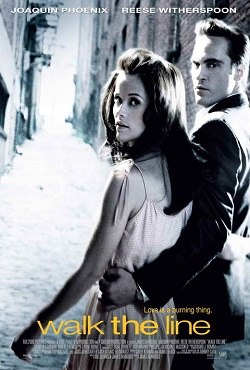
Walk the Line
The film begins in 1968 with Johnny Cash performing at Folsom State Prison. As the audience of inmates cheer him on, Cash waits backstage near a table saw, which reminds him of his early life. Two decades earlier, in 1944, 12-year-old Johnny is raised on a cotton farm in Dyess, Arkansas, with his brother Jack, his abusive father Ray, his mother Carrie, and his two sisters. One day, Jack is killed in a sawmill accident while Johnny is out fishing. Ray blames Johnny for Jack's death, saying that the Devil "took the wrong son". In 1950, Johnny enlists in the U.S. Air Force and is stationed in West Germany. While there, he purchases a guitar and finds solace in writing songs, including " Folsom Prison Blues ", which he develops in 1952. After his discharge from the military in 1954, Johnny returns to the United States and marries his girlfriend, Vivian Liberto. The couple moves to Memphis, Tennessee, where Cash works as a door-to-door salesman to support his growing family, but with little success. One day, Johnny walks past a recording studio and is inspired to form a band to play gospel music. He and his band audition for Sam Phillips, the owner of Sun Records, and Phillips signs them after they play "Folsom Prison Blues." The band tours as Johnny Cash and the Tennessee Two, along with other rising stars Elvis Presley, Carl Perkins, Roy Orbison and Jerry Lee Lewis. Johnny meets country music singer and songwriter June Carter while on tour and is immediately smitten. He tries to woo her, but she gently rebuffs his attempts. Despite this, they become friends. As Johnny grows up, he begins abusing drugs and alcohol, and over the objections of Vivian, he persuades June to go on tour with him. The tour is a success, but backstage, Vivian becomes critical of June's influence over Johnny. After one performance in Las Vegas, Johnny and June sleep together. The next morning, June notices Johnny taking pills and begins to doubt her choice to be with him. At their concert that evening, Johnny is upset by June's apparent rejection and behaves erratically, eventually passing out on stage. June is upset with Johnny's behavior and decides to dispose of his drugs. She begins to write " Ring of Fire " as a way to describe her feelings for him and the pain she feels as she watches him descend into addiction. After returning to California, Johnny travels to Mexico to purchase more drugs and is arrested. Soon after, Johnny's marriage to Vivian implodes; they divorce, and he moves to Nashville, Tennessee, in 1966. Johnny buys a large house near a lake in Hendersonville, Tennessee, in an attempt to reconcile with June. Ray and other members of the extended Carter family arrive for Thanksgiving, where Ray and Johnny get into an argument, and June's mother urges June to help Johnny. Johnny goes into detox and awakens next to June, who says they have been given a second chance. They begin a tentative relationship, but June resists Cash's marriage proposals. Later, Johnny records an album live at Folsom Prison after discovering that most of his fan mail is from prisoners. The performance is a success, and Johnny embarks on a tour with June and his band. At the end of the film, Johnny invites June to join him for a duet but stops in the middle of the song and tells her that he can't sing " Jackson " anymore unless she agrees to marry him. June accepts, and they share a passionate embrace on stage. Later, Johnny and his father reconcile their relationship while they are with their families.

Captain Fantastic
Ben Cash, his wife Leslie, and their six children live an isolated existence on ten acres in the mountainous Washington wilderness. They are left-wing anarchist activists disillusioned by capitalism and American life, who choose to instill survivalist skills and left-wing politics and philosophy in their children. They educate them to think critically, and train them to be physically fit, athletic, and self-reliant without dependence on modern technology. They are raised to coexist with nature, are given unique names, and celebrate Noam Chomsky 's birthday instead of Christmas. The children are accustomed to reading many forms of college-level literature, and, while showing high aptitude and intelligence beyond their years, they are socially awkward as they have not been socialized with the outside world. Ben has been raising the children on his own while Leslie is hospitalized in New Mexico for bipolar disorder, away from her family and near her wealthy elitist parents. She dies by suicide while undergoing treatment, and Ben learns that her father, Jack Bertrang, plans to hold a Christian burial, despite Leslie being a philosophical Buddhist who abhorred religion. Ben tries to persuade Jack to honor Leslie's wish to be cremated, to no avail, and Jack forbids Ben to attend the funeral, threatening to have him arrested if he comes. Ben initially decides not to go and prevents his children from doing so, but then changes his mind, driving his children across the country in a repurposed school bus. The family briefly stays at the home of Ben's sister, Harper. She and her husband try to convince Ben that the children should attend school to receive a conventional education; Ben quizzes Harper's children and his children on various topics, such as the Bill of Rights, showing that his children are far better educated than Harper's. Ben arrives at Leslie's funeral with their children against Jack's wishes and reads her will, which instructs her family to cremate her and flush her ashes down a toilet, in the hopes of convincing Jack to honor her wishes, only for Jack to have him forcibly removed from the church. Angered by Jack's refusal to honor Leslie's wishes, Ben follows the funeral procession to the cemetery, planning to intervene, despite a police presence and Jack's threat to have him arrested. Ben only relents at his children's insistence that they cannot lose both of their parents. After this, some of Ben's children start to doubt him and his parenting skills, with his second eldest son and middle child Rellian accusing him of failing to treat Leslie's mental health, and eldest son Bodevan accusing him of not equipping them for the real world, showing him acceptance letters from several top Ivy League colleges to which Leslie had helped him apply. Ben finds a note from Rellian, who has run away to live with his grandparents. When Ben visits Jack to get Rellian back, he refuses to go back with him, wanting to stay with his grandparents. Jack berates Ben and accuses him of child abuse, telling him he is filing for custody of all of Ben's children. When one of Ben's older twin daughters Vespyr tries to clandestinely exfiltrate Rellian from their grandparents on Ben's orders, she falls from the roof and narrowly avoids breaking her neck. Ben, shocked and guilty when the hospital tells him how close she was to death, allows Jack to take his children. Jack assures Ben he's making the right choice by leaving his children in their care, and Ben drives off in his bus, feeling sad without his children. However, the children dislike living in their grandparents' capitalist environment and miss their father, so have stowed away in the family bus, and reconcile with their father. The children desire to honor Leslie's final wishes, and persuade Ben to help them. Exhuming her corpse, they burn it on a funeral pyre by the ocean, and perform a singing ceremony in her memory. As per her wishes, they then flush her ashes down an airport toilet. Bodevan then leaves the family to travel to Namibia, while the rest return home. The final scene shows the children eating breakfast around the kitchen table with their father and getting ready for the school bus.

The Chaser
Joong-ho is a dishonest pimp and former police detective who is in financial trouble because two of his prostitutes have gone missing. One night, he commands Mi-jin to service a customer, despite her protests over her sickness. Joong-ho then realizes this customer was the last to see his missing girls. Believing that this customer is trafficking his women, Joong-ho nevertheless sends Mi-jin in so that she can forward the customer's address to him. Joong-ho contacts his old police task force for help, but they cannot assist because the mayor of Seoul, whom they were guarding, has been attacked with feces; this results in the police suffering a media firestorm. The customer, Yeong-min, takes Mi-jin back to the house but Mi-jin fails to contact Joong-ho due to the bathroom having no cell service. Yeong-min binds Mi-jin, but her struggles prevent her murderer with a chisel, so Yeong-min hits her with a hammer, knocking her out. Just then, an elderly couple from the local church arrives, inquiring about the real house owner, Mr. Park; they recognize his dog. Yeong-min then invites the elderly couple in and murders them. Joong-ho, only aware of the customer's district, searches. Yeong-min tries to ditch the couple's car, but collides with Joong-ho's car. Joong-ho's suspicions are aroused as Yeong-min has blood on his shirt and refuses to give his phone number. Joong-ho calls the customer's number and Yeong-min's phone rings. Yeong-min flees but is caught and beaten by Joong-ho. Both men are arrested by a local cop. At the station, Yeong-min casually admits that he committed nine murders. Competing police divisions argue over who will investigate the high-profile unsolved murders in the area. Despite the confession, the police have no physical evidence so they cannot detain Yeong-min for long. Yeong-min reveals Mi-jin is alive, but the police doubt it. Joong-ho goes to Mi-jin's apartment to collect DNA samples, and from there he takes Mi-jin's daughter Eun-ji with him while he follows up a lead in Yeong-min's hometown. Joong-ho learns that Yeong-min was jailed for three years for lobotomizing his nephew. Another prostitute informs Joong-ho that Yeong-min is impotent. When Yeong-min is questioned about his impotency being part of his motive, he attacks the interrogator. Joong-ho's assistant finds a room where Yeong-min had once lived; Joong-ho discovers religious drawings on the room's walls. Eun-ji wanders off while following a woman who looks like her mother, then meets with an accident and is brought to a hospital by Joong-ho. Yeong-min provides a false lead after being beaten again by Joong-ho. The prosecutor discovers Yeong-min's injuries and demands Yeong-min's release, refusing to wait for DNA test results. Saying that Yeong-min's arrest will be seen as the police's attempt to save face, the prosecutor demands Joong-ho's arrest for injuring Yeong-min. Joong-ho is handcuffed and attacks his former teammates to escape; one of them frees him. Meanwhile, Mi-jin frees herself and escapes from the house. Badly injured, she finds help at a nearby corner shop and hides in the back. The police are informed, but the nearest officers are fast asleep. Yeong-min stops at the same shop to buy cigarettes. Not knowing Yeong-min is the attacker himself, the shopkeeper tells him about Mi-jin's story, asking him to stay to protect them from the attacker while they await the police. Yeong-min uses the shopkeeper's hammer to murder both her and Mi-jin. Alerted by police sirens, Joong-ho arrives to find the police have cordoned off the bloody shop. Yeong-min escapes off-camera back to Mr. Park's house, where he stores Mi-jin's severed head and hands in a fish tank. Yeong-min buries the elderly couple and kills Mr. Park's dog. The humiliated police throw everything into the search for Yeong-min, while the story is leaked to the public. A distraught Joong-ho follows a lead to the local church and then notices that a church statue matches the drawings he had seen in Yeong-min's old room. As Mr. Park was the sculptor and Yeong-min his "assistant", the deacon points Joong-ho to Mr. Park's house. Joong-ho enters the residence, interrupting Yeong-min's departure. They fight, with Joong-ho ultimately getting the upper hand, but the police arrive and restrain Joong-ho from killing Yeong-min. Yeong-Min is taken away while the police excavate the yard, finding several bodies. The film ends with Joong-ho sitting silently by Eun-ji in her hospital room, holding her hand.

The Promised Land
Karol Borowiecki (Daniel Olbrychski), a young Polish nobleman, is the managing engineer at the Bucholz textile factory. He is ruthless in his career pursuits, and unconcerned with the long tradition of his financially declined family. He plans to set up his own factory with the help of his friends Max Baum (Andrzej Seweryn), a German and heir to an old handloom factory, and Moritz Welt (Wojciech Pszoniak), an independent Jewish businessman. Borowiecki's affair with Lucy Zucker (Kalina Jędrusik), the wife of another textile magnate, gives him advance notice of a change in cotton tariffs and helps Welt to make a killing on the Hamburg futures market. However, more money has to be found so all three characters cast aside their pride to raise the necessary capital. On the day of the factory opening, Borowiecki has to deny his affair with Zucker's wife to a jealous husband who, himself a Jew, makes him swear on a sacred Catholic object. Borowiecki then accompanies Lucy on her exile to Berlin. However, Zucker sends an associate to spy on his wife; he confirms the affair and informs Zucker, who takes his revenge on Borowiecki by burning down his brand new, uninsured factory. Borowiecki and his friends lose all that they had worked for. The film fast forwards a few years. Borowiecki recovered financially by marrying Mada Müller, a rich heiress, and he owns his own factory. His factory is threatened by a workers' strike. Borowiecki is forced to decide whether or not to open fire on the striking and demonstrating workers, who throw a rock into the room where Borowiecki and others are gathered. He is reminded by an associate that it is never too late to change his ways. Borowiecki, who has never shown human compassion toward his subordinates, authorizes the police to open fire nevertheless.


The Adventures of Prince Achmed
An African sorcerer conjures up a flying horse, which he shows to the Caliph. When the sorcerer refuses to sell it for any amount of gold, the Caliph offers any treasure he has. The sorcerer chooses Dinarsade, the Caliph's daughter, to her great distress. Prince Achmed, Dinarsade's brother, objects, but the sorcerer persuades him to try out the horse. The prince does not know how to control the horse, so it carries the prince away, higher and higher into the sky. The Caliph has the sorcerer imprisoned. When Achmed discovers how to make the horse descend, he finds himself in a strange foreign land, a magical island called Wak Wak. He is greeted by a bevy of attractive maidens. When they begin fighting for his attention, he flies away to a lake. There, he watches as Pari Banu, the beautiful ruler of the land of Wak Wak, arrives with her attendants to bathe. When they spot him, they all fly away, except for Pari Banu, for Achmed has her magical flying feather costume. She flees on foot, but he captures her. He gains her trust when he returns her feathers. They fall in love. She warns him, however, that the demons of Wak Wak will try to kill him. The sorcerer frees himself from his chains. Transforming himself into a bat, he seeks out Achmed. The prince chases the sorcerer (who has turned into a kangaroo) and falls into a pit. While Achmed fights a giant snake, the sorcerer takes Pari Banu to China and sells her to the Emperor. The sorcerer returns and pins Achmed under a boulder on top of a mountain. However, the Witch of the Flaming Mountain notices him and rescues Achmed. The sorcerer is her arch-enemy, so she helps Achmed rescue Pari Banu from the Emperor. Then, the demons of Wak Wak find the couple and, despite Achmed's fierce resistance, carry Pari Banu off. Achmed forces a captive demon to fly him to Wak Wak. However, the gates of Wak Wak are locked. He then slays a monster who is attacking a boy named Aladdin. Aladdin tells of how he, a poor tailor, was recruited by the sorcerer to retrieve a magic lamp from a cave. When Aladdin returned to the cave entrance, the sorcerer demanded the lamp before letting him out. Aladdin refused, so the sorcerer sealed him in. Aladdin accidentally released one of the genies of the lamp and ordered it to take him home. He then courted and married Dinarsade. One night, Dinarsade, Aladdin's magnificent palace, and the lamp disappeared. Blamed by the Caliph, Aladdin fled to avoid being executed. A storm at sea cast him ashore at Wak Wak. When he tried to pluck fruit from a "tree", it turned into a monster and grabbed him, but Achmed killed it. Achmed realizes the sorcerer had been responsible for Aladdin's fate, and is further enraged. He also reveals to Aladdin that his palace and the lamp were stolen by the sorcerer because of his obsession for Dinarsade. Then, the witch arrives. Since only the lamp can open the gates, she agrees to attack the sorcerer to get it. They engage in a magical duel, each transforming into various creatures (Sorcerer transforms into a lion, a scorpion, a vulture and a sea serpent and Witch transforms into a snake, a rooster and a whale). After a while, they resume their human forms and fling fireballs at each other. Finally, the witch slays the sorcerer. With the lamp, they are able to enter Wak Wak, just in time to save Pari Banu from being thrown to her death. A fierce battle erupts. A demon steals the lamp, but the witch gets it back. She summons creatures from the lamp who defeat the demons. One hydra -like creature seizes Pari Banu. When Achmed cuts off one of its heads, two more grow back immediately, but the witch stops this regeneration, allowing Achmed to kill it and rescue Pari Banu. A flying palace then settles to the ground. Inside, Achmed, Pari Banu, Aladdin, and the Caliph find Dinarsade. The two couples bid goodbye to the witch and fly home to the palace.

The Insider
CBS producer Lowell Bergman convinces the founder of Hezbollah, Sheikh Fadlallah, to grant an interview to Mike Wallace for 60 Minutes. Wallace and Bergman firmly stand their ground against the Sheikh's armed and hostile bodyguards, who attempt to intimidate and disrupt their interview preparations. Later, Bergman approaches Jeffrey Wigand—a former executive at the Brown & Williamson tobacco company—for help explaining technical documents. Wigand agrees but intrigues Bergman when he insists that he will not discuss anything else, citing a confidentiality agreement. Brown & Williamson coerces Wigand into a more restrictive agreement, leading Wigand to accuse Bergman of betraying him. Bergman subsequently visits Wigand to defend himself and investigate the potential story. Although Wigand apparently possesses very damaging information, he hesitates to reveal anything, fearing that it will jeopardize his severance package from Brown & Williamson. Wigand's family moves into a more modest house, and Wigand begins working as a teacher. One night, Wigand finds evidence of trespass and receives a sinister phone call. Meanwhile, Bergman contacts Richard Scruggs, an attorney representing Mississippi in a lawsuit against the tobacco industry. Bergman suggests that if they depose Wigand, making his information public, it can give CBS cover to broadcast the information; Scruggs expresses interest. Wigand receives an emailed death threat and finds a bullet in his mailbox. He contacts the FBI, but the agents who visit him are hostile and confiscate his computer. Furious, Wigand demands that Bergman arrange an interview, during which Wigand states that he was fired after objecting to Brown & Williamson intentionally making their cigarettes more addictive. Bergman arranges a security detail for Wigand's home, and the Wigands experience marital stress. Wigand testifies in Mississippi, despite attempts of intimidation and legal suppression by Brown & Williamson attorneys. After returning home, he discovers that his wife Liane has left him and taken their daughters. Eric Kluster, the president of CBS News, decides not to broadcast Wigand's interview after CBS legal counsel Helen Caperelli warns that the network is at risk of legal action from Brown & Williamson. Bergman confronts Kluster, accusing him of sacrificing journalistic integrity to protect the impending sale of CBS to Westinghouse, which would enrich both Kluster and Caperelli. Wallace and their executive producer Don Hewitt both side with Kluster. Wigand, learning of this, is appalled and terminates contact with Bergman. Investigators probe Wigand's personal history and publish their findings in a 500-page dossier. Bergman learns that The Wall Street Journal intends to use it in a piece questioning Wigand's credibility. He convinces the Journal 's editor to delay publication and assign journalists to investigate the dossier, claiming that it falsely quotes its sources. After infighting at CBS over the Wigand segment, Bergman is ordered to take a "vacation" as the abridged 60 Minutes segment airs. Bergman contacts Wigand, who is both dejected and furious, accusing Bergman of manipulating him. Bergman defends himself and praises Wigand and his testimony. Scruggs urges Bergman to air the full segment to draw public support for their lawsuit, which is under threat from a lawsuit by Mississippi's governor. Bergman, frozen out, is unable to assist and privately questions his own motives pursuing the story. Bergman contacts an editor at The New York Times, disclosing the full story and events at CBS. The Times prints the story on the front page and condemns CBS in a scathing editorial. The Journal dismisses the dossier as character assassination and prints Wigand's deposition. Hewitt accuses Bergman of betraying CBS, but finds that Wallace now agrees that bowing to corporate pressure was a mistake. 60 Minutes finally airs the original segment, including the full interview with Wigand. Bergman tells Wallace that he has resigned, believing that 60 Minutes 's credibility and integrity are now permanently tarnished.

The Lunchbox
Ila (Nimrat Kaur) is a young housewife seeking the attention of her husband, Rajeev (Nakul Vaid), and searching for ways to bring the romance back into her marriage; one of her ideas is to cook delicious lunches for him. Through a rare mix-up of the dabbawalas (a complicated food delivery system in Mumbai that picks up and delivers lunches from restaurants or homes to people at work), the tiffin carrier (lunchbox) Ila prepares for her husband gets accidentally delivered instead, to Saajan Fernandes (Irrfan Khan), a middle-aged widower who is about to retire from his job of an accountant. Ila eventually realises the mistake and with the advice of her neighbour aunt, Mrs. Deshpande (Bharti Achrekar - voice only), living in the apartment above her, writes a letter to Saajan about the mix-up and places it in the lunchbox (along with her husband's favourite meal) the next day. An exchange of letters sent back and forth with the lunches ignites a friendship between the two, as they share memories and events from their own lives. At work, Saajan is tasked with training his replacement, Aslam Shaikh (Nawazuddin Siddiqui). Socially distant after his wife's death, Saajan is initially reluctant to interact with Shaikh and train him. After Shaikh reveals that he is an orphan who taught himself accounting, Saajan gradually warms up to him, and eventually the duo strike a close friendship. At one point, Saajan saves Shaikh's job by covering for his blatant mistakes and becomes the best man at his marriage with Mehrunissa (Shruti Bapna). Meanwhile, Ila discovers that Rajeev is having an extramarital affair and gives up hope of rekindling her marriage. In one of the lunchbox letters, she suggests moving to Bhutan where the cost of living is much cheaper than India. Saajan writes back with the suggestion that the two move there together. Ila then offers to meet in person at a popular restaurant but at the appointed time, Saajan does not show up. Upon receiving an empty lunchbox in disappointment the next day, Saajan writes back to the dejected Ila and apologises to her, stating that he did arrive and watched her from a distance, but could not approach her. He explains how young and beautiful she looked, while surmising that he is too old for her and advising her to move on. Some time later, Ila's father, battling lung cancer, dies in the care of her mother (Lillete Dubey), who confesses how unhappy her marriage was. She gives Ila the advice "Sometimes, the wrong train takes us to the right station". Ila receives the address of Saajan's office from the dabbawalas only to learn from Shaikh that he has already retired and headed to Nashik. She writes a farewell message to Saajan announcing that she has decided to leave Rajeev and move to Bhutan with her young daughter, Yashvi. Meanwhile, Saajan changes his mind en route to Nashik and returns to Mumbai. The film ends with Ila waiting for Yashvi to return from school and Saajan heading to her house with the dabbawalas who regularly picked up and delivered the eponymous lunchbox.

Brazil
In a dystopian, polluted, hyper- consumerist, overbearing, bureaucratic, totalitarian future based on elements of the 20th century, Sam Lowry is a low-level government employee who frequently dreams of himself as a winged warrior saving a damsel in distress. One day, shortly before Christmas, an insect becomes jammed in a teleprinter, which misprints a copy of an arrest warrant it was receiving. This leads to the arrest and death during interrogation of cobbler Archibald Buttle instead of suspected terrorist Archibald Tuttle. Sam discovers the mistake when he finds that the wrong bank account has been debited for the arrest. He visits Buttle's widow to give her the refund where he catches a glimpse of her upstairs neighbour Jill Layton, a truck driver, and is astonished to discover that she resembles the woman from his dreams. He frantically tries to approach Jill, but she disappears before he can find her. Jill has been trying to help Mrs Buttle establish what happened to her husband, but her efforts have been obstructed by bureaucracy. Unbeknownst to her, she is now considered a terrorist accomplice of Tuttle for attempting to report the wrongful arrest of Buttle. Meanwhile, Sam reports a fault in his apartment's air conditioning. Central Services are uncooperative, but Tuttle unexpectedly comes to his assistance. Tuttle explains that he used to work for Central Services but left because of his dislike of the tedious and repetitive paperwork, and now illegally works as a freelance heating engineer. Tuttle repairs Sam's air conditioning, but when two Central Services workers, Spoor and Dowser, arrive, Sam has to stall to avoid Tuttle's. Sam discovers that Jill's records have been classified and the only way to access them is to be promoted to Information Retrieval. He had previously turned down a promotion arranged by his well-connected mother Ida, who is obsessed with the rejuvenating plastic surgery of cosmetic surgeon Dr Jaffe. Sam retracts his refusal by speaking with Deputy Minister Eugene Helpmann at a party hosted by Ida. After obtaining Jill's records, Sam tracks her down before she can be arrested. Sam clumsily confesses his love to Jill, and they cause mayhem as they escape government agents. They stop at a mall and are frightened by a terrorist bombing (part of a campaign that has been occurring around the city). Following an altercation with the government agents which arrived to the scene of the bombing, he awakens in a prisoner transport vehicle. At work, Sam is chastised by his new boss Mr Warrenn for his lack of productivity. He returns home to find that Spoor and Dowser have repossessed his apartment. Tuttle appears in secret and helps him exact revenge on the two Central Services workers by filling their environment suits with raw sewage. Jill finds him outside his apartment, and the two take refuge in Ida's unoccupied home, where they share their first kiss. He falsifies government records to indicate her death, allowing her to escape pursuit. The two spend the night together, but in the morning are apprehended by the government at gunpoint. Sam learns that Jill was killed during his arrest. Charged with a number of crimes, he is restrained in a chair in a large, empty cylindrical room, to be tortured by his old friend Jack Lint. As Jack is about to start the torture, Tuttle and other members of the resistance break into the Ministry, shooting Jack, rescuing Sam and blowing up the Ministry building. Sam and Tuttle flee together, but Tuttle mysteriously disappears amid a mass of scraps of paperwork from the destroyed building. Sam stumbles into the funeral of Ida's friend, who has died following botched cosmetic surgery. He discovers that his mother now resembles Jill and is too busy being fawned over by young men to care about her son's plight. Government agents disrupt the funeral, and he falls into the open casket. Through a black void, he lands in a street from his daydreams and tries to escape police and monsters by climbing a pile of flex-ducts. Opening a door, he passes through it and is surprised to be in a truck driven by Jill. The two leave the city together. However, this "happy ending" is a delusion: it is revealed that Sam is still strapped to the torture chair. Realising that he has been permanently driven insane, Jack and Mr Helpmann declare him a lost cause and leave the room. He remains in the chair, smiling and humming " Aquarela do Brasil " to himself.

The Conversation
Harry Caul, a surveillance expert in San Francisco, specializes in audio recordings. He and his team are hired by a client known as "the Director" to eavesdrop on a couple, whom they record walking in circles in Union Square. Despite the background noise, Harry filters and merges the tapes to create a clear recording with ambiguous meaning. Harry is intensely private, obsessively guarding his personal life; though he insists that he is not responsible for how his clients use the surveillance he creates, he is haunted by guilt from a past job that resulted in three deaths. He meets with Martin Stett (Ford) who meets with Harry instead of the Director, who told Harry to give the tapes only to him. Harry wrests them away and Stett warns him about the contents of the tapes. When he discovers a potentially dangerous phrase in the recording, "He'd kill us if he got the chance," Harry becomes increasingly anxious. His attempt to deliver the recording is thwarted, and he is both followed and threatened. After a party at his workshop, Harry spends the night with a woman he has just met and the tapes are stolen. He receives a call from Martin Stett, the Director's assistant, informing him that the Director could not wait any longer and they have the tapes. Harry is tasked with delivering the pictures taken and collecting his money in a meeting with the Director that afternoon. There he learns that the woman in the recording is the Director's wife, involved in an affair. Harry, suspecting murder, books a hotel room next to the one the couple had mentioned for a planned rendezvous in the recording, and sees a bloody altercation from the balcony. Convinced there was a murder, Harry breaks into the room; he initially finds the room spotless, but when he flushes the toilet it is clogged and overflowing with blood. Attempting to confront the Director, Harry discovers the wife is alive and unharmed, as is her lover. A newspaper headline reports that an executive has supposedly died in a car accident. Harry realizes that the couple actually murdered the Director, having missed the emphasis on the word "us" in the recording, which not only expressed the couple's fear of being killed by the Director if he discovered the affair, but was also an attempt to justify killing him first as a defensive move. Stett calls Harry at his apartment, and warns him not to investigate. He plays a freshly made recording of Harry playing his saxophone to prove they are listening. Harry frantically searches for bugs in his apartment, destroying nearly everything in it. Having failed to locate the bug, Harry sits alone amid the wreckage, playing his saxophone.