Genre: Biography (Page 4)
Browse 242 movies in the Biography genre.
All Genres
Dallas Buyers Club
In 1985, promiscuous Dallas electrician and rodeo cowboy Ron Woodroof is diagnosed with HIV/AIDS and told that he has about 30 days to live. At first, he refuses to accept the diagnosis until he remembers having unprotected sex with a prostitute who was an IV drug user. Woodroof's family and friends ostracize him, mistakenly assuming he contracted AIDS from gay sex. He is fired from his job and evicted from his home. His doctor, Eve Saks, tells him an antiretroviral drug called AZT —the only drug yet approved for testing in human clinical trials by the FDA —is thought to prolong the life of AIDS patients. Saks informs him that half of the trial patients receive the drug and the other half receive a placebo, since this is the only way to determine whether the drug works. Woodroof bribes a hospital worker to get him AZT, which, exacerbated by his cocaine and alcohol abuse, causes his health to deteriorate. Recuperating in the hospital, he meets Rayon, a drug-addicted, HIV-positive trans woman, whom he is initially hostile toward. As his health worsens, he drives to a makeshift Mexican hospital to get more AZT. The facility is run by an American, Dr. Vass, whose medical license was revoked because his work with people with AIDS had violated US regulations. Vass warns Woodroof against AZT, calling it "poisonous." Instead, he prescribes a cocktail of drugs and nutritional supplements centered on ddC and the protein peptide T, which are not yet approved for use in the USA by the FDA. Three months later, Woodroof finds his health much improved and realizes he could make money by importing the drugs and selling them to other HIV-positive patients. He is able to get the drugs over the border by masquerading as a priest with cancer and claiming they are for personal use. Dr. Saks starts to notice the adverse effects of AZT, but her supervisor, Dr. Sevard, tells her the trials cannot be discontinued. Woodroof starts selling the drugs in Dallas on the street, at gay nightclubs, and discotheque bars. He reluctantly partners with Rayon since she can bring in more customers. The pair establishes the Dallas Buyers Club, charging $400 per month for membership and giving away the drugs to members to circumvent the laws that made it illegal to sell the drugs. The club is extremely popular, and Woodroof gradually begins to respect Rayon as a friend. When Woodroof is hospitalized for a heart attack caused by an overdose of recently acquired interferon from Japan, Dr. Sevard learns of the club and its alternative drugs and is angry that the buyers' club is interfering with his trial. The FDA confiscates the interferon and threatens to have Woodroof arrested. Dr. Saks agrees that there are benefits to clubs for HIV drugs, but feels powerless to change anything. The process the FDA uses to research, test, and approve drugs is considered flawed and part of the problem for people suffering from AIDS. At that time, the USA and the FDA were particularly conservative by international standards in testing and approving anti-AIDS drugs. They were hostile to imported drugs to the point that they were made contraband. Dr. Saks and Woodroof begin a friendship. The FDA gets a warrant to raid the Buyers Club, but can do nothing but fine Woodroof. The FDA changes its regulations in 1987, making any unapproved drug illegal. With the club strapped for cash, Rayon begs her father for money and tells Woodroof that she has sold her life insurance policy to raise money. Woodroof travels to Mexico to get more peptide T. Upon his return, he finds that Rayon has died in the hospital and is extremely upset by her death. Dr. Saks is asked to resign when the hospital discovers she has been sending patients to the buyers club, but she refuses, insisting they will have to fire her instead. After Rayon's death, Woodroof begins to show more compassion toward LGBT members of the club, and making money becomes less of a concern; his priority becomes providing the drugs as peptide T gets increasingly challenging to acquire. Woodroof files a lawsuit against the FDA in late 1987, seeking the legal right to take the protein, which has been confirmed as nontoxic but is still not FDA-approved. The judge is sympathetic toward him and admonishes the FDA, but lacks the power to do anything. The FDA later allows Woodroof to take peptide T for personal use. He dies of AIDS in 1992, seven years later than his doctors had initially predicted.


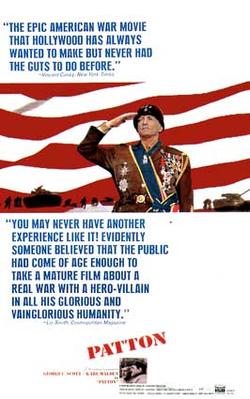
Patton
During World War II, the II Corps suffers a severe defeat at the Battle of Kasserine Pass in North Africa. Hard-charging General George S. Patton is sent to take command; he reorganizes the corps, and imposes strict but necessary discipline. Frustrated by what he perceives as British commander Bernard Montgomery monopolization of the Allied effort—Montgomery's forces had chased Rommel's forces and thus relieved pressure on the Americans following Kasserine—Patton leads the corps to redemption at the Battle of El Guettar. Following Allied victory in North Africa, Patton and Montgomery propose competing plans for the Allied invasion of Sicily. Patton recommends landing his U.S. Seventh Army near Palermo. Commanding officer Harold Alexander opts for Montgomery’s more cautious plan, landing Patton’s forces at Gela. Although initially intended to support Montgomery, Patton pushes northwest, taking Palermo and racing to Messina before the British. During the campaign, he visits a field hospital and slaps a soldier for cowardice, sparking public outrage and requiring a formal apology. Patton is then sidelined by Eisenhower for the Allied invasion of France and placed in command of the fictitious First United States Army Group in London, a decoy to mislead the Germans about the main invasion location. At a public gathering in Knutsford, Patton remarks that the postwar world will be dominated by Anglo-Americans, alarming Allied leaders. George Marshall must decide whether Patton’s outspoken comments warrant sending him home in disgrace. Weeks after the Normandy landings, Patton takes command of the Third Army, reporting to his former subordinate, Omar Bradley. Under his leadership, the Third Army sweeps across France, but is forced to halt before entering Germany due to fuel and supply allocations to Montgomery’s forces. Frustrated, Patton confronts Bradley, who warns him again about the dangers of speaking freely. During the Battle of the Bulge, Patton’s staff plans a bold operation to relieve the trapped 101st Airborne Division in Bastogne. After Germany capitulates, Patton’s candid comparisons of American politics to Nazism create further controversy, and he is relieved of command of the Third Army. He is retained to help oversee the occupation of Germany. In the film’s closing sequence, Patton narrowly avoids a fatal accident while walking with his bull terrier, and his voiceover reflects on the fleeting nature of glory, especially that achieved through military conquest: For over a thousand years, Roman conquerors returning from the wars enjoyed the honor of a triumph —a tumultuous parade. In the procession came trumpeters and musicians and strange animals from the conquered territories, together with carts laden with treasure and captured armaments. The conqueror rode in a triumphal chariot, the dazed prisoners walking in chains before him. Sometimes his children, robed in white, stood with him in the chariot, or rode the trace horses. A slave stood behind the conqueror, holding a golden crown, and whispering in his ear a warning that all glory... is fleeting.

Mishima: A Life in Four Chapters
The film begins on November 25, 1970, the last day of Mishima's life. He finishes a manuscript and then puts on a uniform he designed for himself and meets with four of his most loyal followers from his private army, the Tatenokai. In flashbacks highlighting episodes from his past life, the viewer sees Mishima's progression from a sickly young boy to one of Japan's most acclaimed writers of the post-war era. In adulthood, Mishima trains himself into the acme of muscular discipline, owing to a morbid and militaristic obsession with masculinity and physical culture. His loathing for the materialism of modern Japan has him turn towards an extremist traditionalism. He establishes the Tatenokai and advocates for reinstating the emperor as head of government. The biographical sections are interwoven with short dramatizations of three of Mishima's novels: In The Temple of the Golden Pavilion, a stuttering aspirant sets fire to the famous Zen Buddhist temple because he feels inferior at the sight of its beauty. Kyoko's House depicts the ultimately fatal sadomasochistic relationship between a middle-aged woman and her young lover, who is in her financial debt. In Runaway Horses, a group of young fanatic nationalists plots to overthrow the government and zaibatsu, with its leader subsequently committing suicide. Dramatizations, frame story, and flashbacks are segmented into the four chapters of the film's title, named Beauty, Art, Action, and Harmony of Pen and Sword. The film culminates in Mishima and his followers taking hostage a General of the Japan Self-Defense Forces. He addresses the garrison's soldiers, asking them to join him in his struggle to reinstate the Emperor as the nation's sovereign. His speech is largely ignored and ridiculed. Mishima then returns to the General's office and commits seppuku.

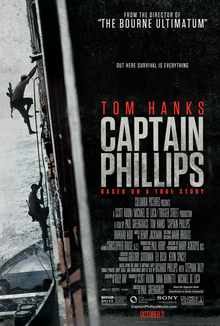
Captain Phillips
Richard Phillips takes command of MV Maersk Alabama, an unarmed container vessel from the Port of Salalah in Oman, with orders to sail through the Guardafui Channel to Mombasa, Kenya. Wary of pirate activity off the coast of the Horn of Africa, he and First Officer Shane Murphy order strict security precautions on the vessel. During a practice drill, the captain notices the vessel being followed by Somali pirates in two skiffs. Knowing the pirates are listening to their radio traffic, he pretends to call a warship for help, requesting immediate air support. One skiff turns around in response, and the other – crewed by four armed pirates led by Abduwali Muse – loses engine power trying to steer through Maersk Alabama ' s wake. The next day, Muse's skiff returns, now fitted with two outboard engines. Despite the efforts of Phillips and his crew, the four pirates board the ship by ladder. Phillips tells the crew to hide in the engine room, just before the pirates storm the bridge and hold Phillips and the other crew members at gunpoint. Phillips offers Muse the $30,000 in the ship's safe, but Muse's orders are to ransom the ship and crew in exchange for millions of dollars of insurance money from the shipping company. Shane sees that the youngest pirate Bilal does not have sandals and tells the crew to line the engine room hallway with broken glass. Chief Engineer Mike Perry deactivates the onboard power, plunging the lower decks into darkness. Bilal cuts his feet when they reach the engine room, and Muse continues to search alone. The crew members ambush Muse, holding him at knifepoint, and arrange to release him and the other pirates into a lifeboat. However, Muse's right-hand man Nour Najee refuses to board the lifeboat with Muse unless Phillips goes with them. Once all are on the lifeboat, Najee attacks Phillips, forcing him into the vessel before launching the boat with all five on board. As the lifeboat heads for Somalia, tensions flare between the pirates as the effects of the plant-based stimulant khat wear off, and they lose contact with their mother ship. Najee, agitated, questions Muse's leadership when they are intercepted by the U.S. Navy destroyer USS Bainbridge. Bainbridge ' s captain Frank Castellano is ordered to prevent the pirates from reaching the Somali coast by any means. Even when additional ships arrive, Muse asserts that he has come too far and will not surrender. The negotiators are unable to change his mind, and a team from DEVGRU parachutes in to intervene. Phillips attempts to escape but is recaptured and beaten by Najee. While three DEVGRU marksmen get into positions, Castellano and DEVGRU continue to try to find a peaceful solution, eventually taking the lifeboat under tow. Muse agrees to board Bainbridge, where he is told that his clan elders are arriving to negotiate Phillips's ransom. Najee, in control of the lifeboat now, spots Phillips writing a goodbye letter to his wife and snatches it. Phillips attacks Najee but Bilal subdues him with his gun butt. Najee beats Phillips, now bound and blindfolded, and prepares to shoot him. Bainbridge ' s crew stops the tow, causing Elmi, Bilal, and Najee to lose balance, giving the American marksmen clear shots, and they simultaneously kill all three pirates. Muse is arrested and taken into custody for piracy. Phillips is rescued and his injuries are treated. Although in shock and tears, he thanks the rescue team for saving his life.

The Big Short
In 2005, eccentric hedge fund manager Michael Burry discovers that the U.S. housing market is extremely unstable due to subprime loans. He draws this conclusion after recognizing similarities to the 1930s crisis and calculates that the market will collapse in 2007. Burry then meets with several major investment and commercial banks to purchase credit default swaps, but is required to pay substantial monthly premiums. The high premiums cause Lawrence Fields, Burry's principal client, to accost him for the high premiums that will bankrupt Burry's fund in a couple of years if his conclusion is wrong, though Burry holds firm. A Deutsche Bank executive later mentions Burry's dealings to his co-worker Jared Vennett. Vennett, sensing an opportunity, tries to secure investors for shorting the market, erroneously calling a trader at FrontPoint Partners who are nonetheless interested in his pitch. Vennett explains the fraud in the market and the disingenuity of seemingly safe bonds. Mark Baum, the head of FrontPoint, is moved by Vennett's pitch due to his disenchantment with banking's business model. The FrontPoint team travels to south Florida to investigate the veracity of Vennett's claims — finding empty neighborhoods and meeting with mortgage brokers who admit to fraudulent practices — and then decide to invest with Vennett. Meanwhile, young investors Charlie Geller and Jamie Shipley accidentally discover Vennett's presentation on a coffee table in the lobby of JPMorgan Chase. They are immediately convinced as they see the high potential payouts, but the small size of their fund requires them to enlist Ben Rickert, Shipley's childhood neighbor and a retired securities trader. Rickert agrees to help and the trio begin investing in credit default swaps. As defaults increase in early 2007, the values of credit default swaps and collateralized debt obligations (CDOs) inexplicably rise and their credit rating remains stable. Burry struggles with the lack of payout and he restricts withdrawals, leading Fields to sue. Baum talks to an acquaintance at Standard & Poor's, finding dishonesty amongst the credit rating agencies to maintain business with investment banks. Geller suspects the banks are committing fraud, leading him, Shipley and Rickert to visit the American Securitization Forum, where bankers are unconcerned about defaults. Shipley learns that the SEC has no regulations governing mortgage-backed securities activity. Geller convinces Shipley and Rickert to bet against higher-rated tranches of the bonds, since they are likely to fail if the lower-rated bonds fail. Vennett and the FrontPoint team also attend the Forum, where Baum learns from a CDO manager that the market for synthetic CDOs is twenty times larger than the market for the mortgages themselves, leading Baum to realize the entire world economy is set to collapse. Geller and Shipley see that New Century Financial, a leader in subprime lending has filed for bankruptcy, and they identify it as the beginning of the housing bubble bursting. At the same time, Baum finds that Bear Stearns is liquidating hedge funds and Burry has his phone calls ignored by the banks. Geller and Shipley realise that for the prices to have remained stable despite defaults continuing to increase, the banks must be freezing the prices of their securities in order to sell and short them before the market crashes. Outraged, Geller and Shipley contact an old friend who works for The Wall Street Journal, but he declines to report the story to preserve his relationships with the investment banks. As the subprime bonds continue to fall, Baum learns that Morgan Stanley, who owns FrontPoint, has also taken short positions against mortgage derivatives. However, it had sold short positions in higher-rated mortgage derivatives to offset the risk. Because even the higher-rated derivatives are collapsing in value, Morgan Stanley is facing severe liquidity problems. Despite pressure from his staff to sell their positions before Morgan Stanley collapses, Baum refuses to sell. Rickert, on vacation in England, sells Geller and Shipley's positions; the two receive huge profits but lose their faith in the system as Ben informs them that foreign bank systems are beginning to crash as well. Burry begins receiving calls from the banks he had originally taken short positions against. Burry yields a profit of $2.69 billion, with Fields alone receiving $489 million. While Baum is speaking at an industry panel, his team learns that Bear Stearns stock has fallen 38% in just ten minutes and the bank collapses shortly after. Baum is the last to sell, making over $1 billion, but laments that the banks and government will not take responsibility for the crisis. Vennett receives a large bonus for the profits he generated. FrontPoint continues to operate as per usual, but Burry closes his fund after public backlash. Geller and Shipley go their separate ways after unsuccessfully trying to sue the ratings agencies and Rickert returns to his retirement. Just prior to the credits, it is noted that most banks responsible for the crisis face no consequences for their actions, with one single trader, Kareem Serageldin, being imprisoned and that banks are again selling CDOs under a new label of the bespoke tranche opportunity.
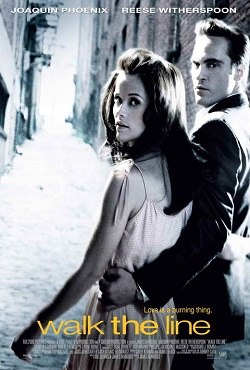
Walk the Line
The film begins in 1968 with Johnny Cash performing at Folsom State Prison. As the audience of inmates cheer him on, Cash waits backstage near a table saw, which reminds him of his early life. Two decades earlier, in 1944, 12-year-old Johnny is raised on a cotton farm in Dyess, Arkansas, with his brother Jack, his abusive father Ray, his mother Carrie, and his two sisters. One day, Jack is killed in a sawmill accident while Johnny is out fishing. Ray blames Johnny for Jack's death, saying that the Devil "took the wrong son". In 1950, Johnny enlists in the U.S. Air Force and is stationed in West Germany. While there, he purchases a guitar and finds solace in writing songs, including " Folsom Prison Blues ", which he develops in 1952. After his discharge from the military in 1954, Johnny returns to the United States and marries his girlfriend, Vivian Liberto. The couple moves to Memphis, Tennessee, where Cash works as a door-to-door salesman to support his growing family, but with little success. One day, Johnny walks past a recording studio and is inspired to form a band to play gospel music. He and his band audition for Sam Phillips, the owner of Sun Records, and Phillips signs them after they play "Folsom Prison Blues." The band tours as Johnny Cash and the Tennessee Two, along with other rising stars Elvis Presley, Carl Perkins, Roy Orbison and Jerry Lee Lewis. Johnny meets country music singer and songwriter June Carter while on tour and is immediately smitten. He tries to woo her, but she gently rebuffs his attempts. Despite this, they become friends. As Johnny grows up, he begins abusing drugs and alcohol, and over the objections of Vivian, he persuades June to go on tour with him. The tour is a success, but backstage, Vivian becomes critical of June's influence over Johnny. After one performance in Las Vegas, Johnny and June sleep together. The next morning, June notices Johnny taking pills and begins to doubt her choice to be with him. At their concert that evening, Johnny is upset by June's apparent rejection and behaves erratically, eventually passing out on stage. June is upset with Johnny's behavior and decides to dispose of his drugs. She begins to write " Ring of Fire " as a way to describe her feelings for him and the pain she feels as she watches him descend into addiction. After returning to California, Johnny travels to Mexico to purchase more drugs and is arrested. Soon after, Johnny's marriage to Vivian implodes; they divorce, and he moves to Nashville, Tennessee, in 1966. Johnny buys a large house near a lake in Hendersonville, Tennessee, in an attempt to reconcile with June. Ray and other members of the extended Carter family arrive for Thanksgiving, where Ray and Johnny get into an argument, and June's mother urges June to help Johnny. Johnny goes into detox and awakens next to June, who says they have been given a second chance. They begin a tentative relationship, but June resists Cash's marriage proposals. Later, Johnny records an album live at Folsom Prison after discovering that most of his fan mail is from prisoners. The performance is a success, and Johnny embarks on a tour with June and his band. At the end of the film, Johnny invites June to join him for a duet but stops in the middle of the song and tells her that he can't sing " Jackson " anymore unless she agrees to marry him. June accepts, and they share a passionate embrace on stage. Later, Johnny and his father reconcile their relationship while they are with their families.

