Genre: Biography (Page 12)
Browse 242 movies in the Biography genre.
All Genres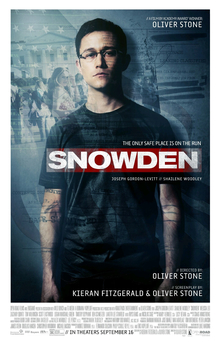
Snowden
In 2013, Edward Snowden arranges a clandestine meeting in Hong Kong with documentarian Laura Poitras and journalist Glenn Greenwald. They discuss releasing the classified information in the former's possession regarding illegal mass surveillance conducted by the National Security Agency (NSA). Poitras later released a documentary about this meeting titled Citizenfour, which was used in a scene within the film. In 2004, Snowden is undergoing basic training, having enlisted in the U.S. Army with intentions of matriculating to the Special Forces. He eventually fractures his tibia and is informed that he will be receiving an administrative discharge in the process but is encouraged to serve his country in other ways. Snowden applies for a position at the Central Intelligence Agency (CIA) and subsequently undergoes the screening process. Initially, his answers to the screening questions are insufficient, but Deputy Director Corbin O'Brian decides to take a chance on him, in the wake of extraordinary times. Snowden is then brought to "The Hill" where he is educated and tested on cyberwarfare. He learns about the Foreign Intelligence Surveillance Act, which circumvents the Fourth Amendment rights of U.S. citizens by allowing warrant requests to be approved by a panel of judges that were appointed by the Chief Justice. Snowden and his peers are each tasked with building a covert communications network in their hometown, deleting it, and then rebuilding it in eight hours or less, with five hours being the average time taken. Snowden impresses O'Brian when he completes the exercise in 38 minutes. Meanwhile, Snowden meets Lindsay Mills via a dating website. The two bond, despite sharply contrasting political ideologies. Snowden acquires his first post abroad working with diplomatic cover in Geneva in 2007, taking Mills with him. He meets Gabriel Sol, who has ample experience in electronic surveillance. Snowden begins questioning the ethical implications of their assignment. After his superior decides to set up their target on a DUI charge in order to coerce information from him, Snowden resigns from the CIA. Snowden later takes a position with the NSA in Japan, initially under the pretense of building a program that would allow the government to back up all critical data from the Middle East in an emergency, a program which he names "Epic Shelter". Snowden learns of the practices the NSA and other U.S. government agencies are using not just in Japan, but in most countries which the U.S. is currently allied with. These plans include planting malware in different computers that manage government, infrastructure and financial sectors so that, in the event that any allies turn against the US, that country can effectively be shut down in retaliation. The stress associated with the job results in the end of his relationship with Mills, who moves back with her family in Maryland. Three months later, Snowden has left his post with the NSA and returned to Maryland where he and Mills resume their relationship and he takes a position consulting for the CIA. During a hunting trip, O'Brian reveals an operation in Oahu that revolves around counterattacking Chinese hackers. After Snowden is diagnosed with epilepsy, Mills agrees that he should join the operation, believing the environment in Hawaii may be beneficial for his health. Upon beginning his new job in " The Tunnel ", Snowden learns that Epic Shelter is actually providing real-time data that assists U.S. drone pilots in launching lethal strikes against terror suspects in Pakistan. Snowden ultimately becomes disillusioned with what he is a part of. It culminates in Snowden smuggling a microSD card into his office by way of a Rubik's Cube, and loading all relevant data. He then tells his colleagues he is feeling ill and departs. He advises Mills to fly home to Maryland, after which he contacts Poitras and Greenwald to schedule the meeting. With the help of journalist Ewen MacAskill, the information is disseminated to the press on June 5, 2013, with additional leaks published in the following days. In the aftermath, with the help of MacAskill, Greenwald and Poitras, Snowden is smuggled out of Hong Kong on a flight bound for Latin America via Russia. However, the U.S. government revokes his passport, forcing him to remain in Moscow indefinitely. He is eventually granted asylum for three years, with Mills joining him at a later date. In a remote interview expressing his activism, Snowden states that he is willing to face a court in the US if he is guaranteed a fair trial. Credit sequences showcase news headlines and interviews detailing the consequences of Snowden's actions in Congress, leading to broad reform in the NSA.

The Disaster Artist
In San Francisco in 1998, 19-year-old Greg Sestero befriends Tommy Wiseau in Jean Shelton 's acting class after Tommy gives a bizarre interpretation of a scene from A Streetcar Named Desire. Greg is impressed by Tommy's fearlessness, though Tommy also exhibits unusual habits and mannerisms; for instance, he can afford apartments in both San Francisco and Los Angeles, but refuses to discuss his personal life or the source of his wealth, and insists that he is from New Orleans despite his pronounced European accent. At Tommy's suggestion, the two move to Los Angeles to pursue acting careers. Greg signs with talent agent Iris Burton, regularly attends auditions, and starts dating a girl named Amber. Meanwhile, Tommy is constantly rejected by agencies, acting teachers, casting directors, and producers, and believes Amber is sabotaging his and Greg's friendship. As Greg's auditions begin to dry up, Tommy decides to make a film for them to star in. He writes the screenplay for The Room, a melodrama about a love triangle between banker Johnny (played by Tommy), his fiancée Lisa, and his best friend Mark (played by Greg, who is also given a line producer credit). Tommy insists on buying, rather than renting, all of the production equipment they need, and decides to shoot the film on 35 mm film and HD Digital simultaneously, another costly and unnecessary measure. Tommy hires Raphael Smadja as the cinematographer and Sandy Schklair as the director and script supervisor, and casts actress Juliette Danielle as Lisa. While production starts smoothly, Tommy's controlling behavior and lack of experience soon begin to cause problems. He forgets his lines, arrives late, and refuses to supply his crew with basic needs like drinking water and air conditioning, even when one of the actors suffers a heatstroke on set. The cast and crew are baffled by the film's nonsensical plot and Tommy's inexplicable directorial and acting choices. Tensions mount between the crew and Tommy when he refuses to film on a closed set and insults Juliette during a sex scene, during which he almost gets into a fight with Smadja. Tommy then angrily reveals that he has been watching the behind-the-scenes footage of the production and thus knows what the cast and crew have been saying about him behind his back, and that he has spent $5 million on the production, though he does not disclose where these funds came from. While The Room is still filming, Greg and Amber run into Bryan Cranston at a café. Cranston reveals that he is directing an upcoming episode of Malcolm in the Middle, the TV show he is on, and invites Greg to play a lumberjack character, noting his lumberjack-like facial hair. Greg begs Tommy to delay shooting of an upcoming scene in The Room where Mark shaves his beard (for no apparent purpose), but Tommy refuses. Greg begrudgingly finishes the film, relinquishing his opportunity to be on the show. On the last day of shooting, which is on location back in San Francisco, Greg lashes out at Tommy for his selfishness throughout their friendship and demands that Tommy finally reveal his age, birthplace, and source of income. Tommy refuses and Greg storms off, while a disheartened Tommy declares that filming is wrapped. By June 2003, Greg has broken up with Amber and started working in theater, and Tommy has finished work on The Room, which he invites Greg to the premiere of. Greg reluctantly agrees; the entire cast and crew also attend. As the film plays on the screen, the capacity audience at first reacts with bemused silence, then increasingly with laughter at Tommy's poor performance, script, and filmmaking techniques. A humiliated Tommy storms out of the theater, but Greg follows him and asserts that the audience's enthusiastic response is something to be proud of, reconciling their friendship. With renewed optimism, Tommy takes the stage as the film ends and expresses his appreciation of the warm reception for his "comedic" film. He invites Greg to join him, and the pair receive a standing ovation. In a post-credits scene, a man named Henry approaches Tommy at a party and invites him to hang out. Tommy declines, but recognizes Henry's familiar "New Orleans" accent.


The Secret Life of Nikola Tesla
Tesla in a hotel room in 1943 talks to a reporter. He then reminisces about how things would be different if J. P Morgan had listened to him. Tesla arrives in the US in the 1880s. He tries to convince his new employer, Thomas Edison, to adopt his newly invented electric induction motor running on an alternating current (AC) system but Edison claims direct current (DC) is better and turns him down. Robert Underwood Johnson and his wife Katharine, who were at the meeting, later find Tesla digging a ditch, having quit his job at Edison. Tesla strikes a business deal with two investors to finance development of his motor. He shows off his AC system at meeting of the American Institute of Electrical Engineers but Edison, in the audience, claims it is impractical. After the reporters, and even Tesla's own investors, walk away George Westinghouse convinces Tesla to sell him his AC patents and offers a contract to pay Tesla a royalty on his motor design. They end up in a public battle with Edison trying to demonstrate their system is not dangerous (as Edison claims) and is actually better than DC. J.P. Morgan, pulling the strings in the background, calls Tesla and Edison into a meeting and, unhappy with Edison's progress electrifying his factories, tells Tesla he can try to prove AC would work better. At a banquet celebrating the building of an alternating current power plant at Niagara Falls Tesla confuses the audience with his futuristic ideas about his high frequency wireless AC transmission system and then tells someone he is off to Europe to see his family (who he has been having flashbacks about). On that trip he visits his bed-ridden mother who dies in his arms. He then wanders out in the country side having flash backs about his childhood and the death of his brother, all punctuated by visions of falling water and lightning. Westinghouse and Katharine visit Tesla back at his New York lab where the inventor tears up his royalty contract to save Westinghouse from financial ruin. Tesla goes on to develop his wireless power system, making several reports to Morgan on his progress. Morgan tells Tesla he is unhappy with wild stories about the inventor but keeps backing him. Westinghouse warns Tesla (who is now building his Morgan financed Wardenclyffe wireless power station) to watch out for Morgan's motives and Katharine tells the inventor how she wished they could have had more of a relationship together. Tesla learns from Morgan that Guglielmo Marconi has stolen his wireless patents and that Albert Einstein has new theories about matter and energy. Tesla tells Morgan these new theories are a "crime against nature" and tries to get Morgan to back his free wireless power system before it is too late. After Tesla leaves Morgan says he won't back a system that would put him out of business and orders all further interaction with Tesla cut off. Tesla looks over his demolished Wardenclyffe station and complains, at the end of his life in a world choked with smog, that he wished Morgan had listened to him.

Leto
The film is mainly set in the summer of 1981 in Leningrad. The main storyline of the film tells the story of the relationship between the 19-year-old Viktor Tsoi (Teo Yoo), 26-year-old Mike Naumenko (Roman Bilyk), and Naumenko's girlfriend Natalia (Irina Starshenbaum), as well as the formation of the Leningrad Rock Club and the recording of Kino 's first album, 45. The film's setting, the Leningrad Rock Club, was one of the few state-permitted public performance spaces for rock musicians in its time. The Club is generally a theatrical venue for boundary-pushing music, where audiences are instructed to sit politely and listen rather than mosh. However, interjections by narrator Skeptic (Alexander Kuznetsov) occasionally recast the club as extravagant, hedonistic, reckless, and dangerous. The musicians live frugally; their indulgences are creative rather than material. Much of the narrative focuses on Mike, the frontman of one of the Club's more popular, old-guard bands, and his girlfriend Natacha, whose close, initially monogamous relationship stands in contrast to the expected behavior of rockstars. Also significant to the plot is Viktor, a quiet, slightly otherworldly young man with a knack for melody and a beguilingly peculiar turn of lyrical phrase. Natacha is the first to notice a kind of melancholic magic about Viktor, as the film gradually reorients itself around his budding stardom rather than Mike's less obviously ascending career. However, the film maintains a more general look at the musicians in the club, including the various musicians who come in and out of the lives of the protagonists. The film's musical numbers alternate between diegetic stage performances and sudden flights of music-video fancy. In one such performance, an altercation between musicians and more conservative citizens on a packed train escalates into a demented, carriage-traversing singalong of Talking Heads' "Psycho Killer," the hitherto realist imagery disrupted with early-MTV-style cartoon flourishes. There are a few sequences in which Mike and the other Leningrad rockers seize their moment, using their music to defy the bureaucrats and wow audiences. However, nearly all of these scenes all followed by a caveat to the effect of "this didn’t really happen."
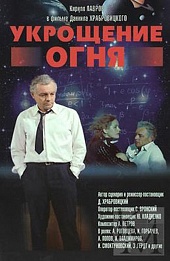
Ukroshcheniye ognya
The film, split into two parts, is based on a true story of the creation and development of the Soviet space and missile industry. Due to security concerns, names were altered in the script, though most of the characters are easily recognizable. Sergei Korolev was the prototype for the lead character of Andrei Bashkirtsev, played by Kirill Lavrov. Part 1: Andrei Bashkirtsev has been obsessed with flying since his youth. Bashkirtsev's career takes shape after meeting with the visionary space scientist Konstantin Tsiolkovsky (played by Innokenti Smoktunovsky). Before World War II he develops the first rockets and builds a launch center in Central Russia. Then he makes the " Katyusha " weapon and takes it to the front-lines of World War II. In spite of his arrest and imprisonment, he continues working on rocket design. He is released from prison upon his request to fight in the front-lines against the Nazis. Part 2: After the end of World War II, Bashkirtsev designs a new rocket system and works with nuclear scientist Igor Kurchatov on the nuclear missiles program. Then he makes a new rocket that launched " Sputnik " to orbit in 1957 from Baykonur Cosmodrome in Kazakhstan. His next achievement is the first man in space, Yuri Gagarin, and other human space missions. By the mid 1960s Bashkirtsev makes developments for the flight to the Moon. However, Bashkirtsev's uncompromising character causes him many problems with Soviet politicians, in addition to other pressures in his life, and he dies from a heart attack. His mission is carried on by his colleagues and apprentices.

Vice
Vice is narrated by Kurt, a fictitious veteran of the Afghan and Iraq wars. In 1963, Dick Cheney works as a lineman in Wyoming after dropping out of Yale University. After Cheney is caught driving while intoxicated, his wife Lynne threatens to leave him if he does not become sober. In 1969, Cheney becomes a White House intern during Richard Nixon 's presidency. Under Nixon's economic adviser, Donald Rumsfeld, Cheney becomes a savvy political operative while juggling commitments to his wife and their daughters, Liz and Mary. Cheney overhears Henry Kissinger discussing the secret bombing of Cambodia with Nixon, exposing the executive branch 's true power to Cheney. Rumsfeld's abrasive attitude leads to him and Cheney being distanced from Nixon, which works in both men's favor; after Nixon's resignation in 1974, Cheney rises to the position of White House Chief of Staff for President Gerald Ford, while Rumsfeld becomes Secretary of Defense. The media dubs the sudden shake-up in the cabinet as the Halloween Massacre. During his tenure, a young Antonin Scalia introduces Cheney to the unitary executive theory. After Ford loses the 1976 election to Jimmy Carter, Cheney runs for Congress in Wyoming. After an awkward and uncharismatic campaign speech, Cheney suffers a heart attack. While he recovers, Lynne campaigns on his behalf, earning him a seat in the House of Representatives. During the Reagan administration, Cheney supports many conservative, pro-business policies favoring the fossil fuel industries, as well as the abolition of the FCC fairness doctrine, which contributed to the rise of Fox News, conservative talk radio, and the rising party polarization in the United States. Cheney then serves as Secretary of Defense under President George H. W. Bush during the Gulf War. Outside of politics, Cheney and Lynne come to terms with their younger daughter, Mary, coming out as a lesbian. Though Cheney develops ambitions to run for president, he decides to retire due to lack of presidential polling enthusiasm for him and to spare Mary from media scrutiny. Cheney becomes the CEO of Halliburton while his wife breeds golden retrievers and writes books. A false epilogue claims that Cheney lived the rest of his life healthy and happy in the private sector, and credits begin rolling, only to end abruptly before the film continues. George W. Bush invites Cheney to become his running mate in the 2000 United States presidential election. Assuming Bush is more interested in impressing his father than attaining power for himself, Cheney agrees on the condition that Bush delegates executive responsibilities to him and does not force him to take a stance against gay rights. As vice president, Cheney works with Rumsfeld, legal counsel David Addington, Mary Matalin, and Chief of Staff Scooter Libby to exercise control of key foreign policy and defense decisions. In the aftermath of the September 11, 2001 terrorist attacks, Cheney and Rumsfeld maneuver to initiate and preside over the U.S. invasions of Afghanistan and Iraq. Various other events from his vice presidency are depicted, including his endorsement of the unitary executive theory, the Plame affair, and the accidental shooting of Harry Whittington. Cheney's actions lead to hundreds of thousands of deaths and the rise of the Islamic State of Iraq, and he receives record-low approval ratings by the end of the Bush administration. While narrating Cheney's deathbed goodbye to his family after another heart attack, Kurt dies in a traffic accident. His heart is transplanted into Cheney. Liz publicly states her opposition to same-sex marriage while running for a Senate seat a few months later, and Cheney does not object. A distraught Mary distances herself from her family. Liz wins election to her father's former position in the House two years later. An irate Cheney breaks the fourth wall and delivers a monologue to the audience at the end of the film, declaring he has no regrets about anything he has done in his career. In a mid-credits scene, some members of a focus group reviewing the film passionately debate the film's effectiveness and the Trump administration, while others are uninterested and would rather discuss the latest Fast & Furious movie.

Steve Jobs
In 1984, the Apple Macintosh 128K 's voice demo fails less than an hour before its unveiling at Flint Center. Apple co-founder Steve Jobs demands engineer Andy Hertzfeld to fix it, threatening to publicly implicate him in the presentation's credits if he does not. Hertzfeld finally suggests faking the demo by using the prototype Macintosh 512K computer. Jobs rants to marketing executive Joanna Hoffman about a Time magazine article exposing his paternity dispute with ex-girlfriend Chrisann Brennan as he denies he is the father of Brennan's five-year-old daughter, Lisa. Brennan arrives with Lisa to confront him – she is bitter over his denials and refusal to support her despite his wealth. Jobs bonds with Lisa over her MacPaint art and agrees to provide more money and a house. Apple co-founder Steve Wozniak asks Jobs to acknowledge the Apple II team in his presentation, but Jobs feels that mentioning the computer (which he considers obsolete) is unwise. By 1988, following the Macintosh's apparent failure, Jobs has founded a new company, NeXT. Before the NeXT Computer launch at the War Memorial Opera House, he spends time with 9-year-old Lisa. However, his relationship with Brennan is still strained. He accuses her of irresponsible behavior and using Lisa to get money from him. Wozniak arrives and predicts the NeXT will be another failure. Jobs confronts him about his public criticism of him, and Wozniak questions Jobs' contributions to computing history. Jobs defends his role as that of a conductor who directs "musicians" like Wozniak. Apple CEO John Sculley demands to know why the world believes he fired Jobs – Jobs was actually forced out by the Apple board, who were resolute on updating the Apple II following the Macintosh's lackluster sales. Despite Sculley's warnings, Jobs criticized the decision and dared them to cast a final vote on his tenure. After Hoffman and Jobs discuss NeXT's unclear direction, she realizes Jobs designed the computer to entice Apple to buy the company and reinstate him. By 1998, Apple has fired Sculley, purchased NeXT, and named Jobs CEO, and Jobs is about to unveil the iMac at Davies Symphony Hall. He is delighted by Hoffman's strong commercial forecasts but furious that Lisa has allowed her mother to sell the house Jobs bought for them. Hoffman reminds Jobs that he threatened to withhold Lisa's college tuition, and Hertzfeld admits that he paid Lisa's tuition and suggested she attend therapy. Wozniak again asks Jobs to credit the Apple II team during the presentation, and again, he refuses in an argument. Sculley arrives in secret, and the two make amends. Jobs and Sculley discuss Jobs' life as an adopted child, and Jobs admits that his need for control stems from his feelings of powerlessness in being given up. At the behest of Hoffman, Jobs apologizes to Lisa for his mistakes and accepts that he is her father, admitting he is "poorly made." He confesses to Lisa that " the Lisa " was named after her. On seeing her Walkman, he also promises Lisa that he will put more music in her pocket. Lisa watches her father take the stage to introduce the first iMac, but only after he hands her the printout of the abstract she made as a kid on the original Macintosh, which he kept with him all those years.

The Man Who Knew Infinity
At the turn of the twentieth century, Srinivasa Ramanujan is a struggling and indigent citizen in the city of Madras in India working at menial jobs at the edge of poverty. While performing his menial labour, his employers notice that he seems to have exceptional skills in mathematics and they begin to make use of him for rudimentary accounting tasks. It becomes equally clear to his employers, who are college-educated, that Ramanujan's mathematical insights exceed the simple accounting tasks they are assigning to him and soon they encourage him to make his personal writings in mathematics available to the general public and to start to contact professors of mathematics at universities by writing to them. One such letter is sent to G. H. Hardy, a famous mathematician at University of Cambridge, who begins to take a special interest in Ramanujan. Hardy soon invites Ramanujan to Cambridge to test his mettle as a potential theoretical mathematician. Ramanujan is overwhelmed by the opportunity and decides to pursue Hardy's offer, even though this means he must leave his wife Janaki for an extended period. He parts lovingly with Janaki and promises to keep up his correspondence with her. Upon arrival at Cambridge, Ramanujan encounters various forms of racial prejudice and finds his adjustment to life in England more difficult than expected. Hardy, though much impressed by Ramanujan's abilities, remains concerned about Ramanujan's ability to communicate effectively due to his lack of experience in writing proofs, but with perseverance, he manages to get Ramanujan published in a major journal. In the meantime, Ramanujan is diagnosed with tuberculosis and his frequent letters home to his wife remain unanswered after many months. Hardy continues to see much more promise in Ramanujan. However, he remains unaware of the personal difficulties his student is having with his housing and with his lack of contact with his family back home in India. Ramanujan's health worsens while he continues delving into deeper and more profound research interests in mathematics under the guidance of Hardy and others at Cambridge. Janaki, after much elapsed time, wonders why she has not heard from Ramanujan and eventually discovers that his mother has been intercepting his letters, and withholding hers to him. Hardy makes special efforts to get Ramanujan's now recognisably exceptional mathematical skills accepted by the university, by nominating Ramanujan for a fellowship of Trinity College. At first, Hardy fails for reasons related to college politics and racial prejudice. By gaining the support of key members of the college, Hardy again successfully nominates Ramanujan as a Fellow of the Royal Society, thereby forcing his acceptance as a fellow of Trinity. Ramanujan is eventually reunited with his family in India, though his declining health, exacerbated by poor housing and harsh winter weather in England, ultimately takes its toll and leads to his death aged 32, soon after his recognition as a mathematician of international merit and importance.

The End of the Tour
Writer David Lipsky is dismayed to hear about the suicide of novelist David Foster Wallace in 2008. He had interviewed the author over a period of days twelve years earlier, following the publication of Wallace's novel Infinite Jest, which received critical praise and became an international bestseller, a touchstone for numerous readers. He listens to the recordings he made during their time together. The film returns to 1996, shortly after the book's release. Although initially skeptical of the high praise Wallace's book is receiving, Lipsky – a writer having only marginal success – is awestruck after reading it. He persuades his editor at Rolling Stone magazine to give him an assignment to interview Wallace during his book tour. The journalist travels to meet Wallace at his home on the outskirts of Bloomington-Normal, Illinois (near Illinois State University where the author teaches writing). Lipsky finds the young author unassuming and amiable, but indifferent to being interviewed. Wallace permits Lipsky to tape-record their conversations, with the proviso that Lipsky won't use any direct quotes which Wallace asks to have taken "off the record" five minutes later. Wallace opens up to Lipsky on a variety of subjects, ranging from dogs to television to fame and self-identity, but remains somewhat guarded. He tacitly admits to alcoholism, but offers few details of his experience. Lipsky's mention of Wallace's brief voluntary institutionalization under a suicide watch causes some friction between them. As their conversation continues late into the night, Wallace invites Lipsky to stay in his unused "guest room", rather than a motel. The room is dominated by stacks of his books. They resume the interview in the morning. Lipsky also accompanies Wallace for a few days to Minneapolis-Saint Paul, where Wallace has the final appearance of his book tour. There they meet two women friends of Wallace: Betsy, whom he knew in graduate school, and Julie, a literary critic; the men spend time with the women later that night and the next day at the Mall of America. Although Wallace and Lipsky generally get along well, Wallace becomes angry when he sees Lipsky flirting with Betsy. After their return to Wallace's home, tension increases when Lipsky asks the author about rumors of past heroin abuse. Wallace denies it, accusing Lipsky of looking for a stereotypical angle from which to write his article. As their time comes to an end, the two spend a morning together, mainly as new friends rather than as journalist and subject. Lipsky summons the nerve to give Wallace a copy of his own novel, and they agree to stay in touch. Twelve years later, Wallace dies by suicide in his house. The closing passage is set fourteen years later, when Lipsky is on his own book tour. He reads from his memoir, Although of Course You End Up Becoming Yourself (2010), based on their 1996 encounter. He recounts the road trip he had with Wallace, reflecting on ideas the two had discussed and how their conversations made Lipsky less lonely.
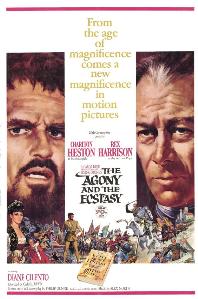
The Agony and the Ecstasy
The film opens in documentary style, chronicling the work of Michelangelo Buonarroti.It then follows Michelangelo, a renowned Cinquecento sculptor of the Republic of Florence, in the early 16th century, and shows him at work on large-scale sculptures near St. Peter's Basilica. When Pope Julius II commissions him to paint the Sistine Chapel, Michelangelo resists because he finds the ceiling's paneled layout of the Twelve Apostles uninspiring. Nonetheless, he is forced into taking the job. During the initial attempt, Michelangelo is discontented with the results, and destroys the frescoes. He flees to Carrara, and then into the mountains where he finds inspiration from nature. Michelangelo returns and is allowed to paint the entire vault in a variety of newly designed biblical scenes based on the Book of Genesis, which the Pope approves. The work proceeds nonstop, even with Mass in session. Michelangelo faces opposition and criticism from the Pope's cardinals, due to its depictons of nudity in the paintings. As months turn to years, Michelangelo's work is threatened when he collapses due to fatigue. He is nursed back to health by Contessina de' Medici, daughter of his old friend Lorenzo de' Medici. After recovering, Michelangelo returns to work after learning he is at risk of being replaced by Raphael, whom the Pope commissions to paint the reception rooms of the Papal palace. Meanwhile, the Papal States are threatened during the War of the League of Cambrai. Preparing for battle and having reached the limits of his patience, the Pope terminates Michelangelo's contract, and has the scaffolding torn down. Raphael, impressed with the work in progress, asks Michelangelo to show humility and finish the ceiling. Michelangelo travels to see the injured and weakened Pope, and pleads for him to restore the patronage. Though the Pope believes an invasion of Rome is inevitable, he raises the money needed to resume work on the ceiling. One night, Michelangelo finds the ailing Pope inspecting the portrait of God in The Creation of Adam, which the Pope declares "a proof of faith" yet doubts Michelangelo's conception of God as merciful and Adam as innocent, then the Pope collapses and becomes bedridden. Though everyone assumes that the Pope will die, Michelangelo goads him into having the will to live and to finish his work and asks permission to allow him return to Florence, a request the Pope refuses. As Michelangelo leaves, the Pope recovers and upon seeing the cardinals and the monks, as well the choir, he angrily shooes them away. The tide of war turns in favor of the Papal States, as allies (including England and Spain) pledge to assist the Pope. A Mass is held in which the congregation is shown the completed ceiling, to a positive response. After the ceremony, Michelangelo asks to begin carving the Pope's tomb. Realizing he has a short time to live, the Pope agrees but changes his mind when he gives Michelangelo another commission to paint a new fresco behind the altarpiece to replace the dilapidated ones (and gives Michelangelo the choice of subject like the crucifixion or the last judgment). The Pope then admits that Michelangelo's conception of God is accurate before goading him to continue his work. As the Pope leaves, Michelangelo turns back to look at the space behind the altarpiece, where he will later paint his Last Judgement 25 years later.