Genre: Mystery
Browse 180 movies in the Mystery genre.
All Genres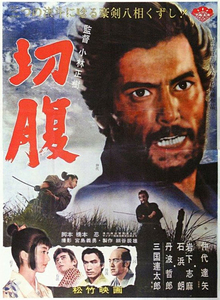
Harakiri
The film takes place in Edo in the year 1630. A rōnin called Tsugumo Hanshirō arrives at the estate of the Iyi clan and says that he wishes to commit seppuku within the courtyard of the palace. To deter him, Saitō Kageyu, the daimyō ' s senior counselor, tells Hanshirō the story of another rōnin, Chijiiwa Motome — formerly of the same clan as Hanshirō. Saitō scornfully recalls the practice of rōnin requesting the chance to commit seppuku on the clan's land, but in fact hoping to be turned away and given alms. Motome had arrived at the palace a few months earlier and made the same request as Hanshirō. Infuriated by the rising number of "suicide bluffs", the three most senior samurai of the clan—Yazaki Hayato, Kawabe Umenosuke, and Omodaka Hikokuro—persuaded Saitō to force Motome to follow through and kill himself, ignoring his request for a couple of days delay. Upon examining Motome's swords, his blades were found to be made of bamboo. Enraged that any samurai would "pawn his soul", the House of Iyi forced Motome to disembowel himself with his own bamboo blade, making his death slow, agonizingly painful, and deeply humiliating. Despite this warning, Hanshirō insists that he has never heard of Motome and says that he is sincere in wanting to commit seppuku. Just as the ceremony is about to begin, Hanshirō is asked to name the samurai who shall behead him when the ritual is complete. To the shock of Saitō and the Iyi retainers, Hanshirō successively names Hayato, Umenosuke, and Hikokuro — the three samurai who coerced the suicide of Motome. When messengers are dispatched to summon them, all three decline to come, with each claiming to be too ill to attend. While waiting for the messengers to return, Hanshirō recounts his life story to the assembled samurai, starting with the admission that he did know Motome. In 1619, his clan was abolished by the Shōgun. His lord decided to commit seppuku and, as his most senior samurai, Hanshirō planned to die alongside him. To prevent this, Hanshirō's closest friend took his place instead, leaving Hanshirō responsible for his teenage son, Motome. In order to support Motome and his own daughter Miho, Hanshirō rented a hovel in the slums of Edo, taking up work as a fan and umbrella craftsman while Motome became a teacher. Realizing the love between Motome and Miho, Hanshirō arranged for them to marry. Soon after, they had a son, Kingo. When Miho became ill with tuberculosis, Motome could not bear the thought of losing her and did everything to raise money to hire a doctor. When Kingo also fell ill, Motome left one morning, saying he planned to take out a loan from a moneylender. Later that evening, Hayato, Umenosuke, and Hikokuro brought home Motome's mutilated body, and described and mocked his death before leaving. It is now clear that Motome had requested a delay so he could visit his family and put his affairs in order. A few days later, Kingo died, and Miho lost the will to live and died, leaving Hanshirō with nothing. Finishing his story, Hanshirō explains that his sole desire is to join Motome, Miho, and Kingo in death. He explains, however, that they have every right to ask him whether justice has been exacted for their deaths. Therefore, Hanshirō asks Saitō if he has any statement of regret to convey to Motome, Miho, and Kingo. He explains that, if Saitō does so, he will die without saying another word. Saitō refuses, calling Motome an "extortionist" who deserved to die. After provoking Saitō's laughter by calling the samurai moral code bushido a facade, Hanshirō reveals the last part of his story. Before coming to the Iyi estate, he tracked down Hayato and Umenosuke and cut off their topknots. Hikokuro then visited Hanshirō's hovel and, with great respect, challenged him to a duel. After a brief but tense sword fight, Hikokuro suffers a double disgrace: his sword is broken and his topknot is taken as well. As proof, Hanshirō removes their labelled topknots from his kimono and casts them upon the palace courtyard. He mocks the Iyi clan, saying that if the men he humiliated were true samurai, they would not be hiding out of shame. He also questions the clan's honor and bushido itself, pointing out that they should not have ignored Motome's request for a delay to his seppuku without investigating the reason why he asked, but they were too preoccupied with their supposed honor to care. Having badly lost face, an enraged Saitō calls Hanshirō a madman and orders the retainers to kill him. In a fierce battle, Hanshirō kills four samurai, wounds eight, and contemptuously smashes into pieces the antique suit of armor which symbolizes the glorious history of the House of Iyi. Finally, the clan corners Hanshirō and prepares to kill him not with swords, but with three matchlock guns. As Hanshirō commits seppuku, he is simultaneously shot by all three gunmen. Terrified that the Iyi clan will be abolished if word gets out that "a half starved rōnin" killed so many of their retainers, Saitō announces that all deaths caused by Hanshirō shall be explained by "illness". At the same time, a messenger returns reporting that Hikokuro had killed himself the day before, while Hayato and Umenosuke are both faking illness. Saitō angrily orders that Hayato and Umenosuke be forced to commit seppuku as atonement for losing their topknots. Those three deaths are also to be attributed to "illness". As the suit of armor is cleaned and re-erected, a new entry in the official records of the House of Iyi is read by a voiceover. Hanshirō is declared to have been mentally unstable, and he and Motome are both listed as having died through harakiri. The Shōgun is said to have issued a personal commendation to the lord of the Iyi clan for how his councilors handled the suicide bluffs of Motome and Hanshirō. At the end of his letter, the Shōgun praises the House of Iyi and their samurai as exemplars of bushido. As workers scrub the blood from the ground of the clan's estate, one of them finds a severed topknot and places it in his work bucket.
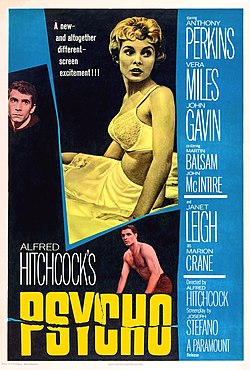
Psycho
In Phoenix, Arizona in late 1959, real estate secretary Marion Crane steals $40,000 in cash from her employer after hearing her boyfriend, Sam Loomis, complain that his debts are delaying their marriage. She sets off to drive to Sam's home in the town of Fairvale, California, switching cars in Bakersfield after an encounter with a suspicious policeman. A rainstorm forces Marion to stop at the secluded Bates Motel a few miles from Fairvale. Norman Bates, the proprietor, whose Second Empire style house overlooks the motel, registers Marion (who uses an alias) and invites her to dinner with him in the motel's office. When Norman returns to his house to retrieve the food, Marion overhears him arguing with his mother about his desire to dine with Marion. After returning, he discusses his hobby as a taxidermist, his mother's "illness" and how people have a "private trap" they want to escape. When Marion suggests that Norman should have his mother institutionalized, he becomes offended and insists that she is harmless. Marion decides to drive back to Phoenix in the morning to return the stolen money. As she showers, a shadowy figure enters the bathroom with a kitchen knife and stabs her to death. Shortly afterward, Norman is heard horrified at his mother's actions and rushes back to find Marion dead. He hurriedly cleans up the murder scene and places Marion's body, her belongings, and, unbeknownst to him, the hidden cash in her car, before sinking the vehicle in a swamp. Marion's sister, Lila, arrives in Fairvale a week later, tells Sam about the theft and demands information about Marion's whereabouts. He denies knowing anything about Marion's disappearance. Arbogast, a private investigator, approaches them, stating that he has been hired to retrieve the money. He stops in at the Bates Motel and questions Norman, whose nervous conduct, stuttering, and inconsistent answers arouse his suspicion. Arbogast examines the guest register and discovers from some handwriting in it that Marion spent a night in the motel. When Arbogast infers from things Norman says that Marion had spoken to his mother, Arbogast asks to speak to her, but Norman refuses to allow it. Arbogast leaves and calls Lila to tell her of his suspicions and that he will return to the motel, speak to Norman's mother, and rejoin Lila in town later. When Arbogast returns and enters the Bates' house to search for Norman's mother, a shadowy figure at the top of the stairs stabs him to death. When Sam and Lila do not hear back from Arbogast, Sam goes to the motel to look for him. Sam spots a silhouette in the house who he assumes is Norman's mother, who is unresponsive to Sam's calls. Lila and Sam alert the local sheriff, Al Chambers, who tells them Norman's mother died in a murder–suicide by strychnine poisoning ten years before. Chambers suggests that Arbogast lied to Sam and Lila so he could pursue Marion and the money. Convinced that something happened to Arbogast, Lila and Sam drive to the motel and check in. Sam distracts Norman in the office while Lila sneaks into the Bates' house. Suspicious, Norman knocks Sam out. As Norman heads to the house, Lila hides in the fruit cellar and discovers the mummified body of Norman's mother. Lila screams in horror, and Norman, wearing women's clothes and a wig, enters the cellar and attempts to attack her, only to be subdued by a recovered Sam. At the police station, a psychiatrist explains to Lila, Sam, and Chambers that Norman killed his mother and her lover out of jealousy. Unable to bear the guilt, he stole his mother's corpse and treated it as if she were still alive, then re-created his mother as an alternate personality, as jealous and possessive toward Norman as he felt about his mother. Whenever Norman was attracted to a woman, "Mother" would take over. Under the "Mother" personality, Norman killed two women before he killed Marion and Arbogast. The psychiatrist concludes that "Mother" has now completely submerged Norman's personality. Norman sits in a jail cell and hears his mother's voice stating the murders were his doing. Marion's car is towed from the swamp.

The Prestige
In 1890s London, Robert Angier, Alfred Borden, and Angier's wife, Julia, work as magician's assistants under the mentorship of John Cutter. During a water tank trick, Julia drowns after Borden incorrectly ties her wrists. Angier blames Borden, and the two men become bitter rivals. Both men pursue separate careers in magic. Borden, a gifted inventor of illusions, marries a woman named Sarah, with whom he has a daughter named Jess, and hires an enigmatic assistant, Fallon. Angier, whose strength lies more in showmanship, continues working with Cutter and takes on a new assistant, Olivia. The feud escalates as Angier and Borden visit and sabotage each other's acts. Borden loses two fingers after being shot by Angier during a pistol trick, and Borden violently thwarts Angier's bird act in front of a live audience. Borden next debuts a spectacular illusion, The Transported Man, in which he appears to teleport from one side of the stage to the other almost instantly. Angier becomes obsessed with discovering the trick's secret and, with Cutter's help, roughly recreates the act using a lookalike named Root, a failed actor. Though Angier's version is successful, he resents remaining hidden beneath the stage while Root takes the applause. Desperate to outdo Borden, he sends Olivia to spy on him, but she falls in love with Borden and defects, and passes Borden's coded diary to Angier. Borden reveals to Angier that the key word, TESLA, supposedly decrypts the diary and reveals his method. Seeking answers, Angier travels to Colorado Springs to meet the inventor Nikola Tesla. Believing Tesla built a teleportation device for Borden, Angier commissions Tesla to make one. Tesla eventually delivers a working machine but warns that it will bring only misery. When used, the device creates a duplicate of its subject while leaving the original person intact. In London, Angier uses the machine in a new illusion, The Real Transported Man, which earns him acclaim. Sarah, suspicious of Borden's secrecy and affair with Olivia, hangs herself. Determined to uncover Angier's method, Borden sneaks backstage during a performance of The Real Transported Man and witnesses Angier fall into a water tank and drown. He attempts to open the tank and save Angier, but is arrested for Angier's murder, convicted, and sentenced to death. While awaiting execution, Borden is approached by a solicitor for a wealthy Lord Caldlow, who offers to care for Borden's daughter Jess in exchange for the secret behind the original Transported Man. When Caldlow visits the prison, Borden is horrified to discover that he is actually Angier. Borden passes this Angier a note revealing the secret, but Angier tears it up, leaving him to hang. Cutter helps dispose of Tesla's teleportation machine. A disguised visitor shoots Angier in the basement of his theater, revealing himself as Borden. The mortally wounded Angier learns the truth: "Borden" is in fact a pair of identical twins sharing one identity. One twin loved Sarah, the other Olivia; one lost two fingers, and the other amputated his same two fingers to match; one has survived, while the other was executed. Together they performed The Transported Man by switching places undetected, and whenever one twin was performing, the other hid using prosthetics and makeup under the identity "Fallon". Dying, Angier confesses that each time he used Tesla's machine, it created a clone, one of whom drowned beneath the stage each night, and that he is no longer sure of his own identity. The surviving Borden brother reclaims his daughter, as Cutter narrates that the final act of any magic trick—the "prestige"—is the return of what was thought lost. Angier's death knocks over a kerosene lamp that sends his theater up in flames, revealing rows of water tanks holding the corpses of his many duplicates.

Memento
The film starts with a Polaroid photograph of a dead man. As the sequence plays backward, the photo reverts to its undeveloped state, entering the camera before the man is shot in the head. The film continues, alternating between black-and-white and color sequences. The black-and-white sequences begin with Leonard Shelby, a former insurance investigator, in a motel room speaking to an unseen and unknown caller. Leonard has anterograde amnesia and is unable to store recent memories, the result of an attack by two men. Leonard explains that he killed the attacker who raped and strangled his wife Catherine, but a second clubbed him and escaped. The police did not accept that there was a second attacker, but Leonard believes the attacker's name is "John G" or "James G". Leonard investigates using notes, Polaroid photos, and tattoos to keep track of the information he discovers. Leonard recalls Sammy Jankis, another anterograde amnesiac, from his insurance industry days. After tests confirmed Sammy's inability to learn tasks through repetition, Leonard believed that his condition was at best psychological and turned down his insurance claim. Sammy's distraught wife repeatedly asked Sammy to administer her insulin shots for her diabetes, hoping he would remember having recently given her a shot and avoid giving her a fatal overdose. However, Sammy administered each injection, and his wife died. The color sequences are shown reverse-chronologically. In the story's chronology, Leonard self-directively gets a tattoo of John G's license plate. Finding a note in his clothes, he meets Natalie, a bartender who resents Leonard because he wears the clothes and drives the car of her boyfriend, Jimmy Grantz. After understanding Leonard's condition, she uses it to get Leonard to drive a man named Dodd out of town and offers to run the license plate as a favor through the Department of Motor Vehicle's database. Meanwhile, Leonard meets with a contact, Teddy, who helps with Dodd, but warns about Natalie. Leonard finds that he had previously annotated his Polaroid of Teddy, warning himself not to trust Teddy. Natalie provides Leonard with the driver's license for a John Edward Gammell, Teddy's full name. Confirming Leonard's information on "John G" and his warnings, Leonard drives Teddy to an abandoned building, leading to the opening where he shoots him. In the final black-and-white sequence, prompted by the caller, Leonard meets with Teddy, an undercover officer, who has found Leonard's "John G", Jimmy, and directs Leonard to the abandoned building. When Jimmy arrives, Leonard strangles him fatally and takes a Polaroid photo of the body. As the photo develops, the black-and-white transitions to the final color sequence. Leonard swaps clothes with Jimmy, hearing him whisper "Sammy". As Leonard has only told Sammy's story to those he has met, he suddenly doubts Jimmy's role in his wife's murder. Teddy arrives and asserts that Jimmy was John G, but when Leonard is undeterred, Teddy reveals that he helped him kill the real attacker a year ago, and Teddy has been using Leonard since. Teddy points out that since the name "John G" is common, Leonard will cyclically forget and begin his search again and that even Teddy himself has a "John G" name. Further, Teddy reveals that Sammy's story is Leonard's own story, a memory Leonard has repressed to escape feelings of guilt. After hearing Teddy confess all of this, Leonard burns the photograph of the dead Jimmy and the photo of himself right after killing the real attacker a year ago, pointing to his chest where he would get a tattoo to document his successful revenge. In a monologue, Leonard explains that he is willing to lie to himself in order to get justice against anyone who has wronged him. He targets Teddy by ordering a tattoo of Teddy's license plate number and writing a note to himself that Teddy is not to be trusted so that he will mistake Teddy for John G and kill him. Leonard drives off in Jimmy's car, confident that, despite this lie, he will retain enough awareness of the world to know that his actions have consequences.

The Lives of Others
In 1984 East Germany (GDR), Stasi Hauptmann Gerd Wiesler, code name HGW XX/7, is ordered by his friend and superior, Lt. Col. Anton Grubitz, to spy on playwright Georg Dreyman, whose pro- communist politics and international recognition have so far kept the state from directly monitoring him. Dreyman's apparent life as a model East German mystifies Wiesler; the playwright has no known vices or record of disloyalty or dissent at all. At the request of Minister of Culture Bruno Hempf, Wiesler and his team bug Dreyman's apartment, set up surveillance equipment, and report Dreyman's activities. Wiesler is disappointed to discover that Hempf is having Dreyman observed not for suspicions of disloyalty or dissent, but for his own lustful interest in Dreyman's girlfriend, actress Christa-Maria Sieland. After an intervention by Wiesler leads to Dreyman discovering Hempf's coercive relationship with Sieland, he implores her not to meet Hempf again and to be true to herself. She returns to Dreyman's apartment without seeing Hempf. Dreyman's friend Albert Jerska, a blacklisted theatrical director, gives him sheet music for Sonate vom Guten Menschen (Sonata about Good People). Shortly afterwards, Jerska hangs himself. Dreyman realises that the GDR has not published its suicide rates since 1977, and decides to publish an article in Western media. To determine whether or not his flat is bugged, Dreyman and his friends feign a defection attempt. A sympathetic Wiesler does not report it and the conspirators believe they are safe. Since all East German typewriters are registered and identifiable, an editor of prominent West German newsweekly Der Spiegel smuggles Dreyman a Groma Büromaschinen Kolibri, an ultra-flat typewriter, which he hides under a floorboard. It has only a red ribbon, which stains his fingers. Dreyman publishes an anonymous article in Der Spiegel accusing the state of concealing the country's elevated suicide rates. The article angers the East German authorities but the Stasi cannot link it to a registered typewriter. Rejected by Sieland, Hempf orders Grubitz to arrest her. She is blackmailed into revealing Dreyman's authorship of the article, although the Stasi do not find the typewriter. Grubitz, suspicious of Wiesler, has him conduct the follow-up interrogation of Sieland. Wiesler makes Sieland reveal the typewriter's location. When the Stasi return to Dreyman's apartment, Sieland realises that Dreyman will know she betrayed him and runs into the street in front of a passing truck. Dreyman runs after her and Sieland dies in his arms. Grubitz finds nothing beneath the floorboard; he ends the investigation with a perfunctory apology to Dreyman. Grubitz informs Wiesler that while the investigation is over, so is Wiesler's career; his remaining years with the Stasi will be steam-opening letters for inspection in Department M, a dead-end assignment for disgraced agents. The same day, Mikhail Gorbachev is elected leader of the Soviet Union. Two years after the fall of the Berlin Wall, Hempf and Dreyman meet at a performance of Dreyman's play, each reflecting on life before and after German reunification. Dreyman asks why he was never monitored by the Stasi, to which Hempf replies that he had been: "We knew everything." Dreyman finds the abandoned listening devices in his apartment and rips them from the walls. Dreyman reviews his Stasi files at the Stasi Records Agency, reading that Sieland was released just before the second search and could not have removed the typewriter. He is confused by other contradictions until, seeing a red fingerprint in the final report, he realises that the officer in charge of his surveillance – Stasi officer HGW XX/7 – had removed the typewriter from his apartment and concealed his activities, including his authorship of the suicide article. He tracks down Wiesler, who now works as a mailman, but ultimately decides not to approach him. Two years later, Wiesler passes a bookstore window display promoting Dreyman's new novel, Sonate vom Guten Menschen ("Sonata about a Good Person"). He opens a copy of the book, discovering that it is dedicated "To HGW XX/7, in gratitude". As he buys a copy, Wiesler is asked if he would like it giftwrapped. He replies: "No, it's for me."

Apocalypse Now
In 1969, during the Vietnam War, jaded MACV-SOG operative Captain Benjamin L. Willard is summoned to I Field Force headquarters in Nha Trang. The officers there tell him that U.S. Army Special Forces Colonel Walter E. Kurtz is waging a brutal war against North Vietnamese Army, Viet Cong, and Khmer Rouge forces without permission from his commanders. Kurtz is based at a remote jungle outpost in eastern Cambodia, where he commands American, Montagnard, and local Khmer militia troops who worship him. Willard is ordered to "terminate command... with extreme prejudice." He joins a U.S. Navy river patrol boat (PBR) commanded by the Chief Petty Officer Phillips, with crewmen Lance Johnson, "Chef" Hicks, and "Mr. Clean" Miller to quietly navigate up the Nùng River to Kurtz's outpost. Before reaching the coastal mouth of the Nùng, they rendezvous with the 1st Squadron, 9th Cavalry Regiment, a helicopter-borne air assault unit of the 1st Cavalry Division commanded by Lieutenant Colonel Bill Kilgore, to coordinate safe entry into the river. Kilgore hasn't been briefed on Willard's mission but becomes more engaged after discovering that Lance, a well-known fellow surfer, is with him. Kilgore agrees to escort the boat through the Nùng's Viet Cong -held coastal mouth and a full-scale air assault is executed on the village with " Ride of the Valkyries " playing on loudspeakers. Resisting Kilgore's attempts to convince Lance to surf with him on the newly conquered beach, Willard gathers the sailors to board the PBR and continue their mission. Going ashore to find mangos, Willard and Chef are surprised by a tiger, leading Chef to have a brief mental breakdown. Willard starts seeing cracks form in the crew. Tensions rise when Willard insists on the priority of his mission over the Chief's usual patrol objectives. Willard partially reveals his orders to convince the Chief of the mission's importance. As Willard studies Kurtz's dossier, he is shocked by Kurtz's mid-career sacrifice by leaving a prestigious Pentagon assignment to join Special Forces, all but destroying his chances for career advancement. At a remote U.S. Army outpost, the boat receives a dispatch bag containing both official and personal mail. Willard learns that another MACV-SOG operative, Special Forces Captain Richard Colby, was sent on an earlier mission identical to Willard's and has since joined Kurtz. Lance activates a smoke grenade while under the influence of LSD, attracting enemy fire, causing Mr. Clean's death. Further upriver, the Chief is impaled by a spear thrown by Montagnards and attempts to kill Willard with the spear point protruding from his chest, but Willard overpowers him. Willard reveals his mission to Chef, now commanding the PBR. They arrive at Kurtz's outpost, a Khmer temple teeming with Montagnards and strewn with the remains of victims. Willard, Chef, and Lance are greeted by an American photojournalist, who praises Kurtz's genius. Willard encounters Colby and five other American soldiers among the Montagnards. He sets out with Lance to find Kurtz, leaving Chef with orders to call in an airstrike on the outpost if the two do not return. In the camp, Willard is questioned by Kurtz, then locked in a bamboo cage. One night Kurtz appears and drops Chef's severed head into Willard's lap. Willard is released, and warned not to attempt escape. Kurtz lectures him on his theories of war, praising the ruthlessness of the Viet Cong, and asks Willard to tell his son the truth about his mutiny. As the Montagnards ceremonially kill a water buffalo, Willard attacks Kurtz with a machete, essentially dismembering him in a frantic rage. Kurtz collapses and silently whispers "the horror", before dying. Kurtz's followers watch Willard depart with Kurtz's writings, and bow down to him. Willard leads Lance back to the PBR, and they depart.


Incendies
Following the death of their mother, Nawal, an Arab immigrant in Canada, Jeanne and her twin brother Simon meet with French Canadian notary Jean Lebel, their mother's employer and family friend. Nawal's will refers to not keeping a promise, denying her a proper gravestone and casket, unless Jeanne and Simon track down their mysterious brother, of whose existence they were previously unaware, and their father, who they believed was dead. Nawal has left two letters; one is to be delivered to Jeanne and Simon's father, and the other is to be delivered to their brother. Jeanne accepts; Simon, on the other hand, seemingly having had a more difficult relationship with Nawal and her unusual personality, is reluctant to join Jeanne on this pursuit. Nawal came from a Christian family in a Levantine country, and she fell in love with a refugee named Wahab, resulting in her pregnancy. Her family murders her lover and nearly shoots her in an honour killing, but her grandmother spares her, making her promise to leave the village after her baby's birth and start a new life in the city of Daresh. The grandmother tattoos the back of the baby's heel and sends him to an orphanage in Kfar Khout. While Nawal is at university in Daresh a few years later, civil war and war crimes break out, with Nawal opposing the war on human rights grounds. Her son's orphanage is destroyed by Muslim militants. Nawal leaves Daresh to try to find her son and boards a bus full of Muslim refugees. Christian Nationalists shoot the driver and fire into the bus full of passengers, only missing Nawal and a mother with her daughter. As the Nationalists prepare to set the bus on fire, the survivors try to escape towards the back of the bus. Nawal shows her crucifix and tells the Nationalists that she is Christian. She attempts to save the girl by claiming her as her own, but the girl runs towards the burning bus, calling for her mother, and is shot dead. Nawal finds her way back to town and joins the Muslim fighters. She tutors the son of a nationalist leader, eventually earning enough trust to smuggle in a gun to shoot the leader. She is imprisoned in Kfar Ryat and sings through the screams of other prisoners, earning her the nickname "The Woman Who Sings". To attempt to break her, she is raped by torturer Abou Tarek who leaves her saying, "sing now". She consequently gives birth to the twins. After traveling to her mother's native country, Jeanne gradually uncovers this past and persuades Simon to join her. With help from Lebel, they learn their brother's name is Nihad of May (the month he was born in) and track down Chamseddine, a local warlord. Simon meets with him and Chamseddine reveals that he attacked the orphanage in Kfar Khout, where he spares the children and converts Nihad into an Islamic child soldier. He then reveals the war-mad Nihad was captured by the nationalists, turned by them, trained as a torturer, and then sent to Kfar Ryat, where he took the name Abou Tarek, making him both the twins' maternal half-brother and father; as such, both letters are addressed to the same person. Like Nawal, Nihad's superiors gave him a new life in Canada after the war. By chance, Nawal encountered him at a Canadian swimming pool and saw both the tattoo and his face, realizing her long-lost son was her rapist all along. The shock of learning the truth caused Nawal to suffer a stroke, which led to her decline and untimely death at age 60. The twins find Nihad in Canada and deliver Nawal's letters to him. He opens both of them; the first letter addresses him as the twins' father, the rapist, and is filled with contempt. The second letter addresses him as the twins' brother and is instead written with caring words, saying that he, as Nawal's son, is deserving of love. Horrified at the truth, Nihad tries to chase after the twins, but they are gone. Nawal gets her gravestone. Sometime later, Nihad visits it.

A Beautiful Mind
In 1947, John Nash arrives at Princeton University as a co-recipient, with Martin Hansen, of the Carnegie Scholarship for Mathematics. He meets fellow math and science graduate students Sol, Ainsley, and Bender, and his roommate Charles Herman, a literature student. Determined to publish an original idea of his own, Nash is inspired when he and his classmates discuss how to approach a group of women at a bar. Nash argues that a cooperative approach would lead to better chances of success, which leads him to develop a new concept of governing dynamics. His theory earns him an appointment at MIT where he chooses Sol and Bender over Hansen to join him. In 1953, Nash is invited to the Pentagon to decipher encrypted enemy telecommunications. Bored with his work at MIT, he is recruited by the mysterious William Parcher of the United States Department of Defense with a classified assignment: to identify hidden patterns in magazines and newspapers to thwart a Soviet plot. He is given an implanted diode that gives him a passcode to access a drop spot at a mansion. Nash becomes increasingly obsessive with his work and grows paranoid. Nash falls in love with a student, Alicia Larde, and they eventually marry. After a shootout between Parcher and Soviet agents, Nash tries to quit his assignment but is forced to continue. While delivering a guest lecture at Harvard University, Nash believes Soviet agents are pursuing him and is forcibly sedated. He awakens to a psychiatric facility under the care of Dr. Rosen. Dr. Rosen tells Alicia that Nash has schizophrenia and that Charles, Marcee (niece of Charles), and Parcher exist only in his imagination. Alicia, Sol and Bender investigate her husband's study, which shows various news and magazine clippings. Alicia uncovers the stack of unopened "classified documents" from the drop point and brings them to Nash, revealing the truth of his assignment. Overcome with shock, Nash slices his arm open to uncover the diode, which doesn't exist. Nash is given a course of insulin shock therapy and eventually released. Frustrated with the side effects of his antipsychotic medication, in particular erectile dysfunction, he secretly stops taking it. He encounters Parcher, who urges him to continue his assignment in a shed near his home. In 1956, Alicia discovers Nash has relapsed and rushes home. She finds that Nash had left their infant son in the running bathtub, convinced "Charles" was watching the baby. Alicia calls Dr. Rosen, but Nash accidentally hits her and the baby, believing he's saving them from Parcher. As Alicia flees with the baby, Nash realizes that all of them have looked the same ever since he first encountered them, in particular that "Marcee" has always remained a young girl, and concludes they must be hallucinations. Against Dr. Rosen's advice, Nash chooses not to be hospitalized again, believing he can deal with his symptoms himself with Alicia's support. Nash returns to Princeton, approaching his old rival Hansen, now head of the mathematics department, who allows him to work out of the library and audit classes. Over the next two decades, Nash learns to ignore his hallucinations and, by the late 1970s, is allowed to teach again. In 1994, Nash is awarded the Nobel Memorial Prize in Economic Sciences for his work on game theory and is honored by his fellow professors. At the Stockholm ceremony, he dedicates the prize to his wife. Nash reencounters Charles, Marcee, and Parcher after the ceremony, but ignores them as he, Alicia, and their son leave.

The Thing
In Antarctica, a Norwegian helicopter pursues a sled dog to an American research station and lands. The passenger fumbles a grenade and destroys the helicopter as the pilot continues the chase on foot with a rifle. The pilot shouts in Norwegian and fires at the dog, hitting one of the Americans, before he is shot dead in self-defense by station commander Garry. The American helicopter pilot, R. J. MacReady, and Dr. Copper leave to investigate the Norwegian base. Among the charred ruins and frozen corpses, they find the burnt corpse of a malformed humanoid, which they transfer to the American station. Their biologist, Blair, autopsies the remains and finds a normal set of human organs. Clark kennels the sled dog, and it soon metamorphoses and absorbs several of the station dogs. This disturbance alerts the team, and Childs uses a flamethrower to incinerate the creature. Blair autopsies the Dog-Thing and surmises it is an organism that can perfectly imitate other life forms. Data recovered from the Norwegian base leads the Americans to a large excavation site containing a partially buried alien spacecraft, which Norris estimates has been buried for over a hundred thousand years and a smaller, human-sized dig site. Blair grows paranoid after running a computer simulation that indicates the creature could assimilate all life on Earth in a matter of years. The group implements controls to reduce the risk of assimilation. The remains of the malformed humanoid assimilate an isolated Bennings, but Windows interrupts the process and MacReady burns the Bennings-Thing. The team also imprisons Blair in a tool shed after he sabotages all the vehicles, kills the remaining sled dogs, and destroys the radio to prevent escape. Copper suggests testing for infection by comparing the crew's blood against uncontaminated blood held in storage, but after learning the blood stores have been destroyed, the men lose faith in Garry's leadership, and MacReady takes command. He, Windows, and Nauls find Fuchs' burnt corpse and speculate that he committed suicide to avoid assimilation. Windows returns to base while MacReady and Nauls investigate MacReady's shack. During their return, Nauls abandons MacReady in a snowstorm, believing he has been assimilated after finding his torn clothes in the shack. The team debates whether to allow MacReady inside, but he breaks in and holds the group at bay with dynamite. During the encounter, Norris appears to suffer a heart attack. As Copper attempts to defibrillate Norris, his chest transforms into a large mouth and bites off Copper's arms, killing him. MacReady incinerates the Norris-Thing, but its head detaches and attempts to escape before also being burnt. MacReady thinks that the Norris-Thing demonstrated that every part of the Thing is an individual life-form with its own survival instinct. He proposes testing blood samples from each survivor with a heated piece of wire and has each man restrained, but is forced to kill Clark after he lunges at MacReady with a scalpel. Everyone passes the test except Palmer, whose blood recoils from the heat. Exposed, the Palmer-Thing transforms, breaks free of its bonds, and infects Windows, forcing MacReady to incinerate them both. Childs is left on guard in the main building while MacReady, Garry and Nauls go to test Blair. They find that he has escaped and has been using vehicle components to assemble a small flying saucer, which they destroy. Upon their return, Childs is missing, and the power generator has been destroyed, leaving the men without heat. MacReady surmises that, with no escape left, the Thing intends to return to hibernation until a rescue team arrives. The three men agree that the Thing cannot be allowed to escape and set explosives to destroy the station but the Blair-Thing kills Garry, and Nauls disappears. The Blair-Thing transforms into an enormous creature and breaks the detonator but MacReady triggers the explosives with a stick of dynamite, destroying the station and the Blair-Thing. While MacReady sits by the burning remnants, Childs returns, claiming he got lost in the storm while pursuing Blair. Exhausted and slowly freezing to death, they acknowledge the futility of their distrust and share a bottle of J&B Scotch whisky.

Gone Girl
On their fifth anniversary, writing teacher Nick Dunne returns home to find that his wife, Amy, is missing. Amy's fame as the inspiration for her parents' Amazing Amy children's books ensures widespread press coverage. The media finds Nick's apathy towards the disappearance suspicious. Before her disappearance, Nick and Amy's marriage deteriorated. Both lost their jobs in the recession and moved from New York to Nick's hometown to support his dying mother. Nick grew distant from Amy and began an affair with his student Andie, while Amy became resentful toward Nick. Detective Rhonda Boney and the forensic team find evidence of a struggle and blood loss in the house. Boney learns of the couple's financial problems, disputes, and Amy's attempt to buy a gun. Medical reports indicate that Amy was pregnant, of which Nick denies knowledge. On each anniversary, Amy sets up elaborate treasure hunts for Nick. This year's clues appear in places where Nick had sex with Andie, revealing Amy's knowledge of his affair. Nick discovers thousands of dollars' worth of items purchased with his credit card, unauthorized and hidden in his sister Margo's woodshed. Amy's clues lead authorities to a diary documenting her growing fear that Nick will kill her. Amy hides in a campground in the Ozarks. After discovering Nick's affair, Amy conceived an elaborate plan to frame him for her murder. She had him increase her life insurance, secretly used his credit card to buy the woodshed items, stole a sample of her pregnant neighbor's urine to fake a pregnancy to elicit media sympathy, wrote increasingly fabricated diary entries and placed incriminating evidence for police to find. On the morning of her disappearance, Amy drained and splattered her own blood across the kitchen. Her original plan was to drown herself after Nick's arrest and have her body found to ensure his death sentence. Nick deduces Amy's scheme, convinces Margo of his innocence, and hires lawyer Tanner Bolt, known for representing husbands suspected of uxoricide. Nick meets two of Amy's ex-boyfriends. Tommy O'Hara claims that she framed him for rape and ruined his life after they broke up. The wealthy Desi Collings, against whom Amy filed a restraining order for stalking, rejects Nick. When Amy's campground neighbors rob her, she calls Desi for help, convincing him that she fled Nick's abuse. Desi agrees to hide her in his lakehouse. Bolt convinces Nick to admit to his affair on a popular talk show, thus seizing the narrative initiative from the media. Andie reveals the affair at a press conference shortly beforehand, but Nick insists on conducting the interview. He affirms his innocence and feigns regret for his shortcomings as a spouse, knowing that Amy is watching. The interview garners widespread sympathy for Nick. However, Boney, having gathered adequate evidence, arrests Nick and Margo. Bolt bails them out, and they brace for the impending trial. After watching Nick's interview, Amy rekindles her attraction to him and begins crafting her escape story. Using surveillance cameras and self-inflicted injuries, she makes it appear that Desi kidnapped and raped her. She seduces Desi, slits his throat during sex, and returns home, clearing Nick of suspicion. Medical examiners lend credence to Amy's story. During questioning, Boney probes her inconsistencies, but Amy accuses Boney of incompetence. The FBI closes the case, but Boney gleans Amy's guilt. At home, Amy tells Nick the truth, but says that she forgives him after seeing him plead for her return on TV. Nick shares this with Boney, Bolt, and Margo. They agree that Amy is guilty, but acknowledge a lack of evidence. Bolt wishes Nick well and returns to New York. A televised interview takes place in their home seven weeks later. Anticipating Nick's intention to leave her and expose her story, Amy reveals her pregnancy minutes before the interview, having inseminated herself with Nick's sperm from a fertility clinic. Nick reacts violently but feels responsible for the child and decides to stay with Amy, to Margo's distress. The couple announces on television that they are expecting a child.

Chinatown
In 1930s Los Angeles, a woman identifying herself as Evelyn Mulwray hires private investigator J. J. "Jake" Gittes to trail her husband, Hollis, the chief engineer at the Department of Water and Power. Gittes photographs Hollis in the company of a young woman and the pictures make their way into the Post-Record, exposing their apparent affair. Gittes is then confronted by the real Evelyn Mulwray, who threatens to sue him. He concludes that the impostor was using him to discredit Hollis. Gittes crosses paths with his former colleague, LAPD Lieutenant Lou Escobar, when Hollis's corpse is found in a reservoir. Investigating further, he discovers that huge quantities of water are being released from the reservoir each night, despite the fact that the city is in the midst of a drought. Water Department Security Chief Claude Mulvihill warns him off, and he has his nose slashed by one of Mulvihill's henchmen. Gittes receives a call from Ida Sessions, the woman who posed as Evelyn. She refuses to say who hired her, but urges Gittes to check the Post-Record ' s obituary section. Now working for Evelyn, Gittes investigates Hollis's death. He learns that Hollis was once the business partner of Evelyn's wealthy father, Noah Cross. Cross offers to double Gittes's fee if he finds Hollis's supposed mistress, who has disappeared. Public records reveal that much of the Northwest Valley has recently changed ownership. Gittes recognizes one of the buyers' names from the obituary section; the obituary indicates that he had been dead for a week when the deal was closed. Gittes and Evelyn bluff their way into the retirement home where the buyer had lived and discover that many of the other residents are " buyers " too, although they have no knowledge of this fact. A suspicious staff member calls Mulvihill, but Gittes and Evelyn escape him and his thugs and hide at her mansion, where they sleep together. Later that night, Gittes follows Evelyn to a house where he sees her comforting the missing girl. When confronted, Evelyn claims the girl is her sister, Katherine. A call from Escobar summons Gittes to Ida's apartment; she has been murdered. Escobar reveals that Hollis had saltwater in his lungs, indicating that he did not drown in the reservoir. He suspects Evelyn is responsible for her husband's murder and tells Gittes to produce her quickly. At the Mulwray residence, Gittes retrieves a pair of bifocals from the saltwater garden pond. Gittes confronts Evelyn about both Katherine, whom she now claims is her daughter, and her husband, whom she denies murdering. Frustrated, he repeatedly slaps Evelyn until she breaks down and reveals that Katherine is both her sister and daughter; the girl's father is Cross, who impregnated Evelyn when she was 15. She tells Gittes that the glasses he found did not belong to Hollis, because he did not wear bifocals. Gittes arranges for the women to flee to Mexico and instructs Evelyn to meet him at her butler's home in Chinatown. He summons Cross to the Mulwray estate, having deduced that Cross dropped his bifocals when he drowned Hollis in the pond. Cross reveals that he is behind both the water shortage and the land grab in the Northwest Valley. Once the land is his, he will get Los Angeles to incorporate the Valley into the city, and obtain a contract from the city to build a reservoir there. He discredited and killed Hollis when the latter came close to uncovering the plan. At gunpoint, Cross and Mulvihill force Gittes to take them to Chinatown, where both Cross's daughter Katherine and the police are waiting. Escobar detains Gittes as Cross attempts to claim Katherine. Evelyn, determined to both protect Katherine from Cross and avoid her learning that Cross is her father, shoots Cross in the arm and tries to escape with Katherine, but the police open fire, killing Evelyn. Cross takes a distraught Katherine away, and Escobar orders Gittes released. As the traumatised Gittes, realizing Cross will get away with everything, is led away by his associates, one tells him, "Forget it, Jake. It's Chinatown."