Genre: Drama (Page 22)
Browse 989 movies in the Drama genre.
All Genres
F1: The Movie
Aging former Formula One (F1) prodigy Sonny Hayes has spent the last 30 years living as a racer-for-hire, following a career-ending crash at the 1993 Spanish Grand Prix that has left him burdened by the failure to live up to his potential. After winning the 24 Hours of Daytona, he is approached by his former teammate Rubén Cervantes, owner of the struggling APXGP F1 team, who asks him to be their second driver. Rubén explains that unless APXGP wins one of the nine remaining Grands Prix of the season, his investors will sell the team. Sonny reluctantly agrees after Rubén insists that victory will prove he is the "best in the world". Sonny meets the team, including technical director Kate McKenna and ambitious rookie Joshua Pearce. Joshua fears that the failing APXGP could derail his career and aims to attract interest from another team. Sonny struggles with the modern F1 machinery but quickly diagnoses APXGP's weaknesses, proposing that the vehicles be upgraded with enhanced aerodynamics to compensate for their speed disadvantage. At the British Grand Prix, Sonny and Joshua compete against each other rather than cooperating, resulting in both crashing out. Acknowledging the team's need to secure a points finish, Sonny exploits the rules at the Hungarian Grand Prix by deliberately colliding with rivals to trigger safety car periods. This allows Joshua to close the gap to the frontrunners and secure APXGP's first top-ten finish. During the rain-affected Italian Grand Prix, Sonny advises Joshua to remain on slick tires, trading grip for speed and elevating him to second place. However, he ignores Sonny's instruction to wait for a straight before overtaking Max Verstappen, skids and flies off the track, while his car bursts into flames. Sonny rescues him, but Joshua is injured and misses the next three races. An increasingly arrogant Joshua returns at the Belgian Grand Prix and deliberately forces Sonny into a crash. Afterward, Sonny criticizes him for foolishly setting the team back for personal glory. Seeking to ease tensions, Kate organizes a poker game to highlight their similar backgrounds, after which Sonny and Kate spend the night together. He later admits to her that he races to recapture the rare moments when he feels untouchable. Following an anonymous tip alleging that Kate's car upgrades are illegal, APXGP is forced to remove them, leaving the team at a disadvantage. Frustrated—and realizing he has skipped his ritual of having a random playing card with him in the cockpit—Sonny drives recklessly during the Las Vegas Grand Prix and crashes. While he recovers, Rubén discovers that Sonny's 1993 injuries left him medically unfit for F1, with risks of blindness or death, and fires him for his own safety. APXGP board member Peter Banning then admits to Sonny that he orchestrated his signing and the anonymous tip to sabotage the team and force its sale, offering Sonny significant compensation to let APXGP fail. Meanwhile, Joshua begins applying Sonny's racing techniques, admits fault for his earlier crash, and recommits to the team. Concealing his blurred vision and headaches, Sonny persuades Rubén to let him return, just as the FIA clears Kate and restores her upgrades. At the season-ending Abu Dhabi Grand Prix, Joshua battles Lewis Hamilton and Charles Leclerc for the lead. After Sonny is caught in a minor crash, the race is red-flagged, allowing APXGP to repair both cars before a three-lap sprint to the finish. On the restart, Sonny overtakes Leclerc and sacrifices his own chance of victory by holding off Hamilton so Joshua can move into first. On the final lap, Hamilton and Joshua collide, clearing the way for Sonny to take his first F1 win and secure APXGP's future. Joshua is offered a seat with Mercedes but declines. As the team celebrates, Sonny quietly prepares to leave, parting on good terms with Joshua and promising to see Kate soon. Some time later, he lines up for the Baja 1000. When asked what he is racing for, Sonny laughs.


Crazy Stone
When a precious jade stone is discovered in an old outhouse, the owner of said outhouse and the surrounding buildings suddenly finds himself with the financial clout to withstand the buy-out pressure of an unethical developer who wishes to build a large building on his plot. The owner, intending to display the stone to the public, puts his dedicated chief of security in charge of keeping it safe. But with the stakes running high, this is easier said than done. The developer hires a high-tech cat burglar from Hong Kong to steal the stone, the owner's wayward son sees the jewel as the perfect symbol of wealth and hatches a plan to use it to increase his chances at getting laid, and a gang of three con-men who hear about the jewel see it as their ticket to the big time. These three groups find themselves in direct competition and, finding their attempts foiled as often by the security guard as by each other, become more and more desperate as the film progresses.

500 Days of Summer
Aspiring architect Tom Hansen works as a writer at a greeting card company in Los Angeles. He meets Summer Finn, his boss Vance's new assistant. They bond over their similar musical tastes, and at a company-sponsored karaoke night, they discuss love, which he believes in, unlike her, as her own parents had divorced. Tom's friend and co-worker drunkenly reveals that Tom likes Summer, which both assert is merely a close friendship. A few days later, Summer spontaneously kisses Tom in the office; Tom agrees to a casual relationship, and that night, they have sex. Over the first few months of their relationship, they grow closer. Tom accompanies Summer to a park bench in the city, his favorite location. Eventually, Tom's friends and work colleagues as well as his adolescent half-sister Rachel urge him to ask Summer about their relationship status, but Summer insists it is unimportant as long as both parties are satisfied. One night, Tom brawls with a man who attempts to make sexual and romantic advances toward Summer in a bar. After an argument, they reconcile and Summer concedes that Tom deserves some certainty but cannot promise to always feel affection for him. Slowly, their relationship becomes less passionate and they begin to continuously argue. After Summer quits her job at the greeting card company and ends things with Tom, citing their unhappiness, Vance transfers him to the consolations department, as his depression is making him unsuitable for happier events. A blind date with a woman named Alison fails, as Tom spends it complaining about Summer. Months later, Tom is invited to attend the marriage of a work colleague named Millie and attempts to avoid Summer on the train heading to the occasion, but she notices him and invites him for coffee. At the ceremony, Summer catches the bouquet thrown by Millie, and dances with Tom at the wedding reception. After she invites him to a party at her apartment, he arrives, hoping to rekindle their romance, but notices her wearing an engagement ring and tearfully departs. Sinking further into depression, Tom secludes himself in his apartment, only emerging for alcohol and junk food. After a few days, he returns to work heavily inebriated and emotionally quits his job on the spot. Rachel criticizes Tom's attitude, explaining that Summer was the wrong woman for him and that his depression stems from focusing solely on happy instances in the relationship. Tom finally reflects on the incompatibilities he'd overlooked. One day, he energetically rededicates himself to architecture, as Summer had encouraged him to do. He assembles a portfolio and secures job interviews. Tom and Summer re-encounter each other at the park bench. She has recently married, and he admits his inability to comprehend it as she never wanted to be serious with anyone. She explains that when she met her now-husband, she was sure of him in a way she wasn't about Tom. When he acknowledges his shortcomings about believing in true love, she reassures him that his beliefs are justified, but stresses their own romantic incompatibility. He wishes her happiness as she departs. On Wednesday, May 23, Tom encounters a young woman who is interviewing for the same position at an architectural firm as him, and they connect over his favorite location. He invites her for coffee once both of them are finished with the interview. She declines, but then changes her mind, revealing that her name is Autumn.

The Secret World of Arrietty
A boy named Shō tells the story of the week in summer he spent at his mother's home with his maternal great-aunt, Sadako, and the housemaid, Haru. When Shō arrives, he gets a glimpse of Arrietty, a Borrower girl, hiding in the plants. At night, Arrietty's father, Pod, takes her on her first "borrowing" mission, to get sugar and tissue paper. After obtaining a sugar cube from the kitchen, they travel to a bedroom which they enter through a dollhouse. It is Shō's bedroom; he sees Arrietty when she tries to take a tissue from his table. Startled, she drops the sugar cube. Shō tries to call out to her, but Pod and Arrietty leave. The next day, Shō places the sugar cube and a little note beside the air vent. Pod warns Arrietty not to take it because their existence must be kept secret from humans. Nevertheless, she sneaks out to visit Shō in his bedroom. Without showing herself, she tells him to leave her family alone, but they soon have a conversation, which is interrupted by a crow. The crow attacks Arrietty, but Shō saves her. On her return home, Arrietty is intercepted by her father. Realizing they have been detected, Pod and his wife Homily decide they must move out. Shō learns from Sadako that his mother and grandfather had noticed the presence of Borrowers in the house and had the dollhouse built for them. The Borrowers had not been seen since. Pod returns injured from a borrowing mission and is helped home by Spiller, a Borrower who lives in the wild. Shō removes the floorboard concealing the Borrower household and replaces their kitchen with the kitchen from the dollhouse to show he hopes for them to stay. However, the Borrowers are frightened by this and speed up their moving process. Pod recovers and Arrietty bids farewell to Shō. Shō apologizes that he has forced them to move out and reveals he has had a heart condition since birth and will undergo an operation in a few days. The operation does not have a good chance of success. He is accepting, saying that every living thing dies. Haru notices the floorboards have been disturbed. She unearths the Borrowers' house and captures Homily. Alerted by her mother's screams, Arrietty goes to investigate. Saddened by her departure, Shō returns to his room. Haru locks him in and calls a pest control company to capture the other Borrowers alive. Arrietty comes to Shō for help; they rescue Homily and he removes all traces of the Borrowers' presence, including putting the kitchen back in the dollhouse. On their way out during the night, the Borrowers are spotted by the cat Niya. Thereupon Niya leads Shō to the "river", a small rivulet, where the Borrowers are waiting for Spiller to take them further. Shō gives Arrietty a sugar cube and tells her that she will always be a part of him and that her courage and the Borrowers' fight for survival have made him want to live through the operation. In return, Arrietty gives him her hairclip, a small clothespin, as a token of remembrance. The Borrowers leave in a floating teapot with Spiller in search of a new home. The Disney international dubbed version contains a final monologue, where Shō states that he never saw Arrietty again. He returned to the house a year later, indicating that the operation had been successful. However, he overhears rumors of objects disappearing in neighboring homes.

The Wave
A political sciences teacher, Rainer Wenger, is forced to teach a class on autocracy, despite being an anarchist and wanting to teach the class on anarchy. When his students, the third generation after the Second World War, do not believe that a dictatorship could be established in modern Germany, he starts an experiment to demonstrate how easily the masses can be manipulated. He begins by demanding that all students address him as "Herr Wenger", as opposed to Rainer, and places students with poor grades beside students with good grades — purportedly so they can learn from one another and become better as a whole. When speaking, they must stand and give short, direct answers. Wenger shows his students the effect of marching together in the same rhythm, motivating them by suggesting that they are superior to the anarchy class, which is below them. Wenger suggests a uniform of a white shirt and jeans, to remove class distinction and further unite the group. A student in the class named Mona argues it will remove individuality, but she is dismissed. Another student in the class named Karo shows up to class without the uniform and is ostracized. The students decide among themselves they need a name, deciding on "Die Welle" (The Wave). Karo suggests another name, but she is the only person in the class who votes for it. The group is shown to grow closer together, and former bullies Sinan and Bomber are shown to reform, protecting Tim, the class outcast, from a pair of anarchists demanding he sell them drugs. Sinan also creates a distinctive logo for the group, while Bomber creates a salute. Tim becomes very attached to the group, having finally become an accepted member of a social group. He burns all of his brand-name clothes, after a discussion about how large corporations do not take responsibility for their actions. Karo and Mona protest the actions of the group, and Mona, disgusted with how her classmates are embracing fascism, leaves the project group. Her other classmates do not see the connection with fascism and continue attending the class. The members of The Wave begin spray-painting their logo around town at night, having parties where only Wave members are allowed to attend, and ostracizing and tormenting anyone not in their group. When Tim and his group of new friends are confronted by a group of angry punks (including those that Tim faced previously), Tim pulls a Walther PP pistol, causing them to back down. Tim explains to his shocked friends that the pistol only fires blanks. Tim later shows up at Wenger's house, offering to be his bodyguard. Although he declines his offer, Wenger still invites Tim in for dinner; this puts further strain on his already tense relationship with his wife, Anke, who thinks his experiment has gone too far. Wenger finally asks Tim to leave his house, only to find the next morning that Tim had slept outside on his doorstep. Anke, upset upon learning this, tells Wenger to stop the experiment immediately. Wenger accuses her of being jealous and insults her dependency on pills. Shocked, Anke leaves him, saying the Wave has made him into a terrible person. Karo continues her opposition to the Wave, earning the anger of many in the group, who asks her boyfriend, Marco, to do something about it. A water polo competition is due to happen later that day, and Wenger asks the Wave to show up in support of the team. Karo and Mona, denied entry to the competition by members of The Wave, sneak in another way in order to distribute anti-Wave fliers. Members of the Wave notice this and scramble to retrieve the papers before anybody reads them. In the chaos, Sinan starts a fight with an opposing team member, with the two almost drowning each other as a result. Members of the Wave in the stands begin to violently shove one another. After the match, Marco confronts Karo and accuses her of causing the fight. She replies that the Wave has brainwashed him completely. He slaps Karo, causing her to get a nosebleed. Unsettled by his own behaviour, Marco approaches Wenger and asks him to stop the project. Wenger seemingly agrees and calls a rally for the Wave members for the following day in the school's auditorium. Once in the rally, Wenger has the doors locked and begins whipping the students into a fervour. When Marco protests, Wenger calls him a traitor and orders the students to bring him to the stage for punishment. However, Wenger turns out to have been acting and was using this meeting to test the students and to see how extreme the Wave has become. Wenger declares that he is disbanding the Wave, but Dennis argues that they should try to salvage the good parts of the movement. Wenger points out there is no way to remove the negative elements of fascism. Seeing the movement falling apart right in front of his very eyes, Tim suffers a mental breakdown and pulls out a gun, refusing to accept the Wave is over as he does not want to lose all that he's gained. When Bomber says the gun only fires blanks and tries to take it, Tim shoots him, revealing it has live rounds. When Tim asks why he shouldn't shoot Wenger too, Wenger says that without him, there would be no one to lead the Wave and it would just die anyway. Utterly consumed by despair, Tim abruptly shoots himself in the head, preferring to commit suicide than go on living without the movement. Horrified, Wenger cradles his corpse and looks on at how his actions have resulted in his whole class being scarred for the rest of their lives. The film ends with Wenger being arrested by the police and driven away, Bomber being taken away to the hospital, and Marco and Karo being re-united; the final shot shows Wenger in the back of a police car, staring blankly into the camera, a look of distress on his face.

Hell
The story begins with Benjamin García, nicknamed "Benny" (Damián Alcázar), saying farewell to his mother and younger brother to migrate to the United States. 20 years later, he is deported back to Mexico, where he finds a bleak reality where an economic crisis and a wave of crime and violence hit the country as a result of the war on drugs. His mother and godfather tell Benny his younger brother was killed under strange circumstances, leaving behind a wife and son. Benny soon meets them is attracted towards his brother's widow, Guadalupe Solís (Elizabeth Cervantes), and promises in front of his brother's grave to help her and his nephew. Some time later, he meets his childhood friend Eufemio "El Cochiloco" Mata (Joaquín Cosío), who has become part of a drug cartel. He learns that Eufemio and his brother worked together in the "Los Reyes del Norte" cartel, going by Pedro "El Diablo" García, but he was killed by the rival cartel "Los Panchos". Days later, Benny, now in a relationship with Guadalupe, finds himself in trouble after his nephew is arrested for robbery and will only walk free with a bribe of 50,000 pesos (about 4000 USD in 2010). Benny asks Cochiloco for help and joins the cartel, where he meets the boss, Don José Reyes (Ernesto Gómez Cruz) and his son Jesús "El J.R." Reyes. He's accepted into the cartel, not before being reminded about the rules: Honesty, loyalty, and absolute silence. Benny seems content, but after witnessing the torture and killing of "La Cucaracha", a whistleblower for the federal police, he starts to doubt himself in front of the horrors he must commit. Despite this, Guadalupe convinces him to stay, claiming they "could get used to anything except starving". Benny starts to adapt and progress in the cartel, and becomes wealthy when he and El Cuchiloco save a shipment of drugs from El Texano (Mario Almada) from attack by a rival gang and are rewarded by Don José. Benny brings his mother money and a television as a gift to apologize for his failure to keep his promise from before he left for the US, and she chastises him for following in his brother's footsteps before requesting he give her his watch and buy her a walkman. As Benny and El Cuhciloco continue to work for the cartel, they are arrested and offered a deal by a federal agent - to help the government to capture Don José in exchange for being entered into witness protection. Don José, furious that the police and mayor were unable to prevent the arrest, orders them to go after his brother, the leader of the rival gang Los Panchos. Benny reveals to Guadalupe that he plans to save the money he makes working for Don José and take her and his nephew to live in the United States as soon as he can afford it. The rival cartel grows stronger and begins a major dispute, for which Los Reyes employ ex-military mercenaries as new members. J.R. divides them in three groups and gives them separate missions. When he returns home, a worried Gudalupe tells Benny that her son is missing, and Benny goes out to find him. He learns that his nephew is working with Los Panchos and goes to bring him home, warning him of the danger he faces by working with the rival gang and telling him not to end up like his father. Benny receives a call from Cochiloco saying he's in trouble. Someone had betrayed them and told the rival cartel their location, with J.R. killed in the ambush as he was having sex with two of the mercenaries. Since J.R. was probably hiding his homosexuality from his father, Cochiloco decided to lie to Don José about his death, which causes him to doubt the loyalty of his subordinate. The day of the funeral, Don José looks at Cochiloco with distrust and resentment, who he believes is responsible for his son's death. He orders another one of the mercenaries, "El Sargento," to kill Cochiloco's eldest son. The latter, filled with rage, seeks revenge against Don José, but dies off screen in his attempt. Don José offers the remaining members a large reward to kill his brother Don Francisco "Pancho" Reyes, his nephews Los Panchos, and whoever gave the location of his son's squad. They slaughter the rival cartel and discover the traitor was a young man from the same town: Benjamin "El Diablito" García, Benny's nephew, but the other members don't recognize him. Angry and nervous, Benny questions his nephew about his reasons, who in tears confesses he did it because he found out it was Los Reyes who killed his father, showing the gold chain he always wore, the one Benny gifted him when he left for the United States. Benny begins to search for the truth, interrogating his partner "El Huasteco" who reveals the truth at gunpoint: Don José personally tortured and killed Pedro by castrating him for having slept with Don Jose's wife. Between laughs and rage he realizes the other members do know his nephew, and it was a matter of time before they found out about his involvement in the ambush. Benny knocks Huasteco unconscious and ties him up before going back to take his nephew to safety and get him out of the country, sending him on a bus to meet someone who can take him into the US where he is to travel on to Phoenix. Before he can return to town, Benny receives a call from Guadalupe warning him Los Reyes already know what's going on, and Benny urges her to abandon the town. Benny resorts to the federal police to testify against Don José for protection, but all too soon he realizes they're involved with Los Reyes as well. After being tortured he attempts to save himself from being brought to Don José by bribing to policemen to let him escape, offering them money and drugs. When they arrive at his brother's grave, Benny shows the policemen the bribe, which was hidden in a small niche on the grave. But as they are distracted, Benny takes out a gun to shoot the agents, however, he misses and one of them shoots back. Benny is left for dead and buried in a shallow grave next to his brother's, knowing Don José had ordered them to bring Benny alive for punishment. The morning after, Benny wakes up and gets out of the grave just to find that Guadalupe had been murdered by the cartel. Badly hurt, he decides to get away to recover. Months later, Don José becomes the county governor, and hold a public Independence Day celebration which leaves them exposed. Benny decides to kill off Los Reyes and his family while they are giving the traditional Independence Day Cry to the town, mowing them down with an AK-47, wiping out the cartel. In the final scene, it is shown that Benny died offscreen. Diablito pays respects in front of Benny's grave with a smile on his face, and leaving in his van to later arrive in a drug warehouse to kill Benny's assassin, Don Francisco's grandson - ensuring the cycle of violence plaguing Mexico will only continue.

Antarctica
In February 1958, the Second Cross-Winter Expedition for the Japanese Antarctic Surveying Team rides on the icebreaker Sōya to take over from the 11-man First Cross-Winter Expedition. The First Cross-Winter Expedition retreats by helicopter, leaving 15 Sakhalin huskies chained up at the Showa Base for the next Expedition. Due to the extreme weather conditions, Sōya can not get near enough to the base and it is decided not to proceed with the handover, leaving the base unmanned. The team is worried about the dogs, as the weather is extremely cold and only one week of food for the dogs has been left. They wish to rescue them but in the end are unable to, due to a shortage of fuel and drinking water. Eight of the fifteen sled dogs manage to break loose from their chains (Riki, Anko, Shiro, Jakku, Deri, Kuma, Taro, and Jiro), while the other seven starve. As the eight journey across the frozen wilderness, they are forced to survive by hunting penguins and seals on the ice shelves and even by eating seal excrement. As the months pass, most die or disappear. Riki is fatally injured by a killer whale while trying to protect Taro and Jiro. Anko and Deri fall through the ice and drown in the freezing waters. Shiro falls off a cliff to his death, and Jakku and Kuma disappear in the wilderness. Eleven months later, on 14 January 1959, Kitagawa, one of the dog handlers in the first expedition, returns with the Third Cross-Winter Expedition, wanting to bury his beloved dogs. He, along with the two dog-handlers Ushioda and Ochi, recover the frozen corpses of the seven chained dogs, but are surprised to discover that eight others have broken loose. To everyone's surprise, they are greeted warmly at the base by Taro and Jiro, brothers who were born in Antarctica. It is still unknown how and why they survived, because an average husky can only live in such conditions for about one month. In the movie, the director used the data available, together with his imagination, to reconstruct how the dogs struggled with the elements and survived.

Watchmen
In 1985, a man living in a Manhattan apartment watches news about escalating Cold War tensions and the response from five-term President Richard Nixon when an unknown assailant attacks and hurls him to the street below. Throughout the opening credits, a montage reviews the rise of costumed crime-fighters from 1939 to 1977, culminating in public backlash and the passage of an anti-vigilante act. Rorschach, a vigilante detective who operates illegally, discovers that the dead man was Edward Blake, better known as "the Comedian ", a costumed hero who worked for the government. Suspecting that other vigilantes could be attacked, Rorschach warns members of his former team, the Watchmen. Rorschach's former partner Dan Dreiberg believes he is paranoid, but relays his concerns to Adrian Veidt, a crime-fighter turned businessman, but he also dismisses the concerns. Rorschach later visits Doctor Manhattan, a physicist whose accidental superpowers make him a national security asset, but Manhattan is preoccupied with energy research and ignores him. At Blake's funeral, Manhattan, Veidt and Dreiberg each recall the Comedian's pessimism in his later years about the Watchmen's mission. After the service, a lone mourner pays his respects. Rorschach tracks down and questions the mourner, former supervillain Edgar Jacobi. Jacobi says that Blake had recently broken into his apartment while he was sleeping — tearful, unmasked, and incoherent. Rorschach is astonished but doubts that Jacobi would tell a lie so bizarre. During a press interview with Doctor Manhattan, an investigative journalist tells him that several people who had been in contact with Manhattan have developed cancer, including his former girlfriend. As other reporters mob Manhattan with questions, he snaps and exiles himself to Mars. Alone, Manhattan reflects on his existence and his regrets at allowing himself to be turned into a weapon. In his absence, the Warsaw Pact countries make aggressive moves, and Nixon prepares for war. Veidt survives an assassination attempt, suggesting that Rorschach's "mask-killer" theory is correct. Dreiberg takes in Laurie Jupiter, a second-generation vigilante and estranged lover of Manhattan, to whom Dreiberg is attracted. Rorschach's investigation of the assassin leads him back to Jacobi. Rorschach finds Jacobi dead and himself framed for Jacobi's murder. After a battle with police, Rorschach is arrested and unmasked as a low-born vagrant. In prison, Rorschach defends his vigilantism to a psychiatrist, saying he cannot ignore evil and the people who cause it. Dreiberg and Jupiter, after donning their costumes and saving multiple people from a burning building, have sex. Imprisoned crime boss Big Figure stages a riot as a cover for assassinating Rorschach. The attack fails, and Rorschach kills Big Figure and his accomplices before leaving the prison with Dreiberg and Jupiter who have arrived to break him out. Manhattan teleports Jupiter to Mars while Dreiberg joins Rorschach's investigation of the Blake murder. Evidence points them to Veidt as the mastermind; they find him at an Antarctic hideout, where he has just overseen the activation of Doctor Manhattan's energy reactors in New York City and other locations across the planet. On Mars, Jupiter tries to convince Manhattan that humanity is worth saving. She succeeds only when he learns that Jupiter is Blake's illegitimate daughter, a fact so unlikely (as Blake had once tried to rape Jupiter's mother) that it restores his respect for life. Veidt admits orchestrating Manhattan's exile, staging the assassination, framing Rorschach, and killing Blake, who was spying on his activities. He has also executed the final step of his plan: turning the world against Manhattan by rigging his reactors to explode, killing 15 million people. Manhattan returns with Jupiter to a devastated New York, pieces together what has happened, and teleports to Veidt's hideout. After a brief struggle, Veidt shows him that the world's countries have put aside their rivalries to focus on a common enemy: Doctor Manhattan. Realizing the logic of Veidt's plan, the Watchmen agree to keep his secret, except for Rorschach, whom Manhattan reluctantly kills to preserve the new global peace. Manhattan departs permanently for another galaxy while Dreiberg rebukes Veidt's moral sacrifice, and Jupiter finally comes to terms with her parentage. A New York tabloid editor, disgusted that there is no war to report on, tells a staff member to choose something from the "crank file", which contains Rorschach's journal.

Dark Waters
In 1998, Robert Bilott, from Cincinnati, is a corporate defense lawyer at law firm Taft Stettinius & Hollister. Wilbur Tennant, a farmer and friend of Bilott's grandmother, asks him to investigate the deaths of numerous dairy cattle at his farm in Parkersburg, West Virginia. Tennant connects the deaths to chemical manufacturing corporation DuPont and gives Robert a large case of videotapes related to the case. Robert visits the Tennants' farm, where he learns that 190 cows have died after exhibiting unusual medical conditions, including bloated organs, blackened teeth, and tumors. DuPont attorney Phil Donnelly says he is not aware of Tennant's concerns, but will help in any way he can. Bilott files a small suit to gain information through legal discovery of the chemicals dumped at a nearby landfill. When he finds nothing useful in the EPA report, he realizes the chemicals might be unregulated. Bilott confronts Donnelly at an industry event, leading to an angry exchange. In response to Bilott's request to broaden discovery, DuPont sends hundreds of boxes. Bilott finds numerous references to something called "PFOA", and with difficulty learns that it is perfluorooctanoic acid, which DuPont uses to manufacture Teflon, a substance widely used in nonstick frying pans and carpeting. The company has been running tests of the effect of PFOA for decades, finding that it causes cancer and congenital disabilities, but kept the findings private. Dupont dumped several tons of toxic sludge in a landfill uphill from Tennant's farm. PFOA and similar compounds are forever chemicals, which slowly accumulate and never leave the bloodstream. The local community shuns Tennant for suing their most significant employer. Bilott encourages him to accept DuPont's settlement, but he refuses, wanting justice, and reveals that both he and his wife have cancer. Bilott sends a summary and supporting documentation of the DuPont issues to the EPA and United States Department of Justice, among others. The EPA fines DuPont $16.5 million. Bilott is unsatisfied, as he realizes the residents of Parkersburg will continue to suffer the effects of the PFOA and more will likely die from disease. He seeks an agreement for DuPont to pay for medical monitoring for all residents of Parkersburg in one large class-action lawsuit. However, DuPont sends a deceptive letter notifying residents of the presence of PFOA, thus starting the statute of limitations running, giving any further legal action only 12 months to begin. Since PFOA is unregulated, Robert's team argues that the corporation is liable, as the amount in contaminated waters was 6 times higher than the 1 part per billion deemed safe by DuPont's internal documents. In court, DuPont claims that the West Virginia Department of Environmental Protection has recently found that 150 parts per billion are safe (contradicting DuPont's scientific findings since the 1970s). The locals protest, and the story becomes national news. DuPont agrees to settle for benefits valued at over $300 million. It is agreed in mediation that the company will carry out medical monitoring only if it is proven that PFOA caused the ailments, and an independent science panel is set up. To gather data, Robert's team tells locals they can get their settlement money after they donate blood samples for testing. Nearly 70,000 people donate to the study. Seven years pass with no results from the science panel. Tennant dies, and Bilott suffers financially following several pay cuts, since the case is not providing revenue. His marriage and health are strained. Finally, the science panel contacts Bilott and tells him that they have linked PFOA exposure to an increased incidence of two types of cancer and four other diseases in Parkersburg. His celebration is short-lived, however, as DuPont decides to withdraw from the mediated agreement. Bilott defiantly decides to sue the company separately for each Parkersburg resident with an illness that would have been covered by the medical monitoring (which currently includes over 3,500 individuals), and juries award his first three clients multi-million dollar settlements. In response, DuPont settles the remaining cases for $671 million.
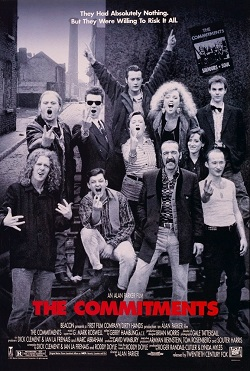
The Commitments
In the Northside of Dublin, Ireland, Jimmy Rabbitte is a young music fanatic who aspires to manage an Irish soul and rock and roll band in the tradition of 1950s and 60s African-American recording artists. He places an advert in the local newspaper and holds auditions in his parents' home. After being deluged by several unsuitable performers, Jimmy decides to put together a band consisting of friends and people he encounters—lead singer Deco Cuffe, guitarist Outspan Foster, keyboardist Steven Clifford, alto saxophonist Dean Fay, bassist Derek Scully, drummer Billy Mooney, and female backup singers Bernie McGloughlin, Natalie Murphy and Imelda Quirke. Jimmy then meets trumpeter Joey "The Lips" Fagan, a veteran musician who offers his services, and has unlikely stories about meeting and working with famous musicians. Joey names the band "The Commitments". After purchasing a drum set and acquiring a piano from Steven's grandmother, Jimmy secures the remainder of the band's musical equipment from Duffy, a black market dealer. The band rehearses on the first floor above a snooker hall, and after much practice, they convince a local church community centre to give them a gig, under the pretence of it being an anti- heroin campaign. Jimmy then hires Mickah Wallace, a belligerent and hot-tempered bouncer, to act as the band's security. The band draws a good crowd, but after Deco inadvertently hits Derek with his microphone stand, the amplifiers explode, resulting in a power outage. Tensions run high among the band members, as Joey seduces Natalie, then Bernie, then Imelda, all while Deco grows increasingly obnoxious and unruly, believing himself to be the star of the band. The band performs at another venue where, at the end of one song, Billy accidentally knocks over his hi-hat cymbals, leading to a heated argument between him and Deco. Billy leaves the band in fear of going to jail if he beats up Deco – much to Jimmy's frustration – and Mickah replaces him as the band's drummer. During the band's next performance at a roller disco, their first paying gig, Jimmy is confronted by Duffy, who demands payment for the equipment he provided the band. Mickah intervenes and violently attacks Duffy, who is escorted out. Jimmy then goes on stage and introduces the band, which elicits boisterous cheers from the audience. After the band secures another gig, Joey promises Jimmy that he can get his friend, Wilson Pickett, to sing alongside them. On this promise, Jimmy convinces several journalists to attend the band's next performance. At the venue, the band draws a large crowd, but its members begin arguing with each other offstage, and become doubtful when it appears that Pickett will not show. They go back on stage, where Deco denounces Jimmy for misleading the audience about Pickett's appearance; the band's performance of one of Pickett's songs, " In the Midnight Hour ", silences the crowd's protests. After the performance, the fighting continues; during a heated argument, Mickah beats up Deco outside the club, and Jimmy storms off in frustration, claiming that the band is finished. Joey follows Jimmy, who berates him for misleading the band about Pickett. Joey apologizes to Jimmy, and assures him that despite the band breaking up, Jimmy is still a success for helping the others realize their self worth and potential to rise above their previous lot in life. Just as Joey leaves, Pickett's limousine pulls up next to Jimmy, and his driver asks for directions to the club, revealing that Joey was telling the truth about Pickett; he just showed up too late. In a closing monologue, Jimmy explains that the band's members have since gone their separate ways; Bernie joined a country band, Deco got his record deal and became a bigger egomaniac, Mickah sings for a punk band, Outspan & Derek still play as street buskers, Dean formed a successful jazz band, Joey's mother got a postcard that he was touring with Joe Tex (who had died a decade prior), Steven became a doctor but misses playing music, Billy is recovering from getting kicked in the head by a horse, Imelda married Greg (who won't let her sing anymore), Natalie became a successful solo singer, and implies that she and Jimmy are in a relationship.

The Reader
In 1958, 15-year-old Michael Berg becomes sick on a tram ride in an unnamed provincial city. He is helped by 36-year-old tram conductor Hanna Schmitz. Weeks later, Michael has recovered from scarlet fever and at his mother's insistence, he visits Hanna with flowers to thank her for her help. They proceed to have a secret summer love affair, and Hanna often asks Michael to read to her. They have a brief cycling holiday in the country where Michael starts to notice some oddities in Hanna's behaviour. However, as their sexual relationship deepens it grows more tumultuous, when his attempts to form a deeper connection are rebuffed by her secretive nature. As a good reliable worker, Hanna is soon promoted, whereupon she abruptly quits without explanation. Michael visits Hanna to apologize following an argument, but is utterly befuddled and devastated to find her apartment vacant. In 1966, Michael is a student at Heidelberg University Law School and observes a war crime trial of several former female SS guards accused of letting 300 Jewish women and children perish in a burning church during a death march near Kraków in Poland. Michael is horrified to learn Hanna is one of the defendants. Survivor Ilana Mather provides testimony, including that Hanna forced some of the prisoners to read to her. Hanna admits that she and the co-defendants each chose ten women monthly for extermination at Auschwitz in Nazi-occupied Poland. Ilana's mother Rose testifies that when the church caught fire during a bombing, the guards refused to unlock the doors. The official SS report stated the guards did not know about the fire until the following day. Hanna reveals the guards in fact kept the doors locked so that the prisoners could not escape. Hanna's co-defendants all state she was in command and wrote the report. Hanna denies this, insisting they agreed on the contents of the report together. When the lead judge asks for a handwriting sample, Hanna quickly condemns herself by admitting she authored the report alone. Recalling their time together, Michael is initially confounded by her testimony, finally deducing that Hanna is deeply ashamed of being illiterate. Michael informs his law professor, who states that Michael should inform the court. Deeply conflicted, Michael attempts to visit Hanna in prison, but changes his mind. Hanna receives a sentence of life imprisonment, while her co-defendants are sentenced to just over four years each. Michael attempts to move on, though haunted by the memories of a relationship that he cannot put to rest. He marries and has a daughter, however, Michael cannot commit fully to the relationship and grows distant from his family, culminating in divorce and estrangement from his daughter, Julia. Throughout the 1980s, Michael records himself on tape reading various books and regularly mails them to Hanna. Borrowing the same books from the prison library, Hanna slowly teaches herself to read and write. She starts writing to Michael, but he never replies. In 1988, a prison official requests Michael's help with Hanna's parole as he has been the only person outside prison to have had contact with her. Michael finally visits Hanna, revealing in the stilted reunion that he has secured her a residence and a job. When Michael arrives for Hanna's release, he is told she hanged herself in her cell and left a crude will asking Michael to give her money to Ilana Mather. Michael finds Ilana in New York City, revealing his connection to Hanna and its long-lasting impact. He tells Ilana about Hanna's illiteracy, but she rebuffs this and refuses to forgive Hanna. Michael gives her Hanna's tea tin filled with cash, but Ilana refuses the money. He suggests it be donated to a Jewish literacy organization in Hanna's name and Ilana agrees. She keeps the tin, placing it next to a photograph of her deceased family. The film ends in 1995 with Michael driving Julia to Hanna's grave, telling her their story.