Genre: Biography (Page 7)
Browse 242 movies in the Biography genre.
All Genres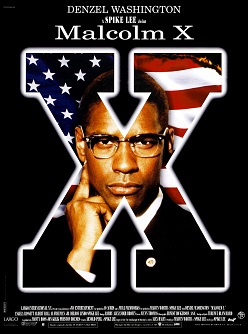
Malcolm X
One night shortly before Malcolm Little is born, a party of Klansmen surround the Little family home in Omaha, Nebraska, break all the windows, and ride off into the night. Malcolm has a Grenadian mother and African-American father. His father, an activist for black rights, is killed. His death is registered as a suicide and the family receives no compensation. Malcolm and his siblings are put into protective care. He performs well in school and dreams of being a lawyer, but his teacher discourages it due to his skin color. During World War II, Malcolm lives in Boston. One night at a dance, he catches the attention of the white Sophia, and the two begin a sexual relationship. Malcolm travels to New York City 's Harlem with Sophia, where he meets "West Indian" Archie, a gangster who runs a local numbers game, at a bar. The two become friends and start co-operating an illegal numbers racket. One night at a club, Malcolm claims to have bet on a winning number; Archie disputes this, denying him a large sum of money. A conflict ensues between the two and Malcolm returns to Boston after an attempt on his life. Malcolm, Sophia, his friend Shorty, and a woman named Peg decide to perform burglaries to earn money. By 1946, the group has accrued a large amount of money from their crimes. However, they are later arrested. The two women are sentenced to two years as first offenders, while Malcolm and Shorty are sentenced to 8–10 years. While incarcerated, Malcolm meets Baines, a member of the Nation of Islam, who directs him to the teachings of the group's leader Elijah Muhammad. Malcolm grows interested in the Muslim religion and lifestyle promoted by the group, and begins to resent white people for mistreating his race. He is paroled from prison in 1952 after serving six years, and travels to the Nation of Islam's headquarters in Chicago. There, he meets Muhammad, who instructs him to replace his surname "Little" with "X", which symbolizes his lost African surname that was taken from his ancestors by white slavemasters; he is rechristened as "Malcolm X". Malcolm returns to Harlem and begins to preach the Nation's message; over time, his speeches draw large crowds of onlookers. He proposes ideas such as African-American separation from white Americans. In 1958, Malcolm meets nurse Betty Sanders. The two begin dating, quickly marry and become the parents of four daughters. Several years later, he is now in a high position as the spokesperson of the Nation of Islam. During this time, he learns that Muhammad had fathered numerous children out of wedlock, contradicting his teachings and Islam. After President John F. Kennedy is assassinated in November 1963, Malcolm comments that the assassination was the product of white violence that has been prevalent in America since its founding, saying the killing is an example of "the devil's chickens coming home to roost." This statement damages his reputation and Muhammad suspends him from speaking to the press or at temples for 90 days. He announces that he has been forced out of the Nation of Islam and will start his own mosque in New York. In early 1964, Malcolm goes on a pilgrimage to Mecca where he meets Muslims from all races, including white. His house is firebombed in early 1965. On February 21, 1965, Malcolm speaks before a crowd at the Audubon Ballroom, but assassins shoot him several times. One of his bodyguards shoots one of the shooters in the leg before a furious crowd beats him. Malcolm is transported to a hospital, where his death is announced to the crowd. The film concludes with a series of clips showing the aftermath of Malcolm's death. Martin Luther King Jr. delivers a eulogy to him, and Ossie Davis recites a speech at his funeral. Nelson Mandela delivers a speech to a school, quoting an excerpt from one of Malcolm's speeches.


Boogie Man: The Lee Atwater Story
Using extensive interviews with colleagues, opponents and friends and archival footage, the film follows the principal's influential career, working with Karl Rove, Ronald Reagan, Roger Stone, Paul Manafort and others, culminating in the defining Bush 1988 presidential campaign and its aftermath.


Moneyball
The Oakland Athletics of Major League Baseball have difficulty fielding competitive teams due to low revenue and owners who are reluctant to spend money. General manager Billy Beane drafts and develops cheap, young, and talented players, but the Athletics lose the 2001 American League Division Series (ALDS) to the New York Yankees, baseball's richest and most successful team. For the 2002 season, Beane is given a paltry $41 million budget. Through free agency, three richer teams poach three of Beane's best players: Jason Giambi, Johnny Damon, and Jason Isringhausen. Adding insult to injury, Giambi joins the Yankees. Beane is skeptical about traditional baseball scouting methods after the New York Mets drafted him in the first round of the 1980 draft —prompting Beane to decline a Stanford scholarship—only for Beane to have an unimpressive playing career. Beane tries to trade for the Cleveland Indians ' Karim García, but Cleveland refuses on the advice of team advisor Peter Brand, a Yale economics graduate who privately complains to Beane that Cleveland rarely takes his advice, and expresses a belief that baseball teams focus too much on individual players to have success. Intrigued, Beane asks whether Brand would have drafted him in 1980. After Brand reluctantly admits that he would not have drafted Beane until the ninth round, Beane hires Brand. Beane and Brand study sabermetrics, an unconventional scouting philosophy. Unable to afford more talented, expensive players, Beane and Brand focus on maximizing the team's on-base percentage (OBP) and compromise on skills like base stealing, defense, and batting average. They acquire undervalued players like aging David Justice, injured catcher Scott Hatteberg, and submariner Chad Bradford. Beane fires head scout Grady Fuson, who refuses to abandon his traditional scouting methods. A poor start to the season prompts the media and the team to question Beane's philosophy. Manager Art Howe, who is angling for a contract extension, disregards Brand's advice to put the players with the best OBP at the top of the batting order. Howe resists playing Hatteberg at first base, so Beane forces Hatteberg into the lineup by trading away Howe's favored first baseman Carlos Peña. Although Jeremy Giambi has good on-base skills, Beane decides that Giambi lacks the intangible qualities to succeed and trades him as well. Beane persuades team owner Stephen Schott to trust in the plan. With Cleveland performing poorly, Beane devises a trade for the Indians' star reliever Ricardo Rincón. The Athletics' performance improves, placing them on the verge of an AL -record-breaking 20th consecutive win. Although Beane rarely attends games, his daughter Casey persuades him to attend the next game against the Kansas City Royals. Oakland leads 11–0 when Beane arrives, but the Royals mount a furious comeback and tie the game. Hatteberg hits a walk-off home run to the Oakland fans' delight. Despite the celebration, Beane tells Brand he will not be satisfied until they have changed baseball by winning the World Series. The Athletics are the 2002 American League West champions but lose to the Minnesota Twins in the first round of division playoffs. A media analyst asserts that the Athletics lost because they lacked intangible qualities that cannot be measured with statistics. Later, Boston Red Sox owner John W. Henry offers Beane the largest contract for a general manager in history to take over the Red Sox organization. Beane discloses Henry's offer to Brand and says that their strategy failed. Brand shows Beane a video of batter Jeremy Brown, who hits a home run, but does not realize it. Sensing the meaning of the video and what Brand is trying to say, Beane thanks Brand. Beane drives while listening to a burned CD of Casey singing " The Show ", prompting him to cry. An epilogue reveals that Beane turned down the $12.5 million offer by the Red Sox, who used sabermetrics to win the 2004 World Series, while Beane has yet to win a World Series.

The Gospel According to St. Matthew
Note: The film lacks a conventional narrator, and assumes (or at least benefits from) familiarity with the story of Christ. In Roman Galilee, the local Jewish community lives in poverty. Although the Romans are formally in charge, the Jewish upper class—including King Herod and the Pharisee religious elite—dominates the locals on a day-to-day basis. The pregnant Mary has a troubled relationship with Joseph, who worries she cheated on him. Joseph reconciles with Mary after an angel tells him that God caused Mary's pregnancy. After Mary bears Jesus Christ, the magi visit the baby Jesus. The angel tells the family to flee to Egypt. Herod—who fears a prophecy that Jesus will become king of the Jews —brutally massacres the region's infants. The family return to Judea after Herod dies. Many years later, John the Baptist preaches a brazenly anti-establishment message to the commoners of Galilee. Jesus visits John to be baptized, and God appears to them. Satan offers Jesus wealth and power, but Jesus declines. Jesus recruits a band of disciples. He warns them that "I came not to bring peace, but a sword" and that they will suffer on his behalf. He travels around the country with his disciples, healing the blind, raising the dead, exorcising demons, and proclaiming the arrival of the Kingdom of God and the promised salvation. The film rapidly canvasses his parables and sayings, including the Sermon on the Mount, in a series of montaged monologues. Meanwhile, the new king imprisons John the Baptist before capriciously executing him to impress his stepdaughter. Jesus is generally uncomfortable showing his divine power in public (with the exception of the miracle of the loaves and fishes). He prefers to preach radical messages to working-class crowds and children. The wealthy are alienated by Jesus's socially conscious teachings, the religious elite are threatened by his contempt for their legalism and hypocrisy, and even commoners are concerned with his asceticism. Matthew is wounded when Jesus chooses Peter over him to lead the church, but accepts Jesus's decision. Although the public—which wants to see the supernatural— initially ignores Jesus, he attracts a large following and triumphantly enters Jerusalem to cheering crowds. The Roman army is called in for crowd control and beats several followers of Jesus. After Jesus claims to be the Jews's prophesied Messiah, the chief priests plot to murder him. Judas Iscariot betrays Jesus after Jesus scolds him in front of the other disciples. During the Agony in the Garden, Jesus accepts his fate, which he has long known. The chief priests organize a mob to arrest Jesus. The apostles rise to defend him, but Jesus insists on surrendering peacefully. The chief priests hand Jesus over to the Romans. Fearing a similar fate, Peter denies Jesus three times. After escaping, he breaks down crying. Judas commits suicide after realizing even the priests are disgusted by his treachery. The Roman governor, Pilate, declares Jesus innocent but executes him anyway to placate the chief priests. Mary buries her son. After three days, Jesus rises from the dead and instructs his disciples to spread the gospel throughout the world.

Sophie Scholl: The Final Days
In wartime Munich in February 1943, Sophie Scholl joins her brother Hans in the White Rose student organization. They have prepared an anti-government leaflet and have more copies than they can distribute by mail. Hans proposes distributing the extras at the Ludwig-Maximilians-Universität München and Sophie volunteers to assist. Hans and Sophie put stacks of leaflets near the lecture rooms while classes are in session. When Sophie pushes a stack of leaflets over a balustrade she is spotted by Jakob Schmid, a janitor, and the pair are detained for the Gestapo. They are taken to the Wittelsbacher Palais headquarters where Sophie is interrogated by Gestapo investigator Robert Mohr. She denies that she and her brother had left the leaflets and claims to have pushed the stack off the railing as a prank. She explains the empty suitcase in her possession was for bringing back clothes from a visit to her parents in Ulm. She is remanded when the Gestapo announce they have incontrovertible evidence that Sophie and Hans were responsible for the distribution of the leaflets. She is placed in a cell with dissident Else Gebel, a Communist sympathizer. Sophie confesses her part, contradicting her brother's claim he acted alone. Determined to protect the others, she steadfastly maintains that the distribution of thousands of leaflets throughout the region was the work of the siblings. Mohr, having learned that their father was an imprisoned dissident, urges her to support laws that preserve a society which has funded her welfare and education. Scholl counters that before 1933 the laws protected freedom of speech and denounces atrocities committed by the Nazis. Mohr dismisses some of her accusations, such as the extermination of the Jews, as wartime propaganda, but acknowledges others like the euthanasia program. Sophie and Hans, as well as a friend with three young children, Christoph Probst, are charged with treason, troop demoralization and aiding the enemy. Four days after their arrest they are put on a show trial. Probst is examined first by President of the People's Court Roland Freisler, whose zeal makes the prosecutor and defense attorneys superfluous. Freisler contemptuously dismisses Probst's appeals to spare his life so that his children can have a father. Hans maintains his composure in the face of Freisler's impatient questioning. Declining to answer only what he is asked, he denounces German war crimes on the Eastern Front as immoral and proclaims that the defeat of the Nazi state by the Allies is all but certain. Sophie denies she was led by her brother, and declares that many people are scared to admit they agree with her group. Freisler pronounces the defendants guilty and calls on each to make a final statement. Sophie warns that "where we stand today, you will stand soon." All three are sentenced to death and transported to Stadelheim Prison. Sophie, assuming a normal 99-day delay between conviction and execution, learns she is to be executed the same day. She breaks down briefly, but regains composure, writes a final statement and receives a blessing from the prison chaplain, who offers his support for her silence. After a visit by her parents, who also express approval of what she has done, Mohr arrives and sadly watches Sophie taken away. She is led into a cell with Christoph and Hans, and they share a final cigarette. Sophie is led into a courtyard and remarks "The sun is still shining". An appeal for clemency is declined by the Reich Ministry of Justice, and she is beheaded by guillotine. Hans screams "Let freedom live!" before the blade goes down, and Christoph is executed last. A caption lists dozens of adherents of the White Rose executed in the following months, while others suffered imprisonment. In the final shot, thousands of leaflets fall from the sky over Munich. A narration explains that the sixth leaflet of the White Rose were smuggled through Scandinavia to the United Kingdom by Helmuth James Graf von Moltke, where the Allies then printed millions of copies of the "Manifesto of the Students of Munich" to drop over Germany.

The Last King of Scotland
In 1970, Nicholas Garrigan graduates from the University of Edinburgh Medical School. With dull prospects at home, he decides to seek adventure abroad by working at a missionary clinic in Uganda run by David Merrit and his wife, Sarah. After Garrigan arrives in Uganda, General Idi Amin overthrows President Milton Obote in a coup d'état. Amin gives a well-received speech, but Sarah is pessimistic. Garrigan is called to a car accident involving Amin and treats Amin's hand. During the incident, Garrigan takes a gun and shoots a mortally wounded cow when no-one else is willing to perform euthanasia. Initially hostile to Garrigan, Amin warms up to him after discovering he is Scottish due to his xenophilia for the Scots. Delighted by Garrigan's initiative, Amin exchanges clothing with him and subsequently invites Garrigan to serve as his personal physician and lead efforts to modernise the Ugandan healthcare system. While working for Amin, Garrigan becomes a trusted confidant and is entrusted with a wider range of duties, including matters of state. Despite being dismayed by acts of government repression, Garrigan accepts Amin's explanation that cracking down on political opposition will bring lasting peace to Uganda. Garrigan eventually learns that Amin has ostracized the youngest of his three wives, Kay, because she has given birth to an epileptic son, Mackenzie. When treating Mackenzie, Garrigan and Kay start to form a relationship. Eventually, Garrigan becomes disillusioned by Amin as he witnesses increasing amounts of paranoia, murders and xenophobia. He attempts to announce his intention to return home, but is rebuffed by Amin. While at a party, after doing his best to evade a go-go dancer who is assigned to become his lover, he and Kay have sex; and she says he must find a way to leave Uganda. Amin secretly replaces Garrigan's British passport with a Ugandan one to prevent him from escaping, which leads Garrigan to seek help from Stone, the local Foreign Office representative. Garrigan is told by Stone he will be secretly transported out of Uganda if he assassinates Amin, which Garrigan refuses. In 1972, Amin orders the expulsion of Asians from Uganda over Garrigan's protests. This creates a labor shortage that tanks Uganda's economy. Kay informs Garrigan that she has become pregnant with his child. Aware that Amin will murder her for infidelity if he discovers this, she begs Garrigan for a secret abortion. Delayed by Amin's command that he attend a press conference with Western journalists, Garrigan fails to meet Kay at the appointed time. Kay concludes she has been abandoned and seeks out a primitive abortion in a nearby village, where she is apprehended by Amin's forces. Garrigan finds her dismembered corpse on an autopsy table. Distraught, he decides to kill Amin. A hijacked aircraft is flown to Entebbe Airport by pro- Palestinian hijackers seeking asylum. Amin, sensing a major publicity opportunity, rushes to the scene, taking Garrigan along. At the airport, one of Amin's bodyguards discovers Garrigan's plot to poison Amin under the ruse of giving him pills for a headache. Garrigan is beaten by Amin's henchmen before Amin arrives and discloses he is aware of the relationship with Kay. As punishment, Garrigan's chest is pierced with meat hooks before he is hanged by his skin. Amin arranges a plane for the release of non- Israeli passengers, and the torturers leave Garrigan unconscious on the floor while they relax in another room. Garrigan's medical colleague, Dr. Junju, takes advantage of the opportunity to rescue him. He urges Garrigan to tell the world the truth about Amin's regime, asserting that the world will believe Garrigan because he is white. Junju gives Garrigan his own jacket, enabling him to mingle unnoticed with the crowd of freed hostages and board the plane. When the torturers discover Garrigan's absence, Junju is killed for aiding in the escape. The Entebbe incident irreparably ruins Amin's reputation in the international community, and in 1979 he decides to invade Tanzania, which counterattacks and captures Kampala, overthrowing him. He lives the rest of his life in exile in Saudi Arabia until his death in 2003.