Movies (Page 70)
Browse 2,069 movies from the database, mentioned on Hacker News, ranked by rating or popularity.




Kill!
Tatsuya Nakadai stars as Genta, a former samurai who became disillusioned with the samurai lifestyle and left it behind to become a wandering yakuza gang member. He meets Hanjirō Tabata (Etsushi Takahashi) a farmer who wants to become a samurai to escape his powerless existence. Genta and Tabata wind up on opposite sides of clan intrigue when seven members of a local clan assassinate their chancellor. Although the seven, led by Tetsutarō Oikawa (Naoko Kubo) rebelled with the support of their superior, Ayuzawa (Shigeru Kōyama), he turns on them and sends members of the clan to kill them as outlaws.
Arsenic and Old Lace
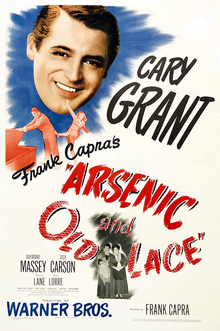
The Brewster family of Brooklyn is descended from Mayflower settlers who "scalped the Indians " instead of the other way around, according to Mortimer Brewster. On Halloween day, Mortimer, a theater critic and author who has repeatedly denounced marriage as "an old-fashioned superstition", marries Elaine Harper, his neighbor and a minister's daughter. Before leaving for their Niagara Falls honeymoon, Elaine goes to her father's house to share the news of her marriage, while Mortimer informs his aunts, Abby and Martha, who raised him in the old family home. Mortimer's delusional younger brother, Teddy, who believes he is Theodore Roosevelt, resides with them. Frequently, while running upstairs, Teddy blows a bugle and yells "Charge!", imitating Roosevelt's 1898 charge up San Juan Hill. Searching for the notes for his next book, Mortimer finds a corpse hidden in the window seat. He assumes in horror that Teddy's delusions have led him to murder. Abby and Martha cheerfully confess to killing Mr. Hoskins, explaining that they minister to lonely old bachelors by ending their "suffering". They post a "Room for Rent" sign to attract a suitable subject for their "charity", then serve a glass of elderberry wine spiked with arsenic, strychnine, and cyanide. Including Mr. Hoskins, the aunts have murdered twelve men; the bodies are buried in the cellar by Teddy, who believes they are yellow fever victims at the Panama Canal. Teddy moves Mr. Hoskins from the window seat down to the cellar. To protect his aunts in case the bodies are discovered, Mortimer frantically leaves to file paperwork to have Teddy legally committed to the Happy Dale mental asylum. In Mortimer's absence, his older brother, Jonathan, arrives with his alcoholic accomplice, plastic surgeon Dr. Herman Einstein. Altered by Einstein while drunk, Jonathan's face resembles Boris Karloff 's Frankenstein appearance. Jonathan is a serial killer with a body count of twelve, fleeing from the police, and intending to dispose of his latest murder victim, Mr. Spenalzo. Shortly after Jonathan and Einstein hide Spenalzo's body in the window seat, Mortimer returns; discovering the corpse, he demands that the pair leave. However, the two criminals reveal they have found Mr. Hoskins' body in the cellar. Mortimer rushes out to obtain a second signature for Teddy's commitment papers. Learning his aunts' secret and mocked by Einstein for their equivalent victim tally, Jonathan determines to increase his body count by killing Mortimer. Meanwhile, Mortimer visits Elaine, expressing his reservations about their marriage due to his family's insanity. When Mortimer returns, Einstein offers him a chance to leave, distracting him while Jonathan takes Spenalzo to the cellar. Mortimer decries the stupidity of characters in plays who are aware that they are in a house with killers but fail to realize the danger. Sneaking up from behind, Jonathan ties up and gags Mortimer. While Jonathan and Einstein argue about killing Mortimer, Officer O'Hara arrives in response to complaints from neighbors regarding Teddy's bugle blasts. After Einstein claims that Mortimer is enacting a scene from a play, O'Hara excitedly recites the plot of the play he is writing. Jonathan prepares to kill O'Hara but is knocked out by Einstein. O'Hara's partners arrive looking for the overdue O'Hara; mistaking an imminent arrest, Jonathan discloses the thirteen bodies buried in the cellar. Lieutenant Rooney arrives looking for the errant officers; recognizing Jonathan from "Wanted" posters as an escapee from an Indiana mental asylum, he arrests Jonathan, discounting his claim. When Mr. Witherspoon comes to take Teddy to Happy Dale, Abby and Martha insist on joining him. Einstein flees after signing the aunts' commitment papers. After Mortimer signs the papers as next of kin, the aunts inform him that he is not actually a Brewster; his mother was the family cook and his father was a chef on a steamship. Ecstatic, Mortimer rushes to find Elaine, who is horrified after discovering the corpses in the cellar. Before Elaine can exclaim about the bodies in the presence of others, Mortimer silences her by kissing her and whisking her off on their honeymoon.

Birdemic: Shock and Terror
Rod is a young software salesman living a successful life in Silicon Valley. He meets up with old classmate and aspiring fashion model Nathalie and begins dating her. Things go well for the couple, with Rod receiving a large bonus that he uses to start his own business, while Nathalie is chosen as a Victoria's Secret model. As they grow closer, the couple remains oblivious to signs of something going wrong around them, such as unexplained wildfires and the carcasses of diseased birds turning up on beaches. After having a romantic time and kissing in a motel, Rod and Nathalie wake up to find that their town is under attack from eagles and vultures. The birds spit acid and explode into flames upon striking the ground (having become mutated and toxic due to global warming). Rod and Nathalie escape from the motel by joining up with an ex- Marine named Ramsey and his girlfriend Becky. As they leave town, they rescue two young children, Susan and Tony, whose parents have been killed by the birds. The group proceeds to drive from one town to the next, fending off more bird attacks along the way and briefly meeting a scientist named Dr. Jones studying the phenomenon. Becky is killed by the birds. Ramsey tries to save a busload of tourists. As they leave the bus, Ramsey and the tourists are killed by acid that is dropped by the birds. Nathalie stops Rod from attempting to rescue Ramsey because she fears the birds will kill him, too. The group then continue to a gas station. The children purchase candies and Rod begrudgingly agrees to purchase gas for $100 a gallon. They then continue, running into a man who presumably needs help. This man, unnamed, then robs Rod for gas at gunpoint. As the robber slowly backs away from Rod, a bird suddenly slits his throat and he succumbs to his wounds on the side of the road. Rod, Nathalie, and the kids then continue to flee from the birds, driving into a forest where they briefly meet a " tree hugger " named Tom Hill, who talks to them about the dangers of global warming. After escaping a forest fire, the quartet ultimately settles on a small beach, where Rod fishes for dinner. As they prepare to eat, they are attacked by the birds, but then doves appear and all the birds leave in peace. The film ends as Rod, Nathalie, and the kids watch the birds fly off into the horizon.


A Man for All Seasons
The film covers the years 1529 to 1535, during the reign of Henry VIII. During a private late-night meeting at Hampton Court, Cardinal Wolsey, Lord Chancellor of England, chastises More for being the only member of the privy council to oppose Wolsey's attempts to obtain from the Pope an annulment of Henry VIII 's marriage to Catherine of Aragon, as their marriage has not produced a male heir. With the annulment, Henry would be able to marry Anne Boleyn, with whom he hopes to father such an heir and avoid a repeat of the Wars of the Roses. More says that he cannot agree to Wolsey's suggestion that they apply "pressure" on Church property and revenue in England. Unbeknownst to More, the conversation is being overheard by Wolsey's ambitious aide, Thomas Cromwell. Returning to his home at Chelsea at dawn, More finds his young acquaintance Richard Rich waiting for his return to lobby for a position at Court. More instead offers Rich a job as a teacher. Rich declines More's offer, saying that teaching would offer him little chance to become well known. More finds his daughter Meg chatting with a brilliant young lawyer, William Roper, who announces his desire to marry her. The devout Catholic More says he cannot give his blessing as long as Roper remains a Lutheran, who are considered members of the heretical Protestant movement. Wolsey is dismissed from office when the annulment is not granted and dies in disgrace in a rural monastery, with More succeeding him as Lord Chancellor. The King makes an "impromptu" visit to the More estate and again requests More's support for an annulment. Still, More remains unmoved as Henry alternates between threats, tantrums, and promises of unbounded royal favors. Cromwell, now the King's Principal Secretary, bribes Rich with the promise of a position at Court if he will spy on More. Roper, learning of More's quarrel with the king, says that his religious views have altered considerably and declares that by attacking the Church, the king has become "the Devil's minister." More admonishes Roper to be more guarded when Rich again pleads for More to grant him an office. When More again refuses, Rich denounces More's steward as a spy for Cromwell. An unmoved More responds, "Of course, that's one of my servants." Humiliated, Rich ends his friendship with More. Meanwhile, the king orders Parliament and the bishops to declare him " Supreme Head of the Church of England ". Embracing Caesaropapism, the bishops and Parliament accede to the king's demands and renounce all allegiance to the Pope. More quietly resigns as Lord Chancellor rather than accept the new order. His close friend and successor, Thomas Howard, attempts to draw out his opinions in a friendly private chat, but More knows that the time for speaking openly of such matters is over. In a meeting with Norfolk, Cromwell implies that More's troubles will be over if he attends the king's wedding to Boleyn. After More does not, he is summoned again to Hampton Court and interrogated mercilessly by Cromwell. More refuses to answer any questions, and an infuriated Cromwell sends him away. The Thames boatmen are aware of the King's hostility to More and refuse to ferry him, so More returns home on foot. As More finally arrives, his daughter Meg informs him that a new oath is being circulated and that all must take it or face charges of high treason. Initially, More says he might be willing to take the oath, depending on its wording. Upon learning that it names the king as head of the Church, legitimizes his Lutheran heirs, and allows no legal or moral loopholes, More refuses to take it and is imprisoned in the Tower of London. At an inquiry chaired by Cromwell and Norfolk, More remains steadfast in his refusal to take the Oath and refuses to explain, knowing that he cannot be convicted if he has not explicitly denied the king's supremacy. Cromwell punishes More by confiscating his prized collection of books. As Rich collects the books, he and his former friend share a final debate over More's choices. More says goodbye to his wife Alice, Meg, and Roper, urging them not to try to defend him, but to leave the country. At his trial, More refuses to express an opinion about the king's second marriage or why he will not take the Oath, based upon the legal principle that silence is to be interpreted as consent. Cromwell calls Rich to testify. Rich alleges that, when he went to confiscate More's books, More told him that while Parliament has the power to dethrone the king, it does not have the authority to make the king the Head of the Church. A horrified More offers to take any oath required by the court that he never said any such thing to Rich. More adds that he would never be so suicidal as to entrust so dangerous an opinion "to such a man as that." As Rich leaves the witness box, it emerges that Rich has been made Attorney General for Wales as a reward from Cromwell for committing perjury, much to More's chagrin. Under a direct order from Cromwell, the jury convicts More without leaving the courtroom to deliberate. But as the judges begin to pronounce the death penalty, More interrupts and reminds them that prisoners are to be asked before sentencing if they have anything to say. Upon being so asked by the judges, More declares that he does. More calls Parliament's Act of Supremacy repugnant to every legal precedent and institution in all the history of Christendom. He cites the Biblical foundation for the Petrine Primacy and the authority of the Papacy, rather than national governments, over the Church. Furthermore, he declares that the Church's freedom from state control and interference is guaranteed both in the Magna Carta and in the king's own coronation oath. As uproar ensues, the judges sentence More to death by beheading. The scene switches from the court to Tower Hill on July 6th, 1535, where More observes custom by pardoning and tipping the executioner. More declares, "I die his Majesty's good servant, but God's first." He kneels at the block and, off-screen, the executioner cuts off More's head. In the epilogue, a narrator describes the aftermath and the fates of those involved in More's downfall, with Thomas Cromwell himself beheaded for treason five years later, Archbishop Cranmer being burned at the stake, and Norfolk narrowly avoiding his own execution due to Henry's death from syphilis. The only exception is Richard Rich, who "became Chancellor of England, and died in his bed."