Genre: Drama (Page 2)
Browse 989 movies in the Drama genre.
All Genres
Django Unchained
In 1858 Texas, several male African American slaves are being "driven" by the Speck Brothers, Ace and Dicky. Among the shackled slaves is Django, sold off and separated from his wife, Broomhilda. The Speck Brothers are stopped by Dr. King Schultz, a German ex-dentist and bounty hunter from Düsseldorf. Schultz asks to buy one of the slaves, but while questioning Django about his knowledge of the Brittle Brothers, for whom Schultz is carrying a warrant, he irritates Ace, who aims his shotgun at Schultz. Schultz quickly kills Ace and leaves Dicky at the mercy of the other newly freed slaves, who kill him. Since Django can identify the Brittle Brothers, Schultz offers Django his freedom in exchange for his help in tracking them down. Django discovers Schultz is a bounty hunter, as Schultz kills an outlaw named Willard Peck, who was posing as the Sheriff in a small town. Schultz and Django then track the Brittle Brothers down, leading them to a plantation in Tennessee. Django shoots dead the first brother, brutally whips the second before shooting him too, while Schultz kills the third brother. After getting out of it by producing the warrant for their capture “dead or alive”, they then ambush and kill the plantation owner who leads a group of lynchers to murder them in revenge. Django partners with Schultz through the winter and becomes his apprentice, and Schultz discovers Django's natural ability with gunslinging. Schultz explains that, being the first person he has ever given freedom to, he feels responsible for Django and is driven to help him in his quest to rescue Broomhilda. Django, now fully trained, collects his first bounty, keeping the handbill as a good luck charm. In Mississippi, Schultz uncovers the identity of Broomhilda's owner: Calvin Candie, the charming but brutal owner of the Candyland Plantation, where black slaves are forced to fight in wrestling deathmatches called " Mandingo fights". Schultz, expecting Candie will not sell Broomhilda if they ask for her directly, plots to feign interest in purchasing one of Candie's prized fighters, offer to purchase Broomhilda on the side for a reasonable sum, then take her and escape before the Mandingo deal is finalized. Schultz and Django meet Candie at his gentleman's club in Greenville and submit their offer. His greed tickled, Candie invites them to Candyland. After secretly briefing Broomhilda on the plan, Schultz claims to be charmed by the German-speaking Broomhilda and offers to buy her after arranging to buy a fighting slave. During dinner, Candie's staunchly loyal head house slave, Stephen, becomes suspicious. Deducing that Django and Broomhilda know each other and that the sale of the Mandingo fighter is just a misdirection, Stephen alerts and privately admonishes Candie on his greed. Candie is humiliated at being fooled by a black man, but he contains his anger long enough to theatrically display his knowledge of phrenology which he uses to justify white superiority and black inferiority. Candie's bodyguard suddenly bursts into the room with his shotgun trained on the two bounty hunters; Candie furiously threatens to kill Broomhilda if Schultz does not pay the complete bid amount, and taunts him by demanding a formal handshake to finalize the deal before he leaves. Tired of his arrogance and angered by his brutality, Schultz fatally shoots Candie with a concealed derringer and his bodyguard kills him in turn. Django grabs the bodyguard’s revolver and kills him to avenge Schultz, and after a violent shootout, in which the Candies’ lawyer is also killed along with several white overseers, Django is forced to surrender when Broomhilda is taken hostage at gunpoint. The next morning, Stephen tells Django that he will be sold to a mine where he will labor for the rest of his life. En route to the mine, Django proves to his dim-witted Australian escorts that he is a bounty hunter by showing them the handbill from his first kill. He convinces them that there is a large bounty for outlaws who are hiding at Candyland, and promises that they would receive most of the money. The escorts release him and give him a pistol, and he kills them before stealing a horse and leaving for Candyland. Django returns to the plantation and kills the slave trackers to avenge a slave they had torn apart by dogs and to ensure they will not be sent after him. He takes Broomhilda's freedom papers from Schultz's pocket, bidding his friend and mentor a final farewell before freeing Hildi from a nearby cabin. When Candie's mourners return from his burial, Django kills Candie's few remaining henchmen and his sister Lara, releases the two remaining house slaves, and kneecaps Stephen. Django then ignites dynamite that he has planted throughout the mansion. He and Broomhilda watch from a distance as the mansion explodes, killing Stephen, before they ride off together.

Gladiator
In 180 AD, the Roman general Maximus Decimus Meridius intends to return home after he leads the Roman army to victory against Germanic tribes near Vindobona. Emperor Marcus Aurelius tells Maximus that his own son, Commodus, is unfit to rule and that he wishes Maximus to succeed him, as regent, to restore the Roman Republic. Angered by this decision when Marcus Aurelius tells the news to him, Commodus secretly assassinates his father by smothering him personally on the spot. Commodus proclaims himself the new emperor and requests loyalty from Maximus, who refuses. Maximus is arrested by Praetorian Guards led by Quintus, who tells Maximus that he and his family will die. Maximus kills his captors and, wounded, rides for his home near Turgalium, where he finds his wife and son murdered. Maximus buries them, then collapses from his injuries. He is found by slave traders, who take him to Zuccabar and sell him to the gladiator trainer Proximo. Maximus fights in local tournaments, his combat skills helping him win matches and gain popularity. He earns the nickname "the Spaniard " and befriends Juba, a gladiator from Carthage, and Hagen, a gladiator from Germania. In Rome, Commodus organizes 150 days of gladiatorial games to commemorate his father and win the approval of the Roman public. Upon hearing this, Proximo reveals to Maximus that he was once a gladiator who was freed by Marcus Aurelius, and advises him to "win the crowd" to gain his freedom. Proximo takes his gladiators to fight in Rome's Colosseum. Disguised in a masked helmet, Maximus debuts in the arena as a Carthaginian in a re-enactment of the Battle of Zama. Unexpectedly, he leads his side to victory and wins the crowd's support. Commodus and his young nephew, Lucius, enter the Colosseum to offer their congratulations. Seeing Lucius, Maximus refrains from attacking Commodus, who orders him to reveal his identity. Maximus removes his helmet and declares he will seek vengeance on Commodus, who is compelled by the crowd to let Maximus live. That evening, Maximus is visited by Lucilla, his former lover and Commodus' sister. Distrusting her, Maximus refuses her help. Commodus arranges a duel between Maximus and Tigris of Gaul, an undefeated gladiator. Several tigers are set upon Maximus, but he prevails. At the crowd's desire, Commodus orders Maximus to kill Tigris, but Maximus spares his life in defiance. In response, the crowd chants "Maximus the Merciful", which angers Commodus. To provoke Maximus, Commodus taunts him about the murder of his family, but Maximus resists the urge to strike him. Increasingly paranoid, Commodus instructs his advisor, Falco, to have every senator followed, and refuses to have Maximus killed for fear he will become a martyr. Maximus discovers from Cicero, his ex- orderly, that his former legions remain loyal to him. He secretly meets with Lucilla and Gracchus, an influential senator. They agree to help Maximus escape from Rome to join his legions in Ostia, which will enable him to oust Commodus and hand power back to the Roman Senate. Soon after, the Praetorians arrest Gracchus. Lucilla meets Maximus at night to arrange his escape and they share a kiss. Lucius accidentally hints at the conspiracy, and Commodus threatens him and Lucilla. Commodus sends the Praetorians to attack the gladiators' barracks, and during the battle Proximo and his men sacrifice themselves to enable Maximus to flee. Maximus makes it to the rendezvous point with Cicero, but Commodus' soldiers kill Cicero and capture Maximus. Commodus demands that Lucilla provide him with an heir. He challenges Maximus to a duel in the Colosseum to win back public approval, and stabs him before the match to gain an advantage. Despite his injury, Maximus disarms Commodus during the duel. After Quintus and the Praetorians refuse to help Commodus, he unsheathes a hidden knife, but Maximus overpowers him and kills him. Before Maximus succumbs to his injuries, he asks for political reforms, the emancipation of his gladiator allies, and the reinstatement of Gracchus as a senator. As he dies, Maximus envisions reuniting with his wife and son in the afterlife. His friends and allies honor him as "a soldier of Rome" and carry his body out of the arena. That night, Juba visits the Colosseum and buries figurines of Maximus' wife and son at the spot where Maximus died.

Cinema Paradiso
In 1988 Rome, Salvatore Di Vita, a famous film director, returns home late one evening, where his girlfriend sleepily tells him that his mother called to say someone named Alfredo has died. Salvatore shies from committed relationships and has not been to his home village of Giancaldo, Sicily, in thirty years. As his girlfriend asks him who Alfredo was, Salvatore is unable to fall asleep and flashes back to his childhood. A few years after World War II, eight-year-old Salvatore is the mischievous, intelligent son of a war widow. Nicknamed Totò, he discovers a love for films and spends every free moment at the local movie house, Cinema Paradiso. Although they initially start on tense terms, he develops a friendship with the middle-aged projectionist, Alfredo, who often lets him watch films from the projection booth. During the shows, the audience can be heard booing because there are missing sections, causing the films to suddenly jump, bypassing scenes with romantic kisses or embraces. The local priest, the owner of the cinema, had ordered these sections to be censored, and the deleted scenes are cut from the film reels by Alfredo and piled on the projection room floor, where Alfredo keeps them until he can splice them back in for the film to be sent to the next town. Alfredo eventually teaches Salvatore how to operate the film projector. One day, Cinema Paradiso catches fire as Alfredo is projecting The Firemen of Viggiù after hours, on the wall of a nearby house. Salvatore saves Alfredo's life, but not before a reel of nitrate film explodes in Alfredo's face, leaving him permanently blind. The movie house is rebuilt by a town citizen, Ciccio Spaccafico, using his winnings from a football lottery. Salvatore, still a child, is hired as the new projectionist, as only he knows how to run the machines. About a decade later, Salvatore, now in high school, is still operating the projector at the "Nuovo Cinema Paradiso". His relationship with the blind Alfredo has strengthened, and Salvatore often looks to him for help – advice that Alfredo often dispenses by quoting classic films. Salvatore has been experimenting with filming, using a home movie camera; doing this he has met, and captured on film, a girl named Elena Mendola, daughter of a wealthy banker, and has fallen in love with her. Salvatore woos – and wins – Elena's heart, only to lose her due to her father's disapproval. As Elena and her family move away, Salvatore leaves town for compulsory military service. His attempts to write to Elena are fruitless; his letters are returned as undeliverable. Upon his return from the military, Alfredo urges Salvatore to leave Giancaldo permanently, counseling that the town is too small for Salvatore to ever find his dreams. Moreover, the old man tells him, once Salvatore leaves, he must pursue his destiny wholeheartedly, never looking back and never returning, even to visit; he must never give in to nostalgia or even write or think about them. They tearfully embrace, and Salvatore leaves to pursue his future as a filmmaker. Back in the present, Salvatore realizes that he is very satisfied with his life from a professional point of view but not from a personal one, so decides to return home to attend Alfredo's funeral. Though the town has changed greatly, he now understands why Alfredo thought it was important that he leave. Alfredo's widow tells him that the old man followed Salvatore's successes with pride and he left him something: an unlabeled film reel and the old stool that Salvatore once stood on to operate the projector. Salvatore learns that Cinema Paradiso is to be demolished to make way for a parking lot. At the funeral, he recognizes the faces of many people who attended the cinema when he was the projectionist. Salvatore returns to Rome where he watches Alfredo's reel and discovers that it comprises all the romantic scenes that the priest had ordered Alfredo to cut from the films; Alfredo had spliced every kiss together to form a single reel. Totò comes to peace with his past, smiling with tears in his eyes.

The Prestige
In 1890s London, Robert Angier, Alfred Borden, and Angier's wife, Julia, work as magician's assistants under the mentorship of John Cutter. During a water tank trick, Julia drowns after Borden incorrectly ties her wrists. Angier blames Borden, and the two men become bitter rivals. Both men pursue separate careers in magic. Borden, a gifted inventor of illusions, marries a woman named Sarah, with whom he has a daughter named Jess, and hires an enigmatic assistant, Fallon. Angier, whose strength lies more in showmanship, continues working with Cutter and takes on a new assistant, Olivia. The feud escalates as Angier and Borden visit and sabotage each other's acts. Borden loses two fingers after being shot by Angier during a pistol trick, and Borden violently thwarts Angier's bird act in front of a live audience. Borden next debuts a spectacular illusion, The Transported Man, in which he appears to teleport from one side of the stage to the other almost instantly. Angier becomes obsessed with discovering the trick's secret and, with Cutter's help, roughly recreates the act using a lookalike named Root, a failed actor. Though Angier's version is successful, he resents remaining hidden beneath the stage while Root takes the applause. Desperate to outdo Borden, he sends Olivia to spy on him, but she falls in love with Borden and defects, and passes Borden's coded diary to Angier. Borden reveals to Angier that the key word, TESLA, supposedly decrypts the diary and reveals his method. Seeking answers, Angier travels to Colorado Springs to meet the inventor Nikola Tesla. Believing Tesla built a teleportation device for Borden, Angier commissions Tesla to make one. Tesla eventually delivers a working machine but warns that it will bring only misery. When used, the device creates a duplicate of its subject while leaving the original person intact. In London, Angier uses the machine in a new illusion, The Real Transported Man, which earns him acclaim. Sarah, suspicious of Borden's secrecy and affair with Olivia, hangs herself. Determined to uncover Angier's method, Borden sneaks backstage during a performance of The Real Transported Man and witnesses Angier fall into a water tank and drown. He attempts to open the tank and save Angier, but is arrested for Angier's murder, convicted, and sentenced to death. While awaiting execution, Borden is approached by a solicitor for a wealthy Lord Caldlow, who offers to care for Borden's daughter Jess in exchange for the secret behind the original Transported Man. When Caldlow visits the prison, Borden is horrified to discover that he is actually Angier. Borden passes this Angier a note revealing the secret, but Angier tears it up, leaving him to hang. Cutter helps dispose of Tesla's teleportation machine. A disguised visitor shoots Angier in the basement of his theater, revealing himself as Borden. The mortally wounded Angier learns the truth: "Borden" is in fact a pair of identical twins sharing one identity. One twin loved Sarah, the other Olivia; one lost two fingers, and the other amputated his same two fingers to match; one has survived, while the other was executed. Together they performed The Transported Man by switching places undetected, and whenever one twin was performing, the other hid using prosthetics and makeup under the identity "Fallon". Dying, Angier confesses that each time he used Tesla's machine, it created a clone, one of whom drowned beneath the stage each night, and that he is no longer sure of his own identity. The surviving Borden brother reclaims his daughter, as Cutter narrates that the final act of any magic trick—the "prestige"—is the return of what was thought lost. Angier's death knocks over a kerosene lamp that sends his theater up in flames, revealing rows of water tanks holding the corpses of his many duplicates.

The Intouchables
At night in Paris, Driss is driving Philippe's Maserati Quattroporte at high speed. Chased through the streets by the police, they are eventually cornered. Driss claims the quadriplegic Philippe must get to a hospital urgently; Philippe pretends to have a seizure and the fooled police officers escort them. After arriving at the hospital, Driss drives away. The story of friendship between the two men is then told as a flashback: Philippe, a wealthy quadriplegic owner of a luxurious hôtel particulier, and his assistant Magalie are interviewing potential live-in caregivers. Driss has no ambitions to get hired; he is only waiting to get a signature on a document proving his interview was rejected, to continue receiving his benefits. He is told to return the next morning to collect his signed document. The next day when Driss returns, Philippe's aide Yvonne greets him, telling him he has the job on a trial basis. Despite being uninterested and inexperienced, he does well caring for Philippe, albeit using unconventional methods. Driss learns the extent of his employer's disability, aiding Philippe in every aspect of his life. A friend of Philippe's reveals that Driss was imprisoned for six months for robbery, but Philippe disregards the warnings, stating he does not care about Driss' past. As Driss is the only one who does not treat Philippe with pity, he will not fire Driss as long as he does his job properly. Philippe explains his disability resulted from a paragliding incident and that his wife died without bearing children. Gradually, Driss helps him to organise his private life, despite having problems with his adopted daughter Elisa. Driss discovers modern art, opera and starts painting. For Philippe's birthday, a private classical music concert is performed in his living room. Philippe educates Driss on famous classical pieces, but Driss only recognises them as advert music or cartoon themes. Feeling the concert is too boring, Driss plays Earth, Wind & Fire 's " Boogie Wonderland ", livening up the party, with the guests also enjoying the music. Discovering Philippe has a purely epistolary relationship with a woman called Eléonore who lives in Dunkirk, Driss encourages his employer to meet her, but Philippe fears her reaction when she discovers his disability. Driss persuades him to talk to her by phone. Philippe agrees to send a photo of himself in a wheelchair to her, but he hesitates and asks his aide, Yvonne, to send a picture as he was before his accident. A date between them is agreed to, but Philippe is too scared to meet Eléonore at the last minute and leaves with Yvonne before she arrives. Philippe then calls Driss, inviting him to fly with him in his Dassault Falcon 900 private jet for a paragliding weekend in the Alps. Driss's cousin, Adama, in trouble with a gang, comes to fetch Driss at the mansion on the pretext of delivering mail. Overhearing, Philippe recognizes Driss's need to be supportive to his family and releases him from his job, suggesting he may not want to push a wheelchair all his life. Driss returns home, joins his friends and manages to help his cousin. In the meantime new carers have replaced Driss but Philippe is not happy with any of them. His morale is very low and he stops taking care of himself. He grows a beard and looks ill. Worried, Yvonne calls Driss back. Upon arrival Driss drives Philippe in the Maserati, which brings the story back to the initial police chase. After they elude the police, Driss takes Philippe to the seaside. Once Philippe has shaved and dressed, they arrive at a Cabourg restaurant on the sea front. Driss suddenly leaves the table, saying good luck to Philippe on his lunch date. A few seconds later Eléonore arrives. Emotionally touched, Philippe looks through the window and sees Driss outside, smiling at him. Driss bids Philippe farewell and walks away as Phillipe and Eléonore chat and enjoy each other's company. The film ends with shots of Philippe Pozzo di Borgo and Abdel Sellou, the people on whom the story is based, together on a hillside, reminiscent of the paragliding scene earlier in the film. The closing caption states that the men remain close friends to this day.
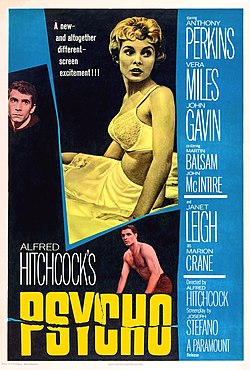
Psycho
In Phoenix, Arizona in late 1959, real estate secretary Marion Crane steals $40,000 in cash from her employer after hearing her boyfriend, Sam Loomis, complain that his debts are delaying their marriage. She sets off to drive to Sam's home in the town of Fairvale, California, switching cars in Bakersfield after an encounter with a suspicious policeman. A rainstorm forces Marion to stop at the secluded Bates Motel a few miles from Fairvale. Norman Bates, the proprietor, whose Second Empire style house overlooks the motel, registers Marion (who uses an alias) and invites her to dinner with him in the motel's office. When Norman returns to his house to retrieve the food, Marion overhears him arguing with his mother about his desire to dine with Marion. After returning, he discusses his hobby as a taxidermist, his mother's "illness" and how people have a "private trap" they want to escape. When Marion suggests that Norman should have his mother institutionalized, he becomes offended and insists that she is harmless. Marion decides to drive back to Phoenix in the morning to return the stolen money. As she showers, a shadowy figure enters the bathroom with a kitchen knife and stabs her to death. Shortly afterward, Norman is heard horrified at his mother's actions and rushes back to find Marion dead. He hurriedly cleans up the murder scene and places Marion's body, her belongings, and, unbeknownst to him, the hidden cash in her car, before sinking the vehicle in a swamp. Marion's sister, Lila, arrives in Fairvale a week later, tells Sam about the theft and demands information about Marion's whereabouts. He denies knowing anything about Marion's disappearance. Arbogast, a private investigator, approaches them, stating that he has been hired to retrieve the money. He stops in at the Bates Motel and questions Norman, whose nervous conduct, stuttering, and inconsistent answers arouse his suspicion. Arbogast examines the guest register and discovers from some handwriting in it that Marion spent a night in the motel. When Arbogast infers from things Norman says that Marion had spoken to his mother, Arbogast asks to speak to her, but Norman refuses to allow it. Arbogast leaves and calls Lila to tell her of his suspicions and that he will return to the motel, speak to Norman's mother, and rejoin Lila in town later. When Arbogast returns and enters the Bates' house to search for Norman's mother, a shadowy figure at the top of the stairs stabs him to death. When Sam and Lila do not hear back from Arbogast, Sam goes to the motel to look for him. Sam spots a silhouette in the house who he assumes is Norman's mother, who is unresponsive to Sam's calls. Lila and Sam alert the local sheriff, Al Chambers, who tells them Norman's mother died in a murder–suicide by strychnine poisoning ten years before. Chambers suggests that Arbogast lied to Sam and Lila so he could pursue Marion and the money. Convinced that something happened to Arbogast, Lila and Sam drive to the motel and check in. Sam distracts Norman in the office while Lila sneaks into the Bates' house. Suspicious, Norman knocks Sam out. As Norman heads to the house, Lila hides in the fruit cellar and discovers the mummified body of Norman's mother. Lila screams in horror, and Norman, wearing women's clothes and a wig, enters the cellar and attempts to attack her, only to be subdued by a recovered Sam. At the police station, a psychiatrist explains to Lila, Sam, and Chambers that Norman killed his mother and her lover out of jealousy. Unable to bear the guilt, he stole his mother's corpse and treated it as if she were still alive, then re-created his mother as an alternate personality, as jealous and possessive toward Norman as he felt about his mother. Whenever Norman was attracted to a woman, "Mother" would take over. Under the "Mother" personality, Norman killed two women before he killed Marion and Arbogast. The psychiatrist concludes that "Mother" has now completely submerged Norman's personality. Norman sits in a jail cell and hears his mother's voice stating the murders were his doing. Marion's car is towed from the swamp.

The Lion King
In the Pride Lands, a pride of lions rules over the kingdom from Pride Rock. King Mufasa and Queen Sarabi 's newborn son, Simba, is presented to the gathered animals by Rafiki, the mandrill who serves as the kingdom's shaman and advisor. Mufasa's younger brother, Scar, covets the throne and plots to eliminate Mufasa and Simba so that he may become king. When Simba grows into a young cub, Mufasa shows him the Pride Lands and forbids him to explore beyond its borders. Mufasa explains to Simba the responsibilities of kingship and the "circle of life," which connects all living things. Scar manipulates Simba into exploring an elephants' graveyard beyond the Pride Lands. There, Simba and his best friend, Nala, are chased by three spotted hyenas named Shenzi, Banzai, and Ed. Mufasa is alerted by his majordomo, the hornbill Zazu, and rescues the cubs. Though disappointed in Simba for disobeying him and endangering himself and Nala, Mufasa forgives him. He explains that the great kings of the past watch over them from the night sky, from which he will one day watch over Simba. Scar visits the hyenas and convinces them to help him kill Mufasa and Simba in exchange for hunting rights in the Pride Lands. Scar lures Simba into a gorge and signals the hyenas to drive a large herd of wildebeest into a stampede to trample him. He then alerts Mufasa, who saves Simba and tries to escape the gorge, but Scar betrays him by throwing him into the stampede to his death. Scar then deceives Simba into believing that Mufasa's death was his fault and tells him to leave the kingdom and never return. He orders the hyenas to kill Simba, but Simba escapes. Unaware of Simba's survival, Scar tells the pride that the stampede killed both Mufasa and Simba, and steps forward as the new king, allowing the hyenas into the Pride Lands. Simba collapses in a desert but is rescued by two outcasts, a meerkat and a warthog named Timon and Pumbaa. Simba grows up with his two new friends in their oasis, living a carefree life under their motto " hakuna matata " ("no worries" in Swahili). Years later, an adult Simba rescues Timon and Pumbaa from a hungry lioness, who is revealed to be Nala. Simba and Nala fall in love, and she urges him to return home, telling him that the Pride Lands have become drought -stricken under Scar's reign. Still feeling guilty over Mufasa's death, Simba refuses and leaves angrily. He encounters Rafiki, who tells Simba that Mufasa's spirit lives on in him. Simba is visited by the spirit of Mufasa in the night sky, who tells him that he must take his place as king. After Rafiki advises him to learn from the past instead of running from it, Simba decides to return to the Pride Lands. Aided by his friends, Simba sneaks past the hyenas at Pride Rock and confronts Scar, who shames Simba over his supposed role in Mufasa's death. Scar then reveals to Simba that he killed Mufasa. Enraged, Simba retaliates and forces Scar to confess the truth to the pride. A battle ensues between Simba and his allies and the hyenas. Scar attempts to escape but is cornered by Simba at a ledge near the top of Pride Rock. Scar begs for mercy and attempts to deceive Simba by blaming his actions on the hyenas. Simba spares Scar's life, but orders him to leave the Pride Lands forever. Scar refuses and attacks Simba. Following a brief battle, Simba throws Scar off the ledge. Scar survives the fall, but the hyenas, who overheard him betraying them, attack and maul him to death. With Scar and the hyenas gone, Simba takes his place as king, and Nala becomes his queen. With the Pride Lands restored, Rafiki presents Simba and Nala's newborn cub to the assembled animals, thus continuing the circle of life.

Casablanca
In December 1941, American expatriate Rick Blaine owns a nightclub and gambling den in Casablanca, then in French Morocco. "Rick's Café Américain" attracts a varied clientele, including Vichy French and German officials, refugees desperate to reach the still-neutral United States, and those who prey on them. Although Rick professes to be neutral in all matters, he ran guns to Ethiopia in 1935 and fought on the Republican side in the Spanish Civil War. Petty crook Ugarte boasts to Rick of letters of transit obtained by murdering two German couriers. The papers allow the bearers to travel freely around German-occupied Europe and to neutral Portugal. Ugarte plans to sell them at the club and persuades Rick to hold them for him; however, Ugarte is arrested by the local police under Captain Louis Renault, the unabashedly corrupt prefect of police. Ugarte is killed while in custody without revealing that Rick has the letters. Then, the reason for Rick's cynical nature—former lover Ilsa Lund—enters his establishment. Spotting Sam, Rick's friend and house pianist, Ilsa asks him to play " As Time Goes By ". Rick storms over, furious that Sam disobeyed his order to never perform that song again, and is stunned to see Ilsa. She is accompanied by her husband, Victor Laszlo, a renowned fugitive Czechoslovak Resistance leader. A flashback reveals Ilsa left Rick without explanation when the couple were planning to flee as the German army neared Paris in 1940, embittering Rick. Laszlo and Ilsa need the letters to escape, while German Major Strasser arrives in Casablanca to prevent that. When Laszlo makes inquiries, Signor Ferrari, an underworld figure and Rick's friendly business rival, divulges his suspicion that Rick has the letters. Laszlo returns to Rick's café that night and tries to buy them. Rick refuses to sell, telling Laszlo to ask his wife why. They are interrupted when Strasser leads a group of German officers in singing " Die Wacht am Rhein ". Laszlo orders the house band to play " La Marseillaise ", and Rick allows it. Patriotism grips the crowd and everyone joins in, drowning out the Germans. Afterwards, Strasser has Renault close the club on a flimsy pretext. Later, Ilsa confronts Rick in the deserted café; when he refuses to give her the letters, she threatens him with a gun but then confesses she still loves him. She explains that when they met and fell in love in Paris, she believed her husband had been killed while attempting to escape from a concentration camp. When she learned that Laszlo was alive and in hiding, she left Rick without explanation to nurse her sick husband. Rick's bitterness dissolves. He agrees to help, letting Ilsa believe she will stay with him, while Laszlo leaves Casablanca. When Laszlo unexpectedly shows up, having narrowly escaped a police raid on a Resistance meeting, Rick has waiter Carl spirit Ilsa away. Laszlo, aware of Rick's love for Ilsa, tries to persuade him to use the letters to take her to safety. When the police arrest Laszlo on a trumped-up charge, Rick persuades Renault to release him by promising to set Laszlo up for a much more serious crime: possession of the letters. To allay Renault's suspicions, Rick explains that he and Ilsa will use the letters to leave for America. When Renault tries to arrest Laszlo as arranged, however, Rick forces him at gunpoint to assist in their escape. At the last moment, Rick makes Ilsa board the plane to Lisbon with Laszlo, telling her that she would regret it if she stayed, "Maybe not today, maybe not tomorrow, but soon and for the rest of your life." Strasser, tipped off by Renault, drives up alone. Strasser attempts to stop the plane and then draws a gun on Rick; the latter shoots him dead. When policemen arrive, Renault pauses, then orders them to "round up the usual suspects." He suggests to Rick that they join the Free French in Brazzaville. As they walk away into the fog, Rick says, "Louis, I think this is the beginning of a beautiful friendship."

Whiplash
Andrew Neiman, a 19-year-old jazz drummer, attends the prestigious Shaffer Conservatory in New York City. Terence Fletcher, the conductor of Shaffer's most prestigious ensemble, overhears Andrew practicing and prompts him to play rudiments and a double-time swing beat. Unimpressed, Fletcher leaves, but later recruits him to perform in his ensemble as a backup for the core drummer, Carl Tanner. On his first day in Fletcher's class however, Andrew quickly discovers that Fletcher is relentlessly strict and abuses students verbally, physically, and psychologically. When Andrew apparently fails to keep tempo on Hank Levy 's " Whiplash " during his first ensemble rehearsal, Fletcher throws a chair at him, repeatedly slaps his face, and berates him. Determined to impress Fletcher, Andrew excessively practices, often until his hands bleed. After their first set at a jazz competition, Andrew misplaces Tanner's sheet music. Tanner cannot play without the sheets, so Fletcher allows Andrew to perform; Shaffer wins the competition. Fletcher promotes Andrew to core drummer, but abruptly reassigns the position to Ryan Connolly, a drummer from Andrew's previous ensemble within Shaffer. Andrew's single-mindedness toward music leads to him clashing with his family and breaking up with his girlfriend Nicole. One day, Fletcher begins rehearsal by announcing that Sean Casey, a former member of the Studio Band, has died in a car crash. He then pushes the three drummers to play at a faster tempo on " Caravan ", keeping them for a grueling five-hour practice. Andrew earns the core position back after he is the only one able to perform on tempo. Andrew's bus gets a flat tire on his way to the next competition. He rents a car, but arrives late and forgets his drumsticks at the rental office. Andrew races back and retrieves them, but his car is hit by a truck on the way back. An injured Andrew runs to the theater, arriving bloodied and weak as the ensemble enters the stage. He struggles to keep tempo and Fletcher halts the performance to dismiss him. Enraged, Andrew attacks Fletcher onstage and is expelled from Shaffer. At the request of his father Jim, Andrew meets a lawyer representing Casey's parents, who explain that Casey did not die in a car crash, but actually hanged himself after suffering from depression and anxiety due to Fletcher's abuse; and his parents want Fletcher held accountable. Andrew agrees to anonymously testify against Fletcher. Months later, Andrew, having abandoned drumming, encounters Fletcher playing piano at a jazz club. They have a conversation over drinks, during which Fletcher says that he was let go from Shaffer after someone complained about his conduct, admits he was harsh, but insists his methods were necessary to motivate students. He cites a story where Jo Jones allegedly threw a cymbal at Charlie Parker to argue that the next transformative jazz musician would never let themselves be discouraged. Fletcher invites Andrew to perform with his professional band at a New York JVC Jazz Festival, playing the same pieces from Shaffer; Andrew accepts. He calls Nicole to invite her, but learns she has a new boyfriend. At the festival, Fletcher reveals to Andrew that he knows Andrew testified against him; as revenge, he leads the band into Tim Simonec 's "Upswingin'", a song that Andrew does not know nor has the sheet to. After a disastrous performance, a humiliated Andrew walks offstage. After Jim embraces him, Andrew returns to the stage, reclaims the drum kit, and cuts off Fletcher by cueing the band into "Caravan". Fletcher, though angered, resumes conducting. Towards the end of "Caravan", Andrew improvises a lengthy solo. Impressed, Fletcher nods in approval before cueing the final chord.

Léon: The Professional
Léon is an Italian-American hitman (or "cleaner", as he refers to himself) working for a mafioso named "Old Tony" in the Little Italy neighborhood of New York City. One day, Léon meets Mathilda Lando, a lonely twelve-year-old who lives with her dysfunctional family in an apartment down the hall from Léon and has stopped attending class at her school for troubled girls. Mathilda's abusive father attracts the ire of corrupt DEA agents, who have been paying him to stash cocaine in his apartment. After they discover that he has been stealing from their stash, DEA agents invade the apartment, led by their drug-addicted boss, Norman Stansfield. During their search for the missing drugs, Stansfield murders Mathilda's family while she is out shopping for groceries. When she returns, Mathilda realizes what has happened just in time to continue down the hall to Léon's apartment; he hesitantly gives her shelter. Mathilda quickly discovers that Léon is a hitman. She begs him to take care of her and to teach her his skills, as she wants to avenge the murder of her four-year-old brother. At first, Léon is unsettled by her presence and considers killing her in her sleep, but he eventually trains Mathilda and shows her how to use various weapons. In exchange, she runs his errands, cleans his apartment, and teaches him how to read. Mathilda looks up to Léon and quickly develops a crush on him, often telling him she loves him, but he does not reciprocate. When Léon is out on a job, Mathilda fills a bag with guns from Léon's collection and sets out to kill Stansfield. She bluffs her way into the DEA office by posing as a delivery girl and is ambushed by Stansfield in a bathroom. One of his men arrives and informs him that Léon had killed Malky, one of the corrupt DEA agents, in Chinatown that morning. Léon, after discovering her plan in a note left for him, rescues Mathilda, killing two more of Stansfield's men in the process. An enraged Stansfield confronts Tony, who is roughed up and forced to disclose Léon's whereabouts. Léon tells Mathilda about how he became a hitman. When Léon was nineteen in Italy, he fell in love with a girl from a wealthy family, but Léon came from a poor family. The two made plans to elope. When the girl's father discovered their plans, he killed her out of anger. Léon killed the father in revenge and fled to New York, where he met Tony and trained to become a hitman. Later, while Mathilda returns home from grocery shopping, an NYPD ESU team sent by Stansfield captures her and infiltrates Léon's apartment. Léon ambushes the ESU team and rescues Mathilda. Léon creates a quick escape for Mathilda by smashing a hole in an air shaft. He tells her that he loves her and to meet him at Tony's place in an hour, moments before the ESU team fires a grenade into the apartment, wounding Léon and creating chaos. He manages to disguise himself as a wounded ESU officer and sneaks down through the staircase. He goes unnoticed by everyone except Stansfield, who follows him and shoots him in the back. As Léon dies, he presses a grenade pin in Stansfield's palm, saying that it is from Mathilda. Stansfield opens Léon's vest to find a cluster of grenades, which detonate, killing Stansfield. Mathilda goes to Tony and tries to convince him to hire her, but Tony flatly refuses to employ a twelve-year-old and tells Mathilda that he is holding Léon's money for her. Tony gives Mathilda $100 and orders her back to school, where the headmistress re-admits her after Mathilda reveals what has happened. Mathilda walks onto a field near the school to plant Léon's houseplant, as she had told Léon, to "give it roots".

The Kashmir Files
The plot frequently switches between the contemporary period set in the year 2020 and flashbacks to 1989–1990 throughout the film. Circa 1989–1990 In 1989–90 Kashmir, Islamic militants storm and banish Kashmiri Pandits from the Kashmir valley using the slogans Raliv, Chaliv ya Galiv ("convert (to Islam), leave or die") and Al-Safa Batte Dafa ("with god's grace whole Kashmiri Pandit community will leave valley"). Pushkar Nath Pandit, a teacher, fears for the safety of his son Karan, who has been accused by the militants of being an Indian spy. Pushkar requests his friend Brahma Dutt, a civil servant, for Karan's protection. Brahma travels with Pushkar to Kashmir and witnesses the violence against Kashmiri Pandits. He takes up the issue with the chief minister of Jammu and Kashmir (J&K), who suspends Brahma. Militant commander Farooq Malik Bitta, also a former student of Pushkar, breaches Pushkar Nath's house. Karan hides in a rice container but is found and shot by Bitta. Pushkar and his daughter-in-law Sharda plead for their lives. Bitta compels Sharda to eat rice soaked in Karan's blood in exchange for their lives. After Bitta and his gang leave the house, Pushkar begs his doctor friend Mahesh Kumar to bring an ambulance and save Karan's life. However, the hospital gets taken over by militants, who forbid the hospital staff from treating non-Muslims. Subsequently, Karan succumbs to injuries from the gunshots. To ensure their safety, Pushkar and his family are taken by their journalist friend Vishnu Ram to Kaul, a Hindu poet who maintains a cordial relationship with Muslims. Kaul takes in many Pandits into his home but a group of militants arrives to pick Kaul and his son up under the guise of offering protection. The rest of the Pandits leave the place but are later shocked to find corpses of Kaul and his son hanging from trees. The refugee Pandits from the Kashmir valley settle in Jammu and live on meagre ration and in poor conditions. Brahma is appointed as an advisor to the new Governor of J&K. At his request, the Home Minister visits the Jammu camps where Pushkar demands the removal of Article 370 and the resettlement of Kashmiri Pandits. Brahma manages to get Sharda a government job in Nadimarg in Kashmir, and the family moves there. One day, a group of militants headed by Bitta dress up as members of the Indian Army and arrive at Nadimarg. They start rounding up the Pandits living there. Sharda resists when the militants get hold of her elder son Shiva. Angry Farooq strips her and saws her body in half. He lines up Shiva and the remaining Pandits and shoots them into a mass grave. Pushkar is spared to spread the word about what happened. 2020 In the present day, Sharda's younger son Krishna is brought up by Pushkar. He believes that his parents had died in an accident. A student of ANU, Krishna is under the influence of professor Radhika Menon who is a supporter of Kashmiri separatism. Pushkar's friends Brahma, Vishnu, Mahesh, and police officer Hari Narain, who had served in Kashmir when Karan was killed, recall the events of Kashmir from their memory that Brahma calls a " genocide ". Krishna contests the ANU's student election. Following the advice of professor Radhika Menon, he holds the Government of India responsible for the issue of Kashmir, much to the anger of Pushkar. Later, when Pushkar dies, Krishna travels to his ancestral home in Kashmir to scatter the ashes per Pushkar's last wish. Menon asks Krishna to record some footage in Kashmir to expose the government's supposed atrocities. With the help of one of Menon's contacts, Krishna meets Bitta and accuses him of being responsible for the situation of the Pandits. But Bitta declares himself to be a new-age Gandhi who is leading a non-violent democratic movement. Bitta claims that it was the Indian Army, who killed Krishna's mother and brother. When Krishna questions Brahma about this claim, Brahma hands him files of newspaper cuttings (collected by Pushkar), reporting that militants, disguised as Indian Army soldiers, had killed them. Krishna returns to Delhi and gives his scheduled speech for the university presidential elections to a roaring crowd at the ANU campus. He elaborates on the history of Kashmir and the plight of his family and other Kashmiri Hindu victims that he had discovered from his visit. This shocks his mentor professor Menon and her other students, and Krishna is initially met with resistance and ridicule at the meeting. Some students eventually welcome and applaud Krishna's speech.

Grave of the Fireflies
In March 1945, American bombers destroy most of Kobe during the waning days of the Pacific War. Seita and his sister Setsuko, children of an Imperial Japanese Navy captain, survive, but their mother dies. She is cremated in a mass grave outside and Seita is seen carrying a small wooden box containing her ashes. Seita conceals their mother's death from Setsuko. The siblings move in with an aunt. He hides his mother's box of ashes in the garden. Seita retrieves a supply cache he buried before the bombing and gives everything to his aunt, save for a tin of Sakuma drops, which he gives to Setsuko. The aunt convinces Seita to sell his mother's silk kimonos for rice, which devastates Setsuko. As rations dwindle, the aunt becomes resentful of the children as Seita does nothing to earn the food she prepares for them. At her suggestion, Seita withdraws some money from his mother's bank account to buy a charcoal stove and other supplies. Following an air raid, the siblings move into an abandoned bomb shelter. Among the belongings is the wooden box of his mother's ashes. They capture fireflies from the marshes and release them into the refuge for light. The following morning the fireflies have died. Setsuko buries them and reveals their aunt told her their mother died, then tearfully asks why the fireflies had to die so soon. The situation becomes dire when they run out of rice. A friendly farmer recommends that Seita swallow his pride and return to his aunt, but he refuses, instead stealing crops from farms and breaking into homes during air raids. A farmer catches him and brings him to the police station, but the sympathetic policeman lets him go. Setsuko falls ill, and a doctor explains she is suffering from malnutrition. Seita withdraws the last of the money from their mother's bank account. He is distraught to learn that Japan has surrendered and that his father is most likely dead, as most of Japan's naval fleet has been sunk. Seita returns to Setsuko with food and finds her hallucinating. She dies as Seita finishes preparing the food. Seita cremates Setsuko's body and her doll in a straw casket. He carries her ashes in the candy tin along with his father's photograph. Seita dies of starvation a few weeks later at a Sannomiya train station surrounded by other malnourished people. A janitor, tasked with removing the bodies before the Americans' arrival, sorts through Seita's possessions. He finds the candy tin and throws it into a field. Setsuko's ashes spread out, and her spirit springs from the container, joined by Seita's spirit and a cloud of fireflies. The two board a ghostly train and, throughout the journey, look back at the events leading to Seita's death as silent, passive observers. Their spirits, healthy and content, arrive at their destination: a hilltop bench overlooking present-day Kobe, surrounded by fireflies.