Movies (Page 161)
Browse 2,069 movies from the database, mentioned on Hacker News, ranked by rating or popularity.
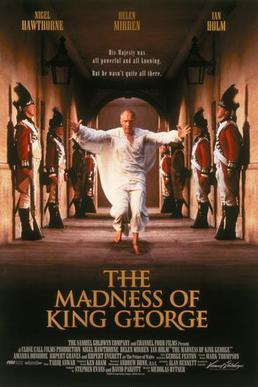
The Madness of King George
King George III's bout of madness in 1788 touched off the Regency Crisis of 1788 and triggered a power struggle between factions of Parliament under the Tory Prime Minister William Pitt the Younger and the reform-minded Leader of the Opposition Charles James Fox. At first, the King's behaviour appears mildly eccentric. He is deeply concerned with the wellbeing and productivity of Great Britain and exhibits an encyclopaedic knowledge of the families of even the most obscure royal appointments. He is devoted to his loving wife, Queen Charlotte, and their large brood of 15 children. However, he is growing more unsettled, partly over the loss of America. His memory fails, his behaviour becomes erratic and hypersexual, he talks and talks, and his urine turns blue. George, Prince of Wales, aggravates the situation, knowing that he will be named regent if the King becomes incapacitated. George chafes under his father's relentless criticism, and yearns for greater freedom, particularly when it comes to choosing a wife. He married the woman everyone believes to be his mistress, Mrs. Fitzherbert, in a secret ceremony in 1785. Without his father's consent, the marriage is illegal. Even with consent, it would remove him from the succession, because Fitzherbert is a Catholic. He knows that he has the moral support of Fox, whose agenda includes abolition of the slave trade and friendlier relations with America. Knowing how to exacerbate the King's behaviour, the Prince arranges a concert of music by Handel. The King reacts as expected, interrupting the musicians, speaking lasciviously to Lady Pembroke, and finally assaulting his son. In a private moment, the King tells Charlotte that he knows something is wrong. They are brutally interrupted when the Prince has them separated, supposedly on the advice of physicians. Led by the Prince of Wales' personal physician, Dr. Warren, the King is treated using the medical practices of the time, which focus on the state of his urine and bowel movements and include painful cupping and purgatives. Lady Pembroke recommends Dr. Francis Willis, who cured her mother-in-law. Willis uses novel procedures. At his farm in Lincolnshire, patients work to gain "a better opinion of themselves." He observes to an equerry "To be curbed, thwarted, stood up to, exercises the character." When the King insults him, foully, he is strapped into a chair and gagged. He will be restrained whenever he "swears and indulges in meaningless discourse" and "does not strive every day and always towards his own recovery". When the Prince has the King transferred to Kew, Charlotte watches as her beloved, bearded and wearing a soiled diaper and a straitjacket, struggles against being put in the coach. "Until you can govern yourself, you're not fit to govern others. And until you do so, I shall govern you," Willis says. At Kew, the King spits soup at Willis, but gains control under the physician's intractable gaze. Later, the King, properly dressed, feeds himself to a round of applause from staff—but the delusions persist. The Whig opposition confronts Pitt's increasingly unpopular Tory government with a proposal that would give the Prince powers of regency. Baron Thurlow, the Lord Chancellor, obtains and suppresses proof of the marriage. Fox wins, and the Regency Bill is printed. Thurlow comes to see the King and joins in a moving reading of King Lear. "I have remembered how to seem..." the King muses. "What, what!" an expression he has not used in six months. His urine is yellow. Thurlow and the King arrive at Parliament in time to thwart the bill. The King forces the Prince to admit his marriage and to put away Fitzherbert. With the crisis averted, all those who have witnessed his suffering are summarily dismissed, including Captain Greville, the King's equerry. Fitzroy, another equerry, observes to the sacked Greville: "To be kind does not commend you to kings." Cheering crowds welcome the royal family to St. Paul's Cathedral. Willis stands by, but the King dismisses him. "We must be a model family," he declares; George wants "something to do." "Smile at the people, wave at them. Let them see that we're happy. That's why we're here." Saluting, Willis disappears into the crowd, where Mrs. Fitzherbert also smiles, wistfully.

The Island of Dr. Moreau
United Nations negotiator Edward Douglas survives a plane crash in the Java Sea. A passing boat rescues him. Aboard, Dr. Montgomery tends to him and promises that Douglas will be taken to Timor. However, when they arrive at Montgomery's destination, "Moreau's Island", he instead advises Douglas to disembark and use the radio there. Douglas and Montgomery go to the Main House, where the former is warned not to wander. According to Montgomery, Moreau fled the United States due to backlash against his experimentation on animals. Douglas is locked in his room by Montgomery, but escapes that night. While exploring, he hears cries and enters a laboratory where he witnesses a human/ llama mutant give birth, with doctors attending to the delivery. Douglas's presence is noticed by a doctor, who turns out to be a human/animal hybrid, and he flees, finding Aissa, a daughter of Moreau's, who leads him to the 'village' of the mutants. There, Moreau is worshipped by the mutants. He keeps the hybrids subjugated by using a remote-controlled electrical implant, surgically placed at birth under their skin. Moreau tells Douglas how he introduced human DNA into animals in search of a higher being, incapable of harm. The existing Beast-Folk are imperfect, but Moreau claims to be close to a "solution". When Moreau discovers that the leopard /human hybrid Lo-Mai has killed a rabbit, he promises that there will be a " trial " the next day. Douglas tries to escape by boat, but stops as it is overrun with humanoid rats. At the outdoor trial, Lo-Mai runs at Moreau but is stopped by the remote-controlled implant. To Moreau's shock, Azazello shoots Lo-Mai dead. His body is cremated publicly. Inspecting the charred remains, the mutant " Hyena - Swine " notices the control implant embedded in Lo-Mai's arm. He then feels for the same implant on his own body and removes it from the bone. Hyena later starts saying "no more pain", wanting to spread the word to all the mutants. In addition to the pain caused by the implant, the animals are controlled through regular drugging to prevent them from "retrogressing". Hyena-Swine reveals his removed implant to Montgomery who sets the other beasts after him. Meanwhile, Douglas tries to contact the outside world, but Montgomery sabotages the radio. Hyena-Swine and his trackers—now on his side and also free of implants—confront Moreau. Enraged, Hyena-Swine reveals his intent to overthrow him and destroy all humanity. The group eventually kills Moreau. Douglas then fires a gunshot, scaring the group off. Azazello steals Montgomery's handgun and joins Hyena-Swine's faction. Douglas realizes that Aissa is regressing: her pupils are cat -like, her canine teeth are becoming fangs, and her fingernails are becoming sharper. Douglas can stop this with a serum from the lab. However, Montgomery has gone insane and destroyed it. Moreau was planning to use Douglas's DNA to stop Aissa's regression permanently, completing his experiments. Azazello leads the mutants to the armory. They eventually take over the island, keeping hostages. Montgomery has lost his mind and is promoting hedonism amongst the mutants. Drunk, he sits in Moreau's former throne and is killed by Azazello while watching a mutant orgy. Hyena-Swine's group continues to rampage around the island. Azazello hangs Aissa out of jealousy before being executed by Hyena-Swine, being viewed as a threat to his dominance. Douglas survives by telling Hyena-Swine to impose his leadership and be "God Number One" among the others of his faction, causing Hyena-Swine to kill his supporters. Eventually, M'Ling, another one of Moreau's sons, triggers an explosion that causes Hyena-Swine to lose his gun and allows Douglas to escape. Outnumbered and defenseless, Hyena-Swine retreats into the burning building and dies. Peaceful-minded mutants see off Douglas, who leaves on a raft. The hybrids now want to return to their natural state of being and are in favor of ending Moreau's work.

The Jackal
A joint operation between the FBI and the MVD in Moscow leads to the demise of the younger brother of Azerbaijani mafia boss Terek Murad. Intending to retaliate, Murad hires an ex- KGB asset, an international hitman operating under the codename "The Jackal ", to assassinate an unidentified prominent American for $70 million. Two weeks later, the MVD capture and interrogate one of Murad's henchmen, Viktor Politovsky, and discover the assassination plot. The interrogation, coupled with recovered documents, leads the FBI and MVD to suspect that FBI Director Donald Brown is the intended target. Using a series of disguises and stolen or forged IDs, the Jackal prepares for the assassination attempt. FBI Deputy Director Carter Preston and Russian Police Major Valentina Koslova turn to imprisoned IRA sniper Declan Mulqueen for help. They believe that his former lover, a former ETA militant and fugitive named Isabella Zancona, can identify the Jackal. Mulqueen reveals that he also knows the Jackal and his methods and agrees to help in exchange for his release as well as U.S. citizenship and safe haven for Zancona. Mulqueen and Zancona want revenge on the Jackal after he wounded her in Libya, causing her to miscarry their unborn child. Zancona, now married, provides information to help identify the Jackal, including that he is a United States Army Special Forces veteran with combat experience from his stationing in El Salvador and describes him as sociopathic with no emotions. Zancona discreetly slips Mulqueen a key to a dropbox containing a clean passport and $10,000 cash to return to Ireland. However, Preston had earlier threatened Mulqueen that if he escaped, if he refused to cooperate, or if an IRA squad tried to rescue him, he would be shot. Meanwhile, when the Jackal arrives in Montreal to collect a large caliber weapon, a contact notifies him that hijackers are pursuing it. The Jackal kills one hijacker with an extremely poisonous chemical and evades the others. He then hires Ian Lamont, a mechanic and small-time hoodlum, to build a control mount for the weapon. The Jackal demands that all design specs be turned over to him, and he also requires Lamont's complete confidentiality. When Lamont, underestimating the threat represented by this assassin, tries extorting more money, the Jackal kills him during a live-fire test of the weapon. The FBI discovers Lamont's remains and evidence that the Jackal intends to use a long-range heavy machine gun for the assassination. The Jackal sails across the Great Lakes to Chicago, where he evades the FBI and almost kills Mulqueen, leading Mulqueen to deduce there is a mole tipping off the Jackal. They discover that the director of the Russian Embassy in Washington, D.C., gave the Jackal a direct access code to FBI records, allowing him to track down and kill Koslova and two FBI agents. Before dying, Koslova – passing on a taunt from the Jackal – tells Mulqueen that " cannot protect his women". As the Jackal drives to Washington, D.C., Mulqueen deduces from the Jackal's mocking statement that his target is not Director Brown, but in fact the First Lady of the United States, who is scheduled to give a public speech. The Jackal, masquerading as a gay man, dates Douglas, a man he encountered earlier in a bar; unbeknownst to Douglas, he uses his garage to store his weapon. When a news report exposes the Jackal's identity, he kills Douglas. On the date of the First Lady's speech, the weapon is hidden in a minivan parked near the speaker podium, with the Jackal planning to shoot the First Lady via remote control. However, before the Jackal can take his shot, Mulqueen uses a marksman's rifle to destroy the weapon's scope and takes off in pursuit of the Jackal, while the sniper accompanying Mulqueen blows up the van's fuel tank. The Jackal blindly opens fire before his vehicle is destroyed, causing Preston to be shot and wounded while tackling the First Lady to safety. Following a chase through the Washington Metro tunnels, Mulqueen confronts the Jackal, who is then shot from behind by Zancona; however, the Jackal's gun discharges a shot, and Mulqueen is also wounded. While Zancona tends to Mulqueen, the Jackal, though severely wounded, has survived: he tries to retrieve a spare weapon. Seeing this, Mulqueen grabs Zancona's pistol and shoots the assassin several times, finally killing him. A few days later, Preston and Mulqueen witness the Jackal's burial in an unmarked grave. Preston reveals that he is returning to Russia to pursue Terek Murad and his gang, and that Mulqueen's request to be released was denied but he will likely be moved to a minimum security prison. Preston also remarks that his heroics in saving the First Lady have made him "untouchable" within the FBI: knowing his current clout will prevent any backlash against him, he turns his back on Mulqueen, allowing him to go free.
The Interview
Edward Rodney Fleming (Weaving) is a man living alone after losing his job and wife. One morning, Detective Sergeant John Steele (Martin) and his subordinate, Detective Wayne Prior (Aaron Jeffery), break into Fleming's apartment. They rough Fleming up, ransack his belongings, and take him to the police station in handcuffs. Steele and Prior question Fleming in an interrogation room. The police claim a witness saw Fleming with Andrew Beecroft, the owner of a stolen car. They also claim Fleming's handwriting matches the writing on some forged sales correspondence between Beecroft and a fake buyer, and that the fake buyer's alias matches an alias Fleming used as a teenager to steal a car for a joyride. Fleming denies any knowledge of the theft and only meekly asks for food, as he has not eaten since the previous day. Steele offers false expressions of empathy, while Prior intimidates Fleming when the recorder is off. In between questioning, Detective Inspector Jackson orders Steele to deal with an intrusive reporter, Barry Walls. Steele complains to Walls about how his reckless reporting has previously interfered with police work. Walls shares that he overheard Prior questioning Steele's skills behind his back, to convince Steele he can be useful in return for information. Steele confronts Prior in private, pins him to the wall, and warns him against future disloyalty. As the interrogation proceeds, Steele reveals to Fleming that the car's owner is missing. Fleming correctly guesses he is suspected of murdering the car's owner, and that the police believe the theft is related to other missing persons cases reported in the news. Fleming asks for a lawyer. While Fleming's lawyer advises him to say nothing until he is released in a few hours, Steele convinces Jackson to give him more time with the Fleming. Fleming's demeanour grows in confidence. Despite his lawyer's advice, he expresses his belief that the missing persons were murdered, and mocks the police for chasing some kind of overarching motive. Fleming hints that he might have more to share after eating. When Steele finally provides food, Fleming proudly details how Beecroft picked him up while hitchhiking. He decided to kill Beecroft on a whim. He bludgeoned Beecroft after they drank together, and then he took Beecroft's car and wallet after disposing of the body. Fleming also casually admits to killing five or six other victims starting from a few years ago, claiming he cannot be bothered to remember the details although he always beat them to death after hitchhiking with them. Fleming agrees to provide a video-recorded confession as well. However, during the videotaping, Jackson walks in and asks to speak to Fleming. Fleming immediately recants everything and says he only told Steele and Prior what they wanted to hear because they brutalized him, threatened him, and refused to feed him. Jackson forces Steele and Prior to end the questioning. Later, Steele is informed that the entire day's interrogation was being filmed without his knowledge, due to an investigation by a police ethics committee after too many suspects made formal complaints about his conduct. The officer in charge of the ethics review, Detective Hudson, determines that Steele's entire interview is inadmissible in court due to suggestions, false promises, intimidation, and other questionable techniques by Steele and Prior. Steele blames Jackson for ruining the interview and failing to stand up for him, although Jackson offers to testify that Steele tried to reel in Prior's aggression. Convinced of Fleming's guilt and outraged that he will walk free, Steele arranges to secretly give the entire case info and the audio recording of the confession to Walls. Steele tells Walls he does not care about the consequences since he believes he will be fired anyway. Afterwards, Hudson interviews Steele using another audio recorder. Steele accuses Hudson of a personal grudge, as Hudson led previous ethics investigations against him, too. Hudson turns off the recorder, angrily insults Steele, and tells him he will make sure he is fired. Unbeknownst to Hudson, Steele had his own recorder running and recorded Hudson's abusive comments. Steele is last seen planning how to use his recording of Hudson to defend himself. Fleming leaves the station with an ambiguous grin. In the final scene, he is shown hitchhiking again.
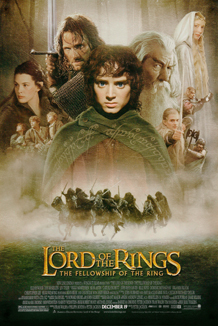
The Lord of the Rings: The Fellowship of the Ring
In the Second Age of Middle-earth, the lords of Elves, Dwarves, and Men each receive Rings of Power. Unbeknownst to them, the Dark Lord Sauron forges the One Ring in Mount Doom, imbuing it with his power to control the other Rings and conquer Middle-earth. A final alliance of Men and Elves battles Sauron's forces in Mordor. Isildur of Gondor severs Sauron's finger, vanquishing him and returning him to spirit form, marking the beginning of the Third Age. The Ring corrupts Isildur, who takes it and is later killed by Orcs. The Ring is lost in a river for 2,500 years until it is found by Gollum, who possesses it for five centuries, until it abandons him and is found by a hobbit named Bilbo Baggins. Sixty years later, Bilbo celebrates his 111th birthday in the Shire with his old friend, Gandalf the Grey. He leaves the Shire for one last adventure, passing on his inheritance, including the Ring, to his nephew Frodo. Gandalf investigates the Ring, learns its true nature, and discovers that Gollum was captured by Sauron and revealed two words during interrogation: "Shire" and "Baggins." Gandalf warns Frodo to leave the Shire. As Frodo departs with his gardener friend, Samwise Gamgee, Gandalf heads to Isengard to seek counsel from his friend, the powerful wizard Saruman. Saruman reveals Sauron has dispatched his nine Nazgûl servants to retrieve the Ring. Gandalf immediately attempts to flee to warn Frodo, but is imprisoned by Saruman who has allied himself with Sauron, communicating with him via a palantír. Frodo and Sam join up with fellow hobbits Merry and Pippin and evade the Nazgûl before reaching Bree to meet Gandalf, who never arrives as Saruman captures him. A Ranger named Strider helps them get to Rivendell but they are ambushed on Weathertop by the Nazgûl, who wound Frodo with a Morgul blade. Arwen, Strider's beloved Elf, finds them, rescues Frodo, and takes him to Rivendell to be healed and reunite with Gandalf, who had escaped Isengard on a Great Eagle. That night, Arwen declares to Strider she is willing to sacrifice her immortality for their love. Learning of Saruman's betrayal from Gandalf and that they are now facing threats from both Sauron and Saruman, Arwen's father Lord Elrond holds a council of Elves, Men, and Dwarves, also attended by Frodo and Gandalf, that decides the Ring must be destroyed. However, Elrond explains that it can only be destroyed in the fires of Mount Doom, the volcano where it was forged. Frodo volunteers to take the Ring, accompanied by Gandalf, Sam, Merry, Pippin, the Elf Legolas, Gimli, Boromir of Gondor, and Strider—who is actually Aragorn, Isildur's heir and the rightful King of Gondor. Bilbo, now living in Rivendell, gives Frodo his old sword Sting, and a chainmail shirt made of mithril. The Fellowship of the Ring is forced to travel through the Mines of Moria due to a storm summoned by Saruman. Gandalf warns Frodo that Gollum, released from Sauron's fortress, has been trailing them with the intention to reclaim the Ring. They find the Dwarves of Moria dead and are attacked by Orcs and a troll. While they hold off the attack, they are pursued by Durin's Bane, a Balrog. The others escape as Gandalf confronts the Balrog and falls into a deep chasm while battling it. The devastated Fellowship reaches Lothlórien, where Galadriel, the Elf-queen, tells Frodo that he alone can complete the quest and warns that one of his companions will try to take the Ring. She shows him a vision of Sauron enslaving Middle-earth should he fail. Meanwhile, Saruman creates an army of Uruk-hai in Isengard to destroy the Fellowship, intending to betray Sauron and claim the Ring for himself. The Fellowship travels to Parth Galen by river. As warned by Galadriel, Frodo is confronted privately by Boromir, who attempts to take the Ring. Uruk-hai scouts ambush the group; their leader, Lurtz, mortally wounds Boromir as he fails to stop them from capturing Merry and Pippin. Aragorn arrives and kills Lurtz, comforting Boromir in his final moments, promising to aid Gondor in their conflict. Worried the Ring will corrupt his friends, Frodo decides to go to Mordor alone, but Sam insists on accompanying him, honouring Gandalf's promise to protect him. Aragorn, Legolas, and Gimli plan to rescue Merry and Pippin, while Frodo and Sam navigate the pass of Emyn Muil towards Mordor.

The Insider
CBS producer Lowell Bergman convinces the founder of Hezbollah, Sheikh Fadlallah, to grant an interview to Mike Wallace for 60 Minutes. Wallace and Bergman firmly stand their ground against the Sheikh's armed and hostile bodyguards, who attempt to intimidate and disrupt their interview preparations. Later, Bergman approaches Jeffrey Wigand—a former executive at the Brown & Williamson tobacco company—for help explaining technical documents. Wigand agrees but intrigues Bergman when he insists that he will not discuss anything else, citing a confidentiality agreement. Brown & Williamson coerces Wigand into a more restrictive agreement, leading Wigand to accuse Bergman of betraying him. Bergman subsequently visits Wigand to defend himself and investigate the potential story. Although Wigand apparently possesses very damaging information, he hesitates to reveal anything, fearing that it will jeopardize his severance package from Brown & Williamson. Wigand's family moves into a more modest house, and Wigand begins working as a teacher. One night, Wigand finds evidence of trespass and receives a sinister phone call. Meanwhile, Bergman contacts Richard Scruggs, an attorney representing Mississippi in a lawsuit against the tobacco industry. Bergman suggests that if they depose Wigand, making his information public, it can give CBS cover to broadcast the information; Scruggs expresses interest. Wigand receives an emailed death threat and finds a bullet in his mailbox. He contacts the FBI, but the agents who visit him are hostile and confiscate his computer. Furious, Wigand demands that Bergman arrange an interview, during which Wigand states that he was fired after objecting to Brown & Williamson intentionally making their cigarettes more addictive. Bergman arranges a security detail for Wigand's home, and the Wigands experience marital stress. Wigand testifies in Mississippi, despite attempts of intimidation and legal suppression by Brown & Williamson attorneys. After returning home, he discovers that his wife Liane has left him and taken their daughters. Eric Kluster, the president of CBS News, decides not to broadcast Wigand's interview after CBS legal counsel Helen Caperelli warns that the network is at risk of legal action from Brown & Williamson. Bergman confronts Kluster, accusing him of sacrificing journalistic integrity to protect the impending sale of CBS to Westinghouse, which would enrich both Kluster and Caperelli. Wallace and their executive producer Don Hewitt both side with Kluster. Wigand, learning of this, is appalled and terminates contact with Bergman. Investigators probe Wigand's personal history and publish their findings in a 500-page dossier. Bergman learns that The Wall Street Journal intends to use it in a piece questioning Wigand's credibility. He convinces the Journal 's editor to delay publication and assign journalists to investigate the dossier, claiming that it falsely quotes its sources. After infighting at CBS over the Wigand segment, Bergman is ordered to take a "vacation" as the abridged 60 Minutes segment airs. Bergman contacts Wigand, who is both dejected and furious, accusing Bergman of manipulating him. Bergman defends himself and praises Wigand and his testimony. Scruggs urges Bergman to air the full segment to draw public support for their lawsuit, which is under threat from a lawsuit by Mississippi's governor. Bergman, frozen out, is unable to assist and privately questions his own motives pursuing the story. Bergman contacts an editor at The New York Times, disclosing the full story and events at CBS. The Times prints the story on the front page and condemns CBS in a scathing editorial. The Journal dismisses the dossier as character assassination and prints Wigand's deposition. Hewitt accuses Bergman of betraying CBS, but finds that Wallace now agrees that bowing to corporate pressure was a mistake. 60 Minutes finally airs the original segment, including the full interview with Wigand. Bergman tells Wallace that he has resigned, believing that 60 Minutes 's credibility and integrity are now permanently tarnished.

The Miracle of P. Tinto
After a prologue (La llave) imitating an Eastern European black-and-white short film, the story is told in a retrospective way. P. Tinto was born obsessed with building a big family and soon enlists a blind girl, Olivia, in his big life project. However, despite his best intentions, the couple is unable to have kids due to their incompetence to understand the sexual innuendo of the adults and they spent the most of their lifes trying to have kids just by pulling the suspenders in and out and singing "tralari, tralari". After several years without having any kid, the now elder couple decide to pray for a miracle and that same night a couple of Martians ends up stranded in their door. P. Tinto, thinking they are children due to their short stature, decides to adopt them and treat them as kids, despite their protests and their adult behavior. Some time later, while watching a video reel about a big family favoured by the government and the need to adopt African orphans, P. Tinto decides to adopt one, but his adoption form goes flying to the hands of Pancho Jose, a man that just escaped from a Polish madhouse and armed with a big butane cylinder. Along with him, a nationalist contractor called Usillos that was giving him a ride, has his car broken in front of the Tinto´s house. Mistaken as an African orphan, Pancho is adopted by the couple, while Usillos is contracted by P. Tinto to rebuild his library to adapt it as a new room for Pancho, Usillos accepts the job after learning that an UFO machine is hidden in the house. Pancho Jose bonds with the Martians after learning that the UFO is also a time machine and he decides to help them to fix it so he can come back in time to save his mother from being crushed by a big box of cheese and prevent a sad chain of events to happen in his life. However, P. Tinto has another plans for Pancho when he learns the contract with the factory´s biggest client, The Vatican, is about to be cancelled, and tries to lure Panchito into the business. While Panchito tries to propose a new product (pizza) for the business, P. Tinto gets angry and locks his son in the attic, where he learns that the UFO got broken during a test run in a weird accident. P. Tinto decides to use his son´s idea, but is quickly rejected by the priest of the town that decides to lure any of the "kids" to the church, enlisting Jose Ramon, one of the Martians, in the process. Ramon, enlightened by faith, decides to become a priest and leave behind the idea to come back to Mars. Meanwhile, Pancho Jose seduces Olivia (that complained a lot about a pain in her low stomach) and the woman dances the next morning in a burst of happiness just to be run over by a train. Pancho Jose, frustrated over the outcome of the last events, decides to rebuild the time machine using Usillo´s truck. Usillos, having enough information about the UFO, reports is to the NASA, but when the investigators arrive, they took Usillos instead, as they find him dressing with his UFO gadgets, his thumb incredibly swollen and completely crazy. Pancho Jose manages to complete the machine and says goodbye to P. Tinto. He leaves with the other Martian, just to reveal that he wasn´t alone bringing with him a midget friend from the madhouse he brought in his luggage that turned also to be a Martian. They came back to time to save Pancho´s mother and reunite her with his past self. This leads to a sequence of changes in the time lapse, reverting the death of Olivia and leading an African orphan to find the house of P. Tinto that is on the roof waiting for a miracle. In a mid-credits scene, it is revealed that the stranded Martian was found in the road and, while he insisted that he is an alien, is again mistaken as a kid and adopted by a big family along with another African orphan. At the end of the credits, we see Olivia running happily in the meadows.

The Matrix Reloaded
Six months after escaping the Matrix, Neo and Trinity are now romantically involved. Morpheus receives a message from Captain Niobe of the Logos calling an emergency meeting of all ships of Zion. An army of Sentinels is tunneling towards Zion and will reach it within 72 hours. Commander Lock orders all ships to return to Zion to prepare, but Morpheus asks one ship to remain to contact the Oracle. But within the Matrix, Bane, a member of the crew, encounters the former Agent Smith. Smith forcibly overwrites his mind, effectively killing him and possessing his body. Thus able to enter the real world, he exits the Matrix. In Zion, Morpheus announces the news of the advancing machines. The Nebuchadnezzar leaves Zion and enters the Matrix, where Neo meets the Oracle's bodyguard Seraph, who leads him to her. The Oracle reveals that she is part of the Matrix and instructs Neo to reach its Source with the help of the Keymaker. As the Oracle departs, Smith appears, telling Neo that he became a rogue program after being defeated by him. He demonstrates his ability to clone himself over other inhabitants of the Matrix, including the new upgraded Agents. He tries to take over Neo's body but fails, prompting a battle between Neo and many copies of Smith. Neo defends himself, but is forced to retreat. Neo, Morpheus, and Trinity visit the Merovingian, who is imprisoning the Keymaker. The Merovingian, a rogue program with his own agenda, refuses to let him go. His wife Persephone, seeking revenge on her husband for his infidelity, leads the trio to the Keymaker. Morpheus, Trinity, and the Keymaker flee while Neo holds off the Merovingian's henchmen. Morpheus and Trinity try to escape with the Keymaker, pursued by several Agents and the Merovingian's chief henchmen, the Twins. After a long chase, Trinity escapes, Morpheus defeats the Twins, and Neo saves Morpheus and the Keymaker from Agent Johnson. The crews of the Nebuchadnezzar, Vigilant, and Logos help the Keymaker and Neo reach the Source. The Logos crew must destroy a power plant and the Vigilant crew must disable a back-up power station to bypass a security system, allowing Neo to enter the Source. Haunted by a vision of Trinity's death, he asks her to remain on the Nebuchadnezzar. The Logos is successful, but the Vigilant is destroyed by a Sentinel. Trinity replaces the Vigilant crew and completes their mission. Agent Thompson corners her and they fight. As Neo, Morpheus, and the Keymaker try to reach the Source, the Smiths ambush them. The Keymaker is killed after unlocking the door to the Source for Neo. Neo meets a program called the Architect, the creator of the Matrix, who explains that, as the One, Neo is an intentional part of the design of the Matrix, which is now in its sixth iteration. Neo is meant to stop the Matrix's fatal system crash that naturally recurs due to humans' free will, leading to dozens of humans gradually refusing to accept the simulation. As with the five previous Ones, Neo has a choice: either reboot the Matrix from the Source and pick a handful of survivors to repopulate the soon-to-be-destroyed Zion, as his predecessors all did, or go to save the imperiled Trinity, causing the Matrix to crash and killing everyone in it. Neo chooses the latter, prompting a dismissive response from the Architect. Neo's vision of Trinity comes true as she is shot by Agent Thompson while falling off a building. Before she hits the ground, Neo arrives and catches her. He then removes the bullet from her chest and restarts her heart. They return to the real world, where Sentinels attack them. The Nebuchadnezzar is destroyed, but the crew escapes. As the Sentinels catch up to them, Neo realizes he can sense the machines in the real world, and telepathically destroys them but falls into a coma. The crew are picked up by another ship, the Hammer. The Hammer' s captain reveals that the machines wiped other ships defending Zion after someone prematurely activated an EMP. Only one survivor was found: the Smith-possessed Bane, who lies beside Neo in the medical bay, also unconscious.

The Life of David Gale
David Gale is a former professor on death row in Texas. With only a few days until his execution, his lawyer negotiates a half-million-dollar fee to tell his story to Bitsey Bloom, a journalist from a major news network. She has a reputation for keeping secrets and protecting her sources. He tells her his story, revealed through a series of flashbacks. In 1994, Gale is a successful intellectual and the head of the philosophy department at the fictional University of Austin (not to be confused with the present day and then non-existent University of Austin). He is an active member of DeathWatch, an advocacy group campaigning against capital punishment. At a graduation party, he encounters Berlin, a graduate student who has been expelled from the school. When Gale gets drunk, she seduces him, and they have rough sex. She then falsely accuses Gale of rape. The next day, he loses a televised debate with the Governor of Texas when he is unable to name any innocent people executed during the governor's term. Gale is arrested, but the charge is dropped when Berlin disappears. However, his marriage, career, and reputation are all destroyed. Gale struggles with alcoholism after his wife Sharon takes their son with her to Spain and disallows contact. Constance Harraway, a fellow DeathWatch activist, is a close friend of Gale who consoles him after his life falls apart. However, Harraway is discovered raped and murdered, suffocated by a plastic bag taped over her head. An autopsy reveals Gale's semen in her body and that she had been forced to swallow the key to the handcuffs, a Securitate torture technique which Gale previously wrote about. The physical evidence at the crime scene points to Gale, who is convicted of rape and murder and is sentenced to death. In the present, Bloom investigates the case between her visits with Gale. Gale maintains his innocence, claiming he and Harraway had consensual sex the night before her murder. Bloom comes to believe that the apparent evidence against Gale does not add up. She is tailed several times in her car by Dusty Wright, an alleged one-time lover and colleague of Harraway, whom she suspects was the real killer. Wright slips evidence to Bloom that suggests Gale has been framed, implying that the actual murderer videotaped the crime. Bloom pursues this lead until she finds a tape revealing that Harraway, who was suffering from terminal leukemia, had committed an elaborate suicide made to look like murder. Wright is seen on the videotape, acting as her accomplice, implying that they framed Gale as part of a plan to discredit the death penalty by conspiring to execute an innocent person, and subsequently releasing evidence of the actual circumstances. Once Bloom and her aide find this evidence, only hours remain until Gale's scheduled execution. She tries to give the tape to the authorities in time to stop the execution. She arrives at the Huntsville Unit just as the warden announces that the execution has been carried out. The tape is subsequently released, causing an uproar over the execution of an innocent man. Later, Wright receives the money that Bloom's magazine agreed to pay for the interview and delivers it to Sharon, along with a postcard from Berlin confessing that the rape accusation that derailed Gale's life and career was false. Sharon looks distraught, knowing Gale told the truth and that she effectively stole their child away from him. Later, a videotape labeled "Off the Record" is delivered to Bloom. This tape shows Harraway's suicide and Gale deliberately leaving his fingerprints on the plastic bag in the process. He then looks at the camera and ends the recording, leaving Bloom stunned with the truth that the couple deliberately sacrificed themselves to discredit capital punishment.

The Italian Job
Professional safecracker John Bridger's team has plans to steal $35 million worth of gold bars from a safe in Venice from Italian gangsters who had stolen it weeks earlier. Professional fixer Charlie Croker, computer expert Lyle or " Napster ", wheelman Handsome Rob, explosives expert Left Ear, and inside man Steve comprise the team. Although the heist is successful, Steve double-crosses them as they drive towards Austria with the bullion, with another crew he takes it for himself and kills John. Rob drives the van over the bridge into the water to protect the others, using air tanks from the heist to stay alive. Steve leaves them for dead. A year later in Philadelphia, Charlie finds Steve, under a new identity, laundering the gold through Ukrainian jeweler Yevhen to finance his lavish lifestyle in Los Angeles. Charlie gathers the team, and also recruits John's daughter Stella, a skilled private safe expert, offering her the chance to avenge her father's death. They stake out Steve's mansion, and Stella, disguised as a cable technician, maps out its interior and determines the location of Steve's safe containing the bullion. Unaware of Stella's identity, Steve asks her out on a date. The plan is to blow the safe while Steve is away on his supposed date, using three heavily modified Mini Coopers to transport the gold out of the mansion. Supplier Skinny Pete gets the explosives and mechanic Wrench modifies the cars. On Steve's last visit to Yevhen, Yevhen accidentally reveals that he knows about the Venice heist. To cover his tracks, Steve kills him. Mashkov, the leader of a Ukrainian crime family and Yevhen's cousin, traces the gold back to Skinny Pete via Yevhen's ex-employee Vance. On the night of the planned heist, the crew discovers that Steve's neighbors are having a party so they have to abort, as the explosives would draw attention. Stella still has to meet Steve, but inadvertently gives away her identity by using her dad's catchphrase. The team arrives to protect her, and Steve taunts them as he says he still has the upper hand. Aware that Charlie intends to steal it back, Steve decides to move the gold to Mexico City. His plan, which involves transporting the gold via armored car from his L.A. home to a private plane at LAX, is overheard by Napster using a phone tap. Charlie and his gang make a new plan to steal the gold en route to the airport by hijacking the city's traffic control system, forcing the armored car to a planned spot where they will execute the heist. On the day, they are surprised when three armored trucks leave Steve's mansion, but Napster determines which one carries the bullion and manipulates the traffic accordingly. As Steve is monitoring the transport by helicopter, they maneuver the truck to the target spot and detonate explosives to drop the part of the road with the truck into the subway tunnel below. Opening the truck, they find the gold in a different safe from the one that held it before. Struggling initially, Stella cracks it open and they divide the $27 million in gold among the three Minis. They race from the subway to the Los Angeles River and through the city, pursued by Steve's henchmen on motorcycles, with Napster creating a green wave to evade traffic. Stella, Handsome Rob, and Left Ear head to Union Station, while Charlie lures Steve away in his helicopter. Steve tries to kill him by having his helicopter pilot destroy Charlie's Mini, but the helicopter's tail rotor is damaged, grounding it. Steve carjacks a Ford Bronco to follow Charlie to Union Station, where the cars are loaded onto a train car with the help of Wrench. He tries to bribe Wrench to let him in, but finds Charlie and the others waiting. When Steve pulls a gun, demanding the gold back, Mashkov and his armed men disarm him. Charlie explains that he has offered Mashkov part of the gold and Steve in exchange for helping with security protection (it is implied that Skinny Pete put him in touch). Stella punches Steve in the face as revenge. Mashkov then takes him away, implying he intends to not kill him, but rather torture him for killing Yevhen. The group boards the train as it departs to New Orleans, and celebrate in John's honor. The team uses their share of the gold for their own desired purposes: Handsome Rob purchases an Aston Martin DB7 Volante, getting pulled over by a beautiful policewoman; Left Ear buys a mansion in Andalusia with a room for his shoe collection; Napster buys a powerful stereo capable of blowing a woman's clothes off; and Charlie takes John's advice about finding someone he wants to spend the rest of his life with, and he and Stella travel to Venice together.

The Kingdom
Al-Qaeda terrorists in Riyadh, Saudi Arabia, detonate an explosive at an American oil company housing compound, killing both American and Saudi citizens. Before this, terrorists disguised as Saudi State Police had shot the inhabitants in the compound before they were stopped by Sergeant Haytham of the Saudi State Police; after this, another terrorist commits a suicide bombing. Francis Manner, the Federal Bureau of Investigation 's Legal Attaché in Saudi Arabia, alerts his colleague, Special Agent Ronald Fleury, to the attacks before being killed by the second bomb. At FBI Headquarters in Washington, D.C., Fleury briefs his rapid deployment team on the attack, believing it to have been orchestrated by local Saudi terrorist Abu Hamza. He recruits forensic examiner Janet Mayes, intelligence analyst Adam Leavitt, and bomb technician Grant Sykes to his team. Although the U.S. Justice Department and the U.S. State Department hinder FBI efforts to investigate, Fleury blackmails the Saudi ambassador into allowing his team into Riyadh. On arrival, the team is met by Colonel Faris al-Ghazi, the commander of the Saudi State Police Force providing security at the compound, and General Al Abdulmalik of the Saudi Arabian National Guard. The general's inexperience in criminal investigation hinders Fleury's team. The team is invited to the palace of Saudi Prince Ahmed bin Khaled, where Fleury convinces the Prince that Colonel al-Ghazi is a better fit to lead the investigation. With this change in leadership, the Americans are allowed direct access to the crime scene. This allows Fleury to sympathize with and befriend al-Ghazi. While searching for evidence, Sergeant Haytham and Sykes discover the second bomb was detonated in an ambulance and that the brother of one of the dead terrorists had access to ambulances and police uniforms. Al-Ghazi orders a raid by the Saudi Emergency Force on a terrorist stronghold, killing several of them. Afterward, Fleury's team discovers clues, including photos of the U.S. and other Western embassies in Riyadh. The U.S. Embassy Deputy Chief of Mission Damon Schmidt notifies Fleury and his team that they have been ordered to return to the United States. However, the team's convoy is attacked and Leavitt is kidnapped. Al-Ghazi commandeers a civilian vehicle, and the team chases the car holding Leavitt into the dangerous Al-Suwaidi neighborhood. As they pull up, a gunman fires rocket-propelled grenades at them and a fierce firefight starts. Leavitt is carried into a room inside a complex, where the terrorists prepare to film his execution before Mayes, separated from al-Ghazi and Fleury, saves him just in time. As al-Ghazi and the team start to leave, Fleury notices a trail of blood leading to the back of the apartment, where a family lives. After noticing several clues, al-Ghazi realizes the grandfather is Abu Hamza. Abu Hamza's teenage grandson walks out of the bedroom and shoots al-Ghazi in the neck, then points his gun at Mayes, prompting Fleury to kill him and Haytham to kill Abu Hamza. Al-Ghazi bleeds out in Fleury's arms, while Abu Hamza whispers something to his other grandchild. At Al-Ghazi's house, Fleury and Haytham meet and comfort his family. Fleury and his team return to the US, where they are commended by the FBI Director for their work. Leavitt asks Fleury what he whispered to Mayes, earlier in the film, to get her to stop crying over Manner. Simultaneously, both Fleury and Hamza's grandson responds "We are gonna kill 'em all."

The International
Louis Salinger, an Interpol detective, and Eleanor Whitman, an Assistant District Attorney from Manhattan, are assigned to investigate the International Bank of Business and Credit (IBBC), which funds criminal activities such as money laundering, terrorism, arms trading, and the destabilization of governments. Salinger's and Whitman's investigation takes them to Milan, where the IBBC assassinates Umberto Calvini, an arms manufacturer and Italian prime ministerial candidate. The assassin diverts suspicion to a local assassin with political connections to the Red Brigades, who is then promptly killed by a corrupt policeman. Salinger and Whitman get a lead on the second assassin, but the policeman confronts the two and orders them out of the country. At the airport, they are able to check the security camera footage for clues on the whereabouts of the bank's assassin, and follow a suspect to New York City. In New York, Salinger and Whitman are met by two New York Police Department detectives, Iggy Ornelas and Bernie Ward, who have a photograph of the assassin's face. Salinger, Ornelas, and Ward locate Dr. Isaacson to whose practice the assassin's leg brace has been traced, and they are able to follow him to the Solomon R. Guggenheim Museum. Jonas Skarssen, the chairman of the IBBC, reveals to his lawyer White and security adviser Wexler that Calvini was killed so that they could have his sons buy missile guidance systems in which the bank has invested. Since the bank knows that Salinger and Whitman are close to finding their assassin, they send a team of hitmen to kill him, while Wexler is arrested by Ornelas. As Salinger and Ward speak to the assassin and attempt to arrest him, a shootout at the Guggenheim erupts when a number of gunmen attack them. Ward is killed in the chaos, and Salinger is forced to team up with the assassin to fight off the gunmen. However, the assassin is mortally wounded during their escape and dies of his injuries. When Salinger goes to interrogate Wexler, a veteran Stasi officer, the latter reveals that the IBBC is practically untouchable due to its connections to terrorist organizations, drug cartels, governments, and powerful corporations, though Wexler indicates a willingness to help Salinger take down the IBBC. Meanwhile, Salinger persuades Whitman to let him continue alone. In Italy, Salinger tells Calvini's sons of the IBBC's responsibility for their father's murder, prompting them to cancel the deal with the bank and order White to be killed. Salinger then accompanies Wexler to Istanbul, where Skarssen is buying the guidance systems from their only other manufacturer, Ahmet Sunay. Salinger attempts to record the conversation so that he can obstruct the deal by proving to the buyers that the missiles will be useless, but he ultimately fails. Both Wexler and Skarssen are then killed by a hitman contracted by the Calvinis to avenge their father's murder. Salinger is left stunned, his investigation, pursuit, and determination to bring down the IBBC having led to nothing. Afterwards, the bank successfully continues its operations despite the death of Skarssen, as he had predicted to Salinger before he was killed. However, with the new and more aggressive chairman Francis Ehames, the IBBC's increased expansion and aggression ultimately lead to greater scrutiny, leading to a United States Senate investigation headed by Whitman.