Movies (Page 74)
Browse 2,069 movies from the database, mentioned on Hacker News, ranked by rating or popularity.

The Man Who Wasn't There
In 1949 Santa Rosa, California, Ed Crane is a quiet barber working in his brother-in-law Frank’s barbershop. His wife Doris, a bookkeeper, struggles with a drinking problem, and their marriage is strained. One day, a customer named Creighton Tolliver tells Ed about an investment opportunity in a new technology called dry cleaning. Tolliver persuades Ed to invest $10,000, but Ed, desperate for money, decides to blackmail Doris's boss, "Big Dave" Brewster, whom he suspects of having an affair with her. Ed anonymously demands money from Brewster, who embezzles funds from his department store to meet the blackmail demands. However, Brewster soon uncovers the scheme and confronts Ed. After Tolliver implicates Ed in the plan, Brewster beats him to death. In a desperate attempt to protect himself, Ed fatally stabs Brewster with a cigar knife in self-defense. Despite this, the police discover discrepancies in the store’s financial records and arrest Doris, suspecting her of both embezzling the money and murdering Brewster. Ed hires Freddy Riedenschneider, a Sacramento defense attorney, who arrives in town and immediately starts living lavishly on the defense fund Doris’s family raised by mortgaging the barbershop. On the day of Doris’s trial, she is found dead, having hanged herself in her jail cell. It is later revealed that Doris was pregnant when she died, though she and Ed had not been intimate for years. Ed’s world unravels further as Frank, now deeply in debt and consumed by grief, turns to alcohol. Amid the chaos, Ed begins spending time with Rachel "Birdy" Abundas, a teenage girl and friend of the family, listening to her play the piano. Ed fantasizes about launching her musical career and becoming her manager, but his dreams are crushed when a music teacher bluntly informs him that Birdy has no talent. On the way home, Birdy makes an overt sexual advance toward Ed, causing him to lose control of his car and crash. Ed wakes up in the hospital to find himself arrested for murder. Tolliver’s body, beaten and found with Ed’s investment contract, leads the police to believe that Ed coerced Doris into embezzling the money and murdered Tolliver when he discovered the scheme. With no resources left, Ed mortgages his house to hire Riedenschneider for his defense. However, during Riedenschneider’s opening statement, Frank attacks Ed in a fit of rage, and the judge declares a mistrial. With his defense in shambles, Ed throws himself at the mercy of the court, but the judge sentences him to death. While awaiting execution on death row, Ed writes his life story to sell to a pulp magazine. One night, he sees a UFO outside the prison, which he walks away from. As Ed is led to the electric chair, he reflects on his life and decisions, finding peace with his past. He regrets nothing and holds hope that, in the afterlife, he and Doris will be free from the imperfections of the mortal world.

Free Guy
Free City is an online game developed by Soonami Studios. Its " players "—people in real life —wear sunglasses and spend their time fighting each other and causing mayhem. The non-player characters (NPCs) accept the chaos while living out their scripted lives, unaware that the world they live in is a video game. These NPCs include Guy, who works as a clerk in Free City's bank with his best friend, security guard Buddy. Unemployed software developer Millie Rusk plays Free City to find proof that Soonami stole the source code from the concept game she developed, Life Itself, which included novel artificial intelligence (AI) techniques for its NPCs. Her friend and co-developer Walter "Keys" McKey is reluctant to help, as he now works in technical support at Soonami. Millie's avatar "MolotovGirl" catches Guy's attention by singing his favorite song, " Fantasy ". Guy then begins to deviate from his programming, accidentally shooting a player robbing the bank, and leaving with the player's sunglasses. Believing Guy to be a hacker disguised as an NPC, Keys and his coworker Mouser unsuccessfully try to ban him from the game. Accessing the players' view of the game, Guy visits new areas and meets Millie at vlogger Revenjamin Buttons' stash house, where they attempt to steal evidence leading to her source code. Believing Guy to be a novice player, she advises him to level up. Guy rapidly progresses through the game by completing missions benevolently, standing out from other players and becoming a worldwide sensation known as "Blue Shirt Guy". As Keys realizes that Guy truly is an NPC, other NPCs that Guy interacts with also begin to develop self-awareness. However, Free City 2 is due to release in 48 hours and will replace Free City, terminating all of its NPCs. Millie tells Guy the truth about his existence, but he becomes distraught and breaks off contact. Guy eventually realizes that there is something more to an NPC's existence, and goes with Buddy to get the evidence Millie wanted from Buttons, who accidentally glitched through the edge of Free City ' s map and discovered an older build of Life Itself, recording a video clip in the process. Guy's popularity threatens the plans of Soonami's CEO Antwan Hovachelik to launch Free City 2, so he orders a server reboot which resets Guy's memories. Guy regains his self-awareness when Millie kisses him. Guy recalls the location of an island containing remnants of the Life Itself build and they attempt to reach it before the Free City 2 launch wipes all old content from the servers, rallying the NPCs to go on strike from the game to hinder Antwan. Antwan fires Keys, has every player removed from Free City, and sends an unfinished but extremely powerful Guy-resembling character named Dude into the game to stop Guy. Initially overwhelmed, Guy then puts his sunglasses on Dude, distracting him, and proceeds to the island. Furious, Antwan begins smashing the game's network server racks with an axe in a last-ditch attempt to stop Guy, erasing Buddy and much of the game world, while firing Mouser after he soon realized that he did steal Millie's code. Before he can destroy the final server, Guy manages to reach the island and Millie offers a deal to drop the copyright infringement lawsuit and surrender the Free City franchise's profits to him in exchange for her creation. Antwan agrees to her terms, believing she made a bad deal. Sometime later, sales for Free City 2 slip because of bugs in the code and lagging online play. An embattled Antwan is in the crosshairs, but claims he is a victim of circumstance. Millie salvages her code and along with Keys and Mouser, releases the indie game Free Life, which includes Guy, Dude, and the other NPCs from Free City. Guy reveals to Millie that his code is actually a love letter to her from Keys: during the development of Life Itself, Keys had encoded what he knew about her tastes into an AI routine in the game, which was eventually incorporated into Free City, explaining why Guy felt drawn to MolotovGirl. After Millie leaves the game, she and Keys kiss. Meanwhile, Guy and Dude reunite with Buddy, whose AI algorithm was reconstructed.
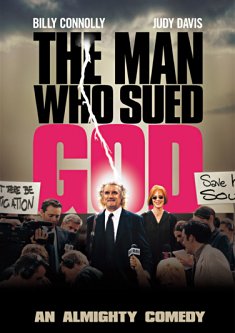
The Man Who Sued God
Advocate Steve Myers (Billy Connolly) is a disillusioned lawyer who becomes fed-up with the corruption within the judicial system. He quits law, buys a small fishing boat and takes up fishing for a living. Steve's fishing boat is struck by lightning and explodes into pieces, burns and sinks. He informs his insurance company, which reviews and then subsequently declines his claim on the grounds that it is not liable as his fishing boat was destroyed due to an " act of God ". Frustrated that his claim is repeatedly declined, Steve files a claim against God, naming religious officials (Christian, Jewish, Muslim, etc) as representatives of God and thereby the respondents. The religious leaders, their respective lawyers and their insurance companies get together to find a way to settle this dilemma, which catches the fancy of the media. It is in court that God's representatives will have to admit that the destruction of Steve's fishing boat was actually God's act, accept and compensate him, or deny it altogether thereby denying God's existence, leaving the onus on Steve to prove his claim. Steve's battle brings media attention leading to a meeting with journalist Anna Redmond (Judy Davis) who helps to raise his public profile, enlisting the support of others who had fallen victim to insurance companies' "acts of God" clause. He also faces heavy criticism and protests from religious groups as his profile grows, and he backs the church into a disadvantageous position. However, the attention takes its toll on Steve's family, who are exploited by the media, his ex-wife already crippled by debt as the guarantor of the boat. Steve faces a reality check as his family considers moving to Perth, on the other side of the country. Meanwhile, Anna Redmond comes under fire for a history of disputes and attacks on insurance companies, drawing criticism that the case is little more than a publicity stunt. Facing a drawn out legal battle and the impact it would have on those around him, Steve decides he has won a moral victory, and withdraws from the case but not before convincing the judge that insurance companies' use of the term "acts of God" is a misleading term.

Greenland
Structural engineer John Garrity lives in Atlanta, Georgia, with his estranged wife, Allison, and their diabetic son, Nathan. He is on the way home to watch the near-earth passing of a recently discovered interstellar comet nicknamed "Clarke", along with his family and neighbors. While at the supermarket, John receives an automated DHS message announcing that he and his family have been selected for emergency sheltering. He returns home just as a comet fragment is seen entering the atmosphere on live TV. Previously expected to land in the ocean near Bermuda, the fragment instead strikes Tampa, vaporizing the city along with most of the state. John then receives a call with instructions to head to Robins Air Force Base for an evacuation flight, as Clarke is on a direct collision course to Earth and the impact will cause an extinction-level event in two days. John, Allison, and Nathan pack up and drive away. The way to the base is clogged by heavy traffic, so the Garritys abandon their car and continue on foot. Nathan's insulin is accidentally left behind in the car. As they reach the base, John realizes it is missing and goes back to retrieve it. Meanwhile, Nathan's medical condition is discovered, disqualifying him for sheltering, and Allison stays with him. John returns and boards a plane, but quickly jumps off upon realizing Allison and Nathan were left behind. As John exits the base, a panicked mob breaks in, destroying several evacuation planes when gunfire ignites spilled jet fuel. Returning to their car, John finds Allison's note saying they are going to her father's home in Lexington. After getting medical supplies, Allison and Nathan hitch a ride with Ralph and Judy Vento, only for Ralph to kidnap Nathan to use him and the wristbands to board a flight. John hitch-hikes a ride on a military truck full of people heading towards Canada, planning to get off in Lexington. A passenger named Colin tells him they are headed to Osgoode, Ontario, where private planes are flying to Greenland, believed to be the military evacuation site. Another man attempts to steal John's wristband, causing the truck to crash, killing Colin. John is forced to kill the other man in self-defense. At another air force base, the Ventos attempt to pose as Nathan's parents, but are arrested when Nathan reveals he's not their child. Allison and Nathan are reunited shortly after at a nearby FEMA camp in Knoxville. The following morning, John learns that the largest fragment will hit in approximately 24 hours. Stealing a car, John reaches his father-in-law, Dale's, house, and Nathan and Allison arrive shortly after. The family learn about a complex of underground bunkers near Thule Air Base in Greenland, confirming that is where the evacuees are being sent. Dale chooses to stay behind, bidding farewell to his daughter's family. John, Allison, and Nathan proceed in Dale's truck. While making steady progress to Osgoode, the family learns over the radio that Clarke's largest fragment, which is 9 miles (14 km) wide, will hit Western Europe and obliterate it. They arrive at the Osgoode airport just in time to board the last flight out. As they reach Greenland, a comet fragment strikes, causing the plane to crash and hit a glacier,killing the pilot. The Garritys and the rest of the passengers flag down a military truck and enter the bunker complex just as the largest fragment enters the atmosphere and hits Earth, devastating civilization along with the world. Nine months later, the bunker makes radio contact with other survivors around the world. The Garritys and other occupants exit the shelter, as reports come in that the atmosphere is finally clearing, giving the survivors the chance to bring Earth back onto its feet.

The Last Mimzy
A scientist in the distant future has set out to avert a catastrophic ecological disaster and sends a small number of high tech devices that resemble toys back in time to the 21st century. Ending up in Seattle, they are discovered by siblings Noah Wilder and his younger sister Emma. The "toys" are initially incomprehensible to them, other than one which appears to be a stuffed rabbit. The children keep their discovery a secret from their parents. Emma becomes telepathically connected to the rabbit, naming it "Mimzy", which imparts knowledge onto her. The children gain genius -level intellects and psionic powers – Noah can teleport objects using a card-sized rectangle of green lines of light and a conch shell to control spiders, but thanks to her link, Emma develops more advanced abilities, becoming the only one who can use the "spinners", stones that can float and produce a force field. Emma describes herself as "the chosen one" but names Noah as "the engineer" without which she cannot "build the bridge to the future". The children's parents and Larry White, Noah's science teacher, discover the devices and the children's powers. By mistake, Noah causes a power outage over half the state of Washington, alerting the FBI to their activities. The family is held for questioning by Agent Nathaniel Broadman, during which Mimzy is revealed as artificial life using nanotechnology created by Intel. Emma relates a dire message from Mimzy which states that many of her kind were sent into the past before, but none of them were able to return to their proper time period, because they lacked an "engineer" like Noah, and now Mimzy, the last one that the scientist was able to send back, is beginning to deteriorate. To save the future, Mimzy must acquire a sample of uncorrupted human DNA to correct the damage done to DNA by ecological catastrophes. The FBI do not believe them, so Noah and Emma use their powers to escape. Mimzy absorbs a tear from Emma, which contains her DNA. Via the time portal that Noah constructs using the toys, Mimzy returns to the future, leaving a Sri Yantra symbol; Larry, who witnessed the event, says he saw "numbers", a reference to a dream he had that related to him winning lottery numbers he had missed out before by never buying a ticket. In the future, Mimzy provides the genetic information required to restore humanity, both physically and mentally, with Emma coming to be dubbed "Our Mother" by the populace.
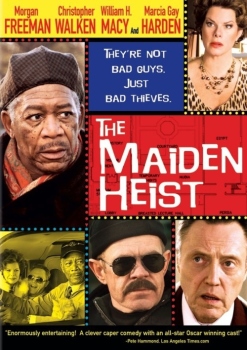
The Maiden Heist
Roger is a security guard at an art museum, where he spends a lot of time staring at his favorite painting, The Lonely Maiden, a beautiful woman staring forlornly out into the distance. Despite the fact he has a wife, Rose, he has become rather obsessed with the painting. Rose wants Roger to retire so they can move to Florida. One afternoon, Roger learns that several pieces including The Lonely Maiden are to be permanently moved to another museum in Copenhagen, Denmark. Unable to follow the maiden, Roger falls into despair until he meets Charles, another guard who has a similar attraction to a painting on another floor, a painting of a woman with cats. George is also obsessed with a piece of art, a nude sculpture of a Greek warrior; he often strips down and poses naked beside it during his night shift. Using the advantages between their shifts and experience, George comes up with the idea to steal their favorite works of art and replace them with replicas. Roger volunteers to tag the artworks being shipped, while Charles and George seek assistance in replicating their favorites. Because Charles is a painter, he's able to do the cat painting perfectly, but he fails in capturing The Lonely Maiden. The men hire a street artist for that task, forcing Roger to steal Rose's Florida vacation savings to pay for the job. Rose becomes suspicious and nearly ends up having Roger taken off the volunteer staff. George manages to replicate "his" sculpture and the Maiden copy is also completed. On the day of the switch, George sneaks into the warehouse in the crate with the statue. He successfully swaps the three marked pieces, but can't resist stripping down and posing with the statue. A guard shows up, forcing George to hide in the crate without his clothes. The next morning, when Roger and Charlie (with the unwitting accompaniment of Rose) come to collect him, the crate containing George ends up in the wrong van. A panic-stricken Charlie gives chase, and they manage to successfully rescue George, who emerges from the shipping crate unclothed, much to Rose's shock. Having pulled off the heist without getting caught, they retire from their jobs and Rose is none the wiser. On a trip to Florida, Roger is enthralled by Rose as she looks out over the ocean because she strikingly resembles the Lonely Maiden pose. Their love life is rekindled. Meanwhile, the three men hide their treasures in a shack on Charles' apartment roof so that they can go and view them at their leisure. However, when Roger looks at the painting, it doesn't inspire him like it once did. He smiles and remembers his wife. Meanwhile, in Copenhagen, a guard on duty passes The Lonely Maiden copy and looks at it, smiling.

Inherit the Wind
In the 1920s, in the town of Hillsboro, Tennessee, a female voice sings " Old-time Religion " as schoolteacher Bertram Cates is arrested for violating state law by conducting a lesson on Charles Darwin 's Descent of Man. The event makes headlines around the world. Matthew Brady, statesman, three-time presidential candidate, and Biblical scholar, volunteers to assist Prosecutor Tom Davenport. A huge parade welcomes Brady, who asks Rev. Jeremiah Brown to stand beside him as he addresses the crowd. Witty and cynical E.K. Hornbeck of the Baltimore Herald, an influential newspaperman, seizes the opportunity to announce that Cates's defense attorney, provided by the newspaper, will be the equally well-known Henry Drummond, one of America's most controversial legal minds and a notorious agnostic. Tourists flood the town. Welcoming Drummond, Hornbeck takes him on a tour of the circus Hillsboro has become. Meanwhile, in the courtroom, Judge Coffey deals with reporters, photographers, and local political interests. Later at the hotel, Brady, his wife Sarah, and Drummond reminisce, regretting the loss of the close friendship they once had. That night, Rev. Brown rallies the townspeople, calling down God's vengeance. When his daughter Rachel, who is engaged to Cates, protests, he condemns her. Admonishing Brown’s harshness, Brady quotes Proverbs 11:29: "He that troubleth his own house shall inherit the wind," sending the crowd home. Breaching Rachel’s confidence to him and Sarah, Brady calls Rachel to the stand, compelling her to tell how Cates left the church when her father declared that a child who drowned was not worthy of heaven because he was not baptized. Overzealously, Brady browbeats a distressed Rachel; Cates instructs Drummond not to cross-examine her, even though her testimony of Cates’s doubts has damaged him with the jury. Drummond intends six scientists as witnesses, but the prosecution successfully objects. Frustrated, Drummond gives an impassioned speech of the consequences of allowing an outdated law to prevail, turning progress backward. He asks to withdraw from the case. The judge orders him to show cause the next morning why he should not be held in contempt. John Stebbins, the father of the drowned boy, offers his farm as collateral for Drummond's bail. That night, the crowds march with a burning effigy chanting that Cates should be hanged. When Drummond tells Hornbeck he needs a miracle, Hornbeck tosses him a Bible, scornfully exclaiming, "Here's a bagful!" Drummond clasps the Bible to his chest, smiling. In court, Drummond makes the unprecedented move of calling Brady—the opposing counsel —as an expert on the Bible, since he has been barred from presenting scientific experts. Brady welcomes this challenge, but he becomes increasingly flustered by Drummond's questions on Biblical inconsistencies and absurdities, such as the “seven days” of creation and Jonah surviving being swallowed by a whale. Brady admits to being unfamiliar with Darwin’s On the Origin of Species. Exposed for his lack of intellectual curiosity, a humiliated Brady is forced to admit that Biblical passages cannot be interpreted literally. He falls into Drummond’s trap to cast doubt on the Bible as the sole credible explanation for human existence. WGN Radio is in court to announce the guilty verdict. Bowing to political pressure not to give a harsh punishment that would aggravate global opinion of Hillsboro backwardness, the judge fines Cates only $100, which Drummond says he will appeal. A disappointed Brady tries to enter a speech into the record, but Drummond successfully moves that the court be adjourned and the crowd begins to leave. As Brady attempts his speech, which few remain to hear, he collapses and dies. Alone in the courtroom, planning the obituary, Hornbeck asks Drummond what Brady said to Rev. Brown, to which Drummond cites Proverbs 11:29 chapter and verse. Hornbeck marvels at how Drummond can quote scripture yet call himself an agnostic. Drummond accuses Hornbeck of being a heartless cynic, a lonely man who will be buried alone. As he leaves, Hornbeck responds confidently that Drummond will be there. Drummond picks up the Bible and Darwin's book in either hand, balancing them as the voice from the beginning sings, " Mine eyes have seen the glory …". Drummond slams the books together, and he walks out with them under his arm.

The Informant!
Mark Whitacre, a rising star at the Archer Daniels Midland (ADM) office in Decatur, Illinois, during the early 1990s, blows the whistle on the company's price-fixing tactics at the urging of his wife Ginger. One night in November 1992, Whitacre confesses to FBI special agent Brian Shepard that ADM executives—including Whitacre himself—had routinely met with competitors to fix the price of lysine, an additive used in the commercial livestock industry. Whitacre secretly gathers hundreds of hours of video and audio over several years to present to the FBI. Whitacre assists in gathering evidence by clandestinely taping the company's activity in business meetings at various locations around the globe. These include locations in Tokyo, Paris, Mexico City, and Hong Kong. He eventually collects enough evidence of collaboration and conspiracy to warrant a raid of ADM. Whitacre's good deed dovetails with his own major infractions, while his internal, secret struggle with bipolar disorder seems to take over his exploits. Whitacre's meltdown results from the pressures of wearing a wire and organizing surveillance for the FBI for three years, instigated by Whitacre's reaction, in increasingly manic overlays, to various trivial magazine articles he reads. In a stunning turn of events immediately following the covert portion of the case, headlines worldwide report Whitacre had embezzled $9 million from his own company. This happened simultaneously while he was covertly working with the FBI and taping his co-workers. Whitacre also aims to be elected as ADM CEO following the arrest and conviction of the remaining upper management members. In the ensuing chaos, Whitacre appears to shift his trust and randomly destabilize his relationships with Special Agents Shepard and Herndon and numerous attorneys in the process. Authorities at ADM begin investigating the forged papertrail Whitacre had built to cover his own deeds. After being confronted with evidence of his fraud, Whitacre's defensive claims begin to spiral out of control, including an accusation of assault and battery against Agent Shepard and the FBI, which had made a substantial move to distance their case from Whitacre entirely. Due to this major infraction and Whitacre's bizarre behavior, he is sentenced to a prison term three times as long as that meted out to the white-collar criminals he helped to catch. In the epilogue, Agent Herndon visits Whitacre in prison as he videotapes a futile appeal to seek a presidential pardon. Overweight, balding and psychologically beaten after his years long ordeal, Whitacre is eventually released from prison, with Ginger awaiting to greet him.

How to Steal a Million
Prominent Paris art collector Charles Bonnet forges and sells famous artists' paintings. His disapproving daughter, Nicole, constantly fears his being caught. Late one night at their mansion, Nicole encounters a burglar, Simon Dermott, holding her father's forged " Van Gogh ". She threatens him with an antique gun that accidentally fires, slightly wounding his arm. Wanting to avoid an investigation that would uncover her father's fake masterpieces, Nicole does not contact the police, and instead drives the charming Simon to his lavish hotel in his expensive sports car, then takes a cab home. Charles is lending the Kléber-Lafayette Museum his renowned " Cellini " Venus statuette for an exhibition. The statue was actually sculpted by his father. Charles has never sold it, knowing scientific testing would reveal it as a fake, rendering his entire collection suspect. Charles signs the museum's standard insurance policy, unaware it includes a forensic examination. Withdrawing the Venus from the exhibition would raise suspicions. Desperate to protect her father, Nicole asks Simon to steal the Venus before the examination. He claims it is impossible to steal the Venus, but changes his mind upon realizing he has fallen for Nicole. American tycoon Davis Leland, an avid art collector, is obsessed with owning the Venus. He arranges to meet Nicole solely to purchase the statue, but finds her attractive. At their second meeting, Leland proposes marriage to ensure he can obtain the statue, but Nicole hurriedly accepts his ring as she rushes off to the museum for the "heist". Nicole and Simon hide in the museum's utility closet until closing time. After observing the guards' routine, Simon repeatedly sets off the security alarm using a toy boomerang until the "faulty" system is finally disabled. Simon notices Nicole's resemblance to the Venus, and she admits that her grandmother posed for the statue that her grandfather sculpted; Simon admits knowing that the Venus was fake and only agreed to the heist for her. Simon takes the Venus, and Nicole, disguised as a cleaning woman, hides it in a bucket. When the Venus is discovered missing, they escape in the ensuing chaos. Following the robbery, Leland seeks to acquire the Venus by any means. Simon offers to "sell" it to him on condition that it never be displayed to anyone and that he never contact the Bonnet family again; Simon says Leland will be contacted later for payment. Leland runs from Nicole when she tries to return the engagement ring; Simon later secretly adds the ring to boxed statue before giving it to Leland, who immediately leaves the country with it. Nicole meets Simon at the Ritz Hotel to celebrate their success, though she is stunned when he admits it was his first heist. Simon is actually an expert consultant and investigator hired by major art galleries to enhance security and detect forgeries. He was investigating Charles' art collection when Nicole first encountered him. When Charles unexpectedly arrives, Simon assures him that the statue will soon be safely out of the country. Charles is relieved though momentarily disappointed that there will be no $1 Million insurance payment due to the statue never being authenticated. Simon insists Charles give up forgery, to which he agrees. As Nicole and Simon are on their way to get married, a collector who admired Charles's new "Van Gogh" arrives at the Bonnet residence. Nicole tells Simon that it is his father's "cousin". Simon admires her newfound flair for lying, and they drive off to begin their new life together.

The Limits of Control
In an airport, Lone Man is being instructed on his mission by Creole. The mission itself is left unstated and the instructions are cryptic, including such phrases as "Everything is subjective," "The universe has no center and no edges; reality is arbitrary," and "Use your imagination and your skills." After the meeting at the airport, he travels to Madrid and then on to Seville, meeting several people in cafés and on trains along the way. Each meeting has the same pattern: he orders two espressos at a cafe and waits, his contact arrives and in Spanish asks, "You don't speak Spanish, right?" in different ways, to which he responds, "No." The contacts tell him about their individual interests such as molecules, art, or film, then the two of them exchange matchboxes. Inside each matchbox that Lone Man receives, is a code written on a small piece of paper. He reads them, and then eat the paper. These coded messages lead him to his next rendezvous. He repeatedly encounters a woman who is always either completely nude or wearing only a transparent raincoat. She invites him to have sex with her but he declines, stating that he never has sex while he is working. One phrase that Creole, the man in the airport, tells him is repeated throughout the movie: "He who thinks he is bigger than the rest must go to the cemetery. There he will see what life really is: a handful of dirt." This phrase is sung in a peteneras flamenco song in a club in Seville at one point in his journey. In Almería, he is given a ride in a pickup truck - driven by a companion of the Mexican - on which the words La vida no vale nada ('life is worth nothing') are painted, a phrase Guitar says to him in Seville, and he is taken to Tabernas desert. There lies a fortified and heavily guarded compound. After observing the compound from afar, he somehow penetrates its defenses and waits for his target inside the target's office. The target asks how he got in, and he answers, "I used my imagination." After garroting the target with a guitar string, he rides back to Madrid, to the room where he disrobes from his latest fresh suit. Folding it, and locking it away, he changes into a sweatsuit bearing the national flag of Cameroon. Before exiting the train station onto a crowded sidewalk he throws away his last matchbox.

Hellfighters
Chance Buckman is the head of a Houston -based oil-well firefighting outfit. With a team that includes Joe Horn, Greg Parker, and George Harris, Chance travels around the world putting out blazes at well heads from industrial accident, explosion, or terrorist attack. Chance enjoys the thrills, but longs for ex-wife Madelyn. She divorced him 20 years earlier, taking their daughter Letitia with her, because Madelyn could not bear to see her husband risk his life. Though they love each other, Madelyn could not deal with her terror that Chance might be badly injured or burn to death in a fire. While extinguishing a burning wellhead, Chance suffers a near-fatal accident when he is crushed by a bulldozer blade. Against his wishes, his daughter Letitia (Tish) visits him in the hospital, summoned by his old friend and former firefighting partner Jack Lomax and fetched by Greg Parker in the Buckman Company's corporate jet. She also pursues Greg Parker to a well fire in Louisiana despite Greg's notorious reputation for using fires to pick up women (generally, any woman he takes to a fire ends up in bed with him). In the case of Buckman's spitfire of a daughter, however, after considerable initial friction, Greg and Tish fall in love and marry five days after their first meeting. In spite of Greg's reputation, Buckman comes to trust his daughter's choice and accepts Greg into the family. Madelyn, projecting her own fears onto her daughter, though gracious, is rather less accepting, despite her liking for Greg. Greg suspects that his new father-in-law is growing increasingly protective of him after the marriage in an effort to protect his daughter from heartbreak should her new husband be harmed or killed. Tish wishes to see the fires that her husband and father fight, which neither man encourages. Her father relents and allows her to accompany Greg into the field. Chance, trying to reunite with his ex-wife, leaves the Buckman Company to accept an executive position with his old friend Jack Lomax on the board of directors of Lomax Oil as a way to win her back. Chance gives his company to his son-in-law as a "wedding present", although Greg's pride compels him to tell Buckman he "doesn't want any gifts" and that he will "pay twice what it's worth." Greg and Tish begin traveling the world to put out oil fires. Soon, the older couple announce that they will remarry, to the delight of Tish. Madelyn is happy to see her husband in a safe job, but before too long, Chance becomes bored with corporate life and longs to be back in the field. As Jack Lomax earlier told Tish, "Your father is the best there is at what he does. No man can walk away from that." Greg encounters problems with a fire in Venezuela —five oil wells in a tight line burning all at once, further compounded by guerrillas who are trying to undermine the operation. He asks Chance to return and help fight the fire. Chance does so without hesitation. Buckman goes to Venezuela in a Texas Air National Guard transport full of firefighting gear, unaware that Madelyn and Tish have followed him to Caracas. Madelyn uses Jack Lomax's influence with the president of Venezuela to get Tish and herself to the oilfield where the fire is burning. Madelyn declares "This is it for me," in the sense that it will either make or break her ability to deal with the fires once and for all, fully aware that her relationship with Chance is on the line. The Hellfighters put out the fires with the help of the Venezuelan Army, while under attack by rebel warplanes that strafe the oilfield. Madelyn explodes in anger at what she perceives as the Venezuelans' inability to protect the team from the unexpected air raid, railing at the Venezuelan army and civil officials for allowing the guerrillas to get close enough to attack. Chance pulls her away during her tirade. She snaps, "Damned if I understand your attitude!", to which he replies, "It's very simple—you'll do." When Greg asks Tish for her take on it, she just smiles and says, "I think we ought to get her a tin hat," referring to the bright red hardhats with the Buckman Company logo worn by the Hellfighters.

The Mercy
In 1968, English businessman Donald Crowhurst is inspired by Sir Francis Chichester to compete in the Sunday Times Golden Globe Race, a single-handed, round-the-world yacht race. Though only an amateur sailor, Crowhurst believes that technology and gumption will enable him to succeed in a custom trimaran, thus ensuring financial security for his wife and young children. As delays and costs mount, however, Crowhurst is forced to sign promissory notes pledging his company and home to his main sponsor Stanley Best, should he fail to finish. Barely ready in time for the race, Crowhurst must complete the race or lose everything he holds dear. During his trip in the Teignmouth Electron he attempts to give an optimistic version of events to both his family and press agent, but inwardly feels under pressure due to his financial situation, physical danger and loneliness. The film cuts between his voyage and scenes at home where his wife Clare is attempting to deal with the situation. To make matters worse for Crowhurst, his boat is damaged, making his journey forward extremely risky. He begins to falsify his records, greatly exaggerating how far he has sailed each day. Crowhurst decides to be vague in his communications, hinting to the newspapers that he is rounding the cape of Africa, while instead sailing slowly and attempting to go unnoticed before returning home. He surreptitiously lands in Argentina to repair the boat. At home, his apparent success is bringing significant press attention. Robin Knox-Johnston completes the race, but Crowhurst’s false accounts suggest that he will finish the fastest as all other sailors but one have dropped out of the race. Crowhurst slows down his return trip to avoid the attention that finishing fastest would bring, knowing that scrutiny would reveal he had fabricated his earlier location reports. Upon learning that the other sailor still in the race has also dropped out because of his false records, he becomes overwhelmed with guilt and fear. He starts to lose his mind and begins to hallucinate and imagines seeing his wife who he confesses to. As his mental health fails, so does his physical health and he is oblivious to harming himself as he attempts to stay occupied by maintaining the radio. Meanwhile the vessel drifts. As his family, the press and public expectantly wait for his return, he loses all control of his mind and his situation and in despair realises he cannot go home and only has one way out. His vessel is eventually found adrift without Crowhurst onboard. It is not clear if he has jumped or fallen overboard. The authorities deduce from his records that he has lied about his progress during his journey. In the closing credits it states that Crowhurst‘s body was never found and that he was at sea for 7 months and completed 13,000 miles. Robin Knox-Johnston was the only sailor to finish the race and he donated his prize money to Crowhurst‘s family.